
Published August 2026
The Pineapple Paradox: Why “Green” Means Ripe in Organic Farming
In the 1700’s, pineapple was a symbol of such extreme wealth that European aristocrats would rent a single pineapple for a night just to display it as a centrepiece at parties (Levy, 2014). It was rarely eaten, and its value lay entirely in its status as a rare, exotic icon of prestige.
Today, that luxury era has been replaced by a supermarket myth. We are still obsessed with the pineapple’s appearance, expecting rows of bright yellow, flawless fruit, but in the modern food supply chain, this aesthetic uniformity is often a chemical illusion.
We have traded biological reality for a profile that satisfies the eye while ignoring the fruit’s natural growing cycles. At CrowdFarming, we wanted to challenge the ‘supermarket ideal’, but we had to start by asking:
Why sell pineapples in Europe, and how can we ensure it is done sustainably?
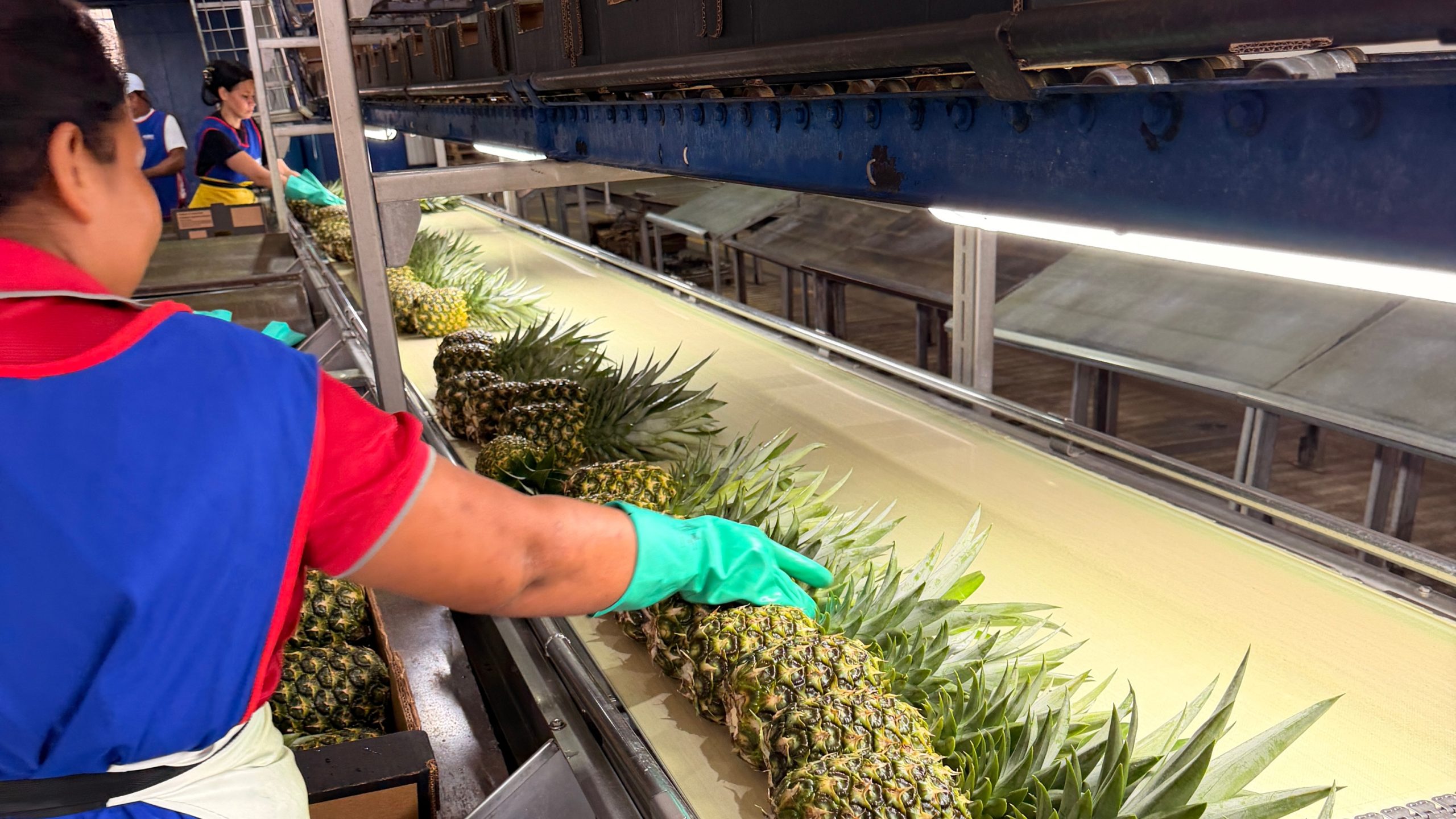
Because pineapples require a tropical climate, there is no viable large-scale alternative to cultivate them in Europe. Yet, the demand continues to grow: European imports account for roughly 43.6% of the global total, with the organic segment growing at an average annual rate of 8.2% (CBI, 2022). Since we cannot grow pineapples locally, we committed to offering the most sustainable option possible. To guarantee this, our technical team of agronomists conducted our first-ever on-site audit outside of Europe, traveling to Costa Rica to get to know the farmers we will be sourcing from.
Working alongside our farmers helped us peel back the curtain on the industry standard, revealing how much of that familiar yellow shell is actually a result of chemical shortcuts.
Why conventional pineapples look all the same (and why it matters)
The consistent yellow hue of supermarket pineapples is rarely a product of nature. It is typically the result of ethephon, a systemic plant growth regulator used extensively in conventional agriculture.
A yellow shell is often used as a mask to hide the fact that a fruit was harvested early to withstand long-distance shipping. This creates a major challenge because of one biological fact: the pineapple is a non-climacteric fruit (Paull & Chen, 2003).
Unlike a banana or an avocado, a pineapple stops producing sugar the moment it is detached from the plant. It has no starch reserves to convert into sweetness on a kitchen counter. If it is picked sour, it stays sour (Paull & Chen, 2003).
- The Shipping Problem: To survive weeks in a shipping container, conventional fruits are often harvested prematurely while still starchy, hard, and acidic (Compassion House Foundation, 2021).
- The Chemical Solution: Because a green, acidic pineapple is difficult to sell, conventional growers use Ethephon, creating an artificial “yellow coat” (Food and Agriculture Organization [FAO], 2022).
By using this mask, the conventional model can harvest entire fields at once, turning every fruit yellow on the outside regardless of its internal sweetness. The result is a “lottery” for the consumer: a fruit that looks perfect on the shelf but may remain biologically immature inside.
When sprayed on a field, ethephon decomposes to release ethylene, a natural plant hormone involved in ripening processes. This forces a “degreening” of the shell, creating an artificial colouration that allows conventional farms to harvest and ship fruit that looks identical, regardless of its internal biological state (Compassion House Foundation, 2021).
So why is Ethephon prohibited in organic farming if its primary function is to release natural compounds such as ethylene?
The answer lies in that organic certification is not only concerned with the end result, but with the entire production ecosystem.
From an environmental perspective, ethephon is a synthetic compound that, when decomposing, releases phosphoric acid and chloride ions (Eurofins, 2021). When applied at scale to synchronise harvests, these byproducts can accumulate in the soil and leach into local waterways. In addition, the use of external growth regulators like ethephon can also disrupt the delicate balance of soil microbes and beneficial insects that the plant relies on for natural resilience, another reason why organic bodies (EU, USDA) ban ethephon to prioritise soil health.
Main differences between conventional and organic grown pineapples
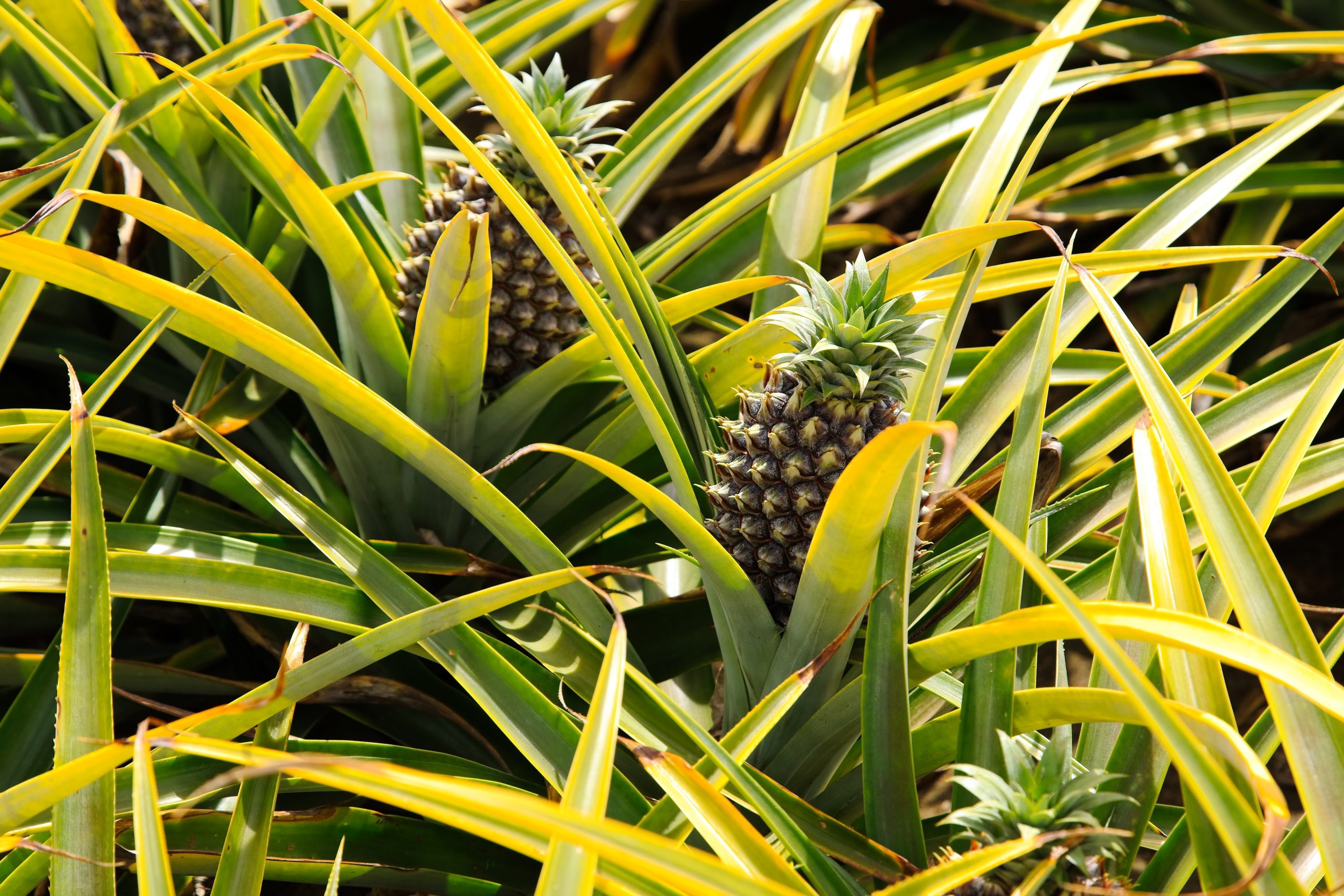
The cultivation of the pineapple follows a highly disciplined, calendar-driven schedule that allows for incredible production accuracy.
The plant is typically induced 10 months after planting, followed by a precise 22-week period until the fruit is ready for harvest. Because this timeline is so consistent across weekly plantings, growers can predict yields with high precision and plan their harvests by the calendar, ensuring a steady supply of fruit.
While the growth timeline remains the same across farming methods, the biochemical development of the fruit is shaped by how it is nourished during those 22 weeks.
The colour of the flesh
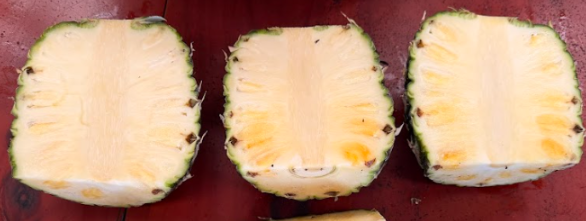
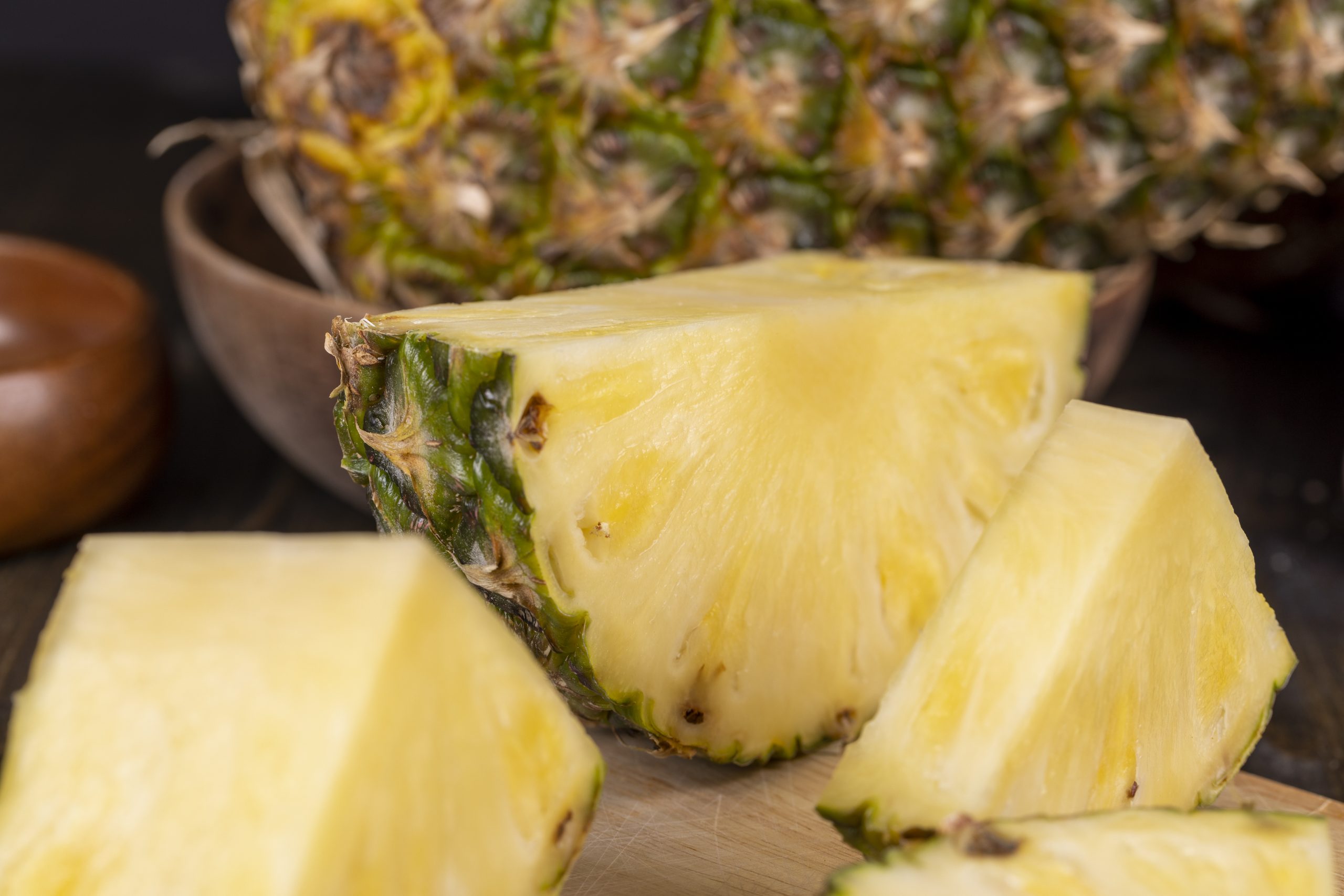
Unlike the perfectly uniform interior of a chemically treated pineapple, an organic one may show non-homogeneous internal ripening, varying slightly in color or translucency from top to bottom, which is a natural characteristic of a fruit developing without synthetic aids.
Flavour and nutrient density
When a pineapple matures over that same 22-week window in living soil rather than through synthetic feeding, it relies on biological synergy to reach harvest with a more complex flavour and higher nutrient density.
In conventional farming, the heavy use of synthetic nitrogen fertilisers often leads to a phenomenon known as dilution. Because these synthetic nutrients are so readily available, the plant over-absorbs them and pulls in significant amounts of excess water to compensate. This results in a larger, heavier pineapple that may look impressive on the shelf but is effectively “watered down,” containing fewer nutrients per gram than its organic counterpart (Worthington, 2001).
This nutritional gap is particularly evident in the plant’s secondary metabolites. Because organic pineapples must develop their own natural defenses against pests without synthetic aid, they produce higher concentrations of protective compounds. Bromelain, for example, is a group of “proteolytic enzymes” found in pineapples that are known for their ability to break down proteins (Worthington, 2001), which is why pineapples can be used to tenderise meat. Its concentration is highest in fresh pineapple, and studies have shown that the enzyme aids in digestion and acts as a natural anti-inflammatory (Pavan et al., 2012).
Additionally, our organic farmers follow a rigorous audit. While the industry allows harvest starting at 12 Brix degrees, we require a minimum of 14 before the fruit is picked. This ensures the fruit is as sweet as possible while still being robust enough to survive the journey in good condition.
Chemical residues
Because Costa Rica’s conventional pineapple industry is one of the world’s largest consumers of pesticides (EWG, 2024), choosing certified organic pineapple ensures your fruit is free from residues of synthetic fungicides and organophosphates like Ethephon. To protect the fruit during transit without the use of synthetic fungicides, our organic pineapples are washed with calcium hypochlorite and coated in an organic-certified protective wax, ensuring they stay fresh while adhering strictly to EU organic regulations.
Organic farmers protect the Costa Rican watershed
Costa Rica produces two out of every three pineapples sold worldwide (EWG, 2024). This massive scale once relied on a standardised chemical protocol that reached a breaking point in 2009. That year, rampant contamination of waterways sparked national protests, serving as a catalyst for a decade-long shift toward the transparency we see today in organic models (UNDP, 2021).
The commitment to the ecosystem continues even after the harvest. While conventional farms often use Paraquat (a highly toxic herbicide) to dry out old plants so that they can be burned for pest control, organic farmers manage crop residues naturally, preventing toxic runoff and protecting local air quality.
By supporting organic farmers, the pressure on these vital tropical watersheds is reduced.Programs like MOCCUP, a satellite monitoring system, now help supervise land-use changes and audit agrochemical levels in waterways (UNDP, 2021). Choosing an organic pineapple is a direct vote for this transparency and for the protection of the water that sustains both the farmers and their communities.
The journey from Costa Rica to Europe
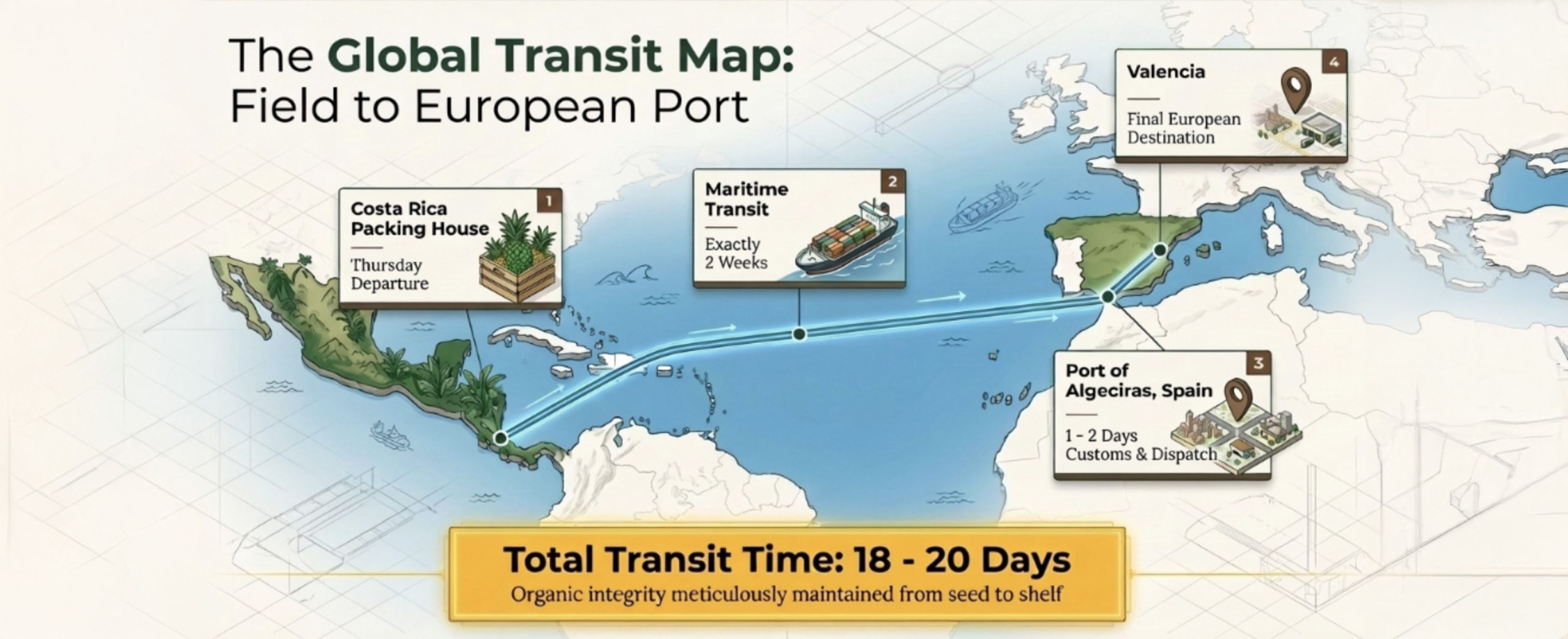
To keep our carbon footprint as low as possible, we prioritise efficiency over speed. For CrowdFarming pineapples, the total transit time from the Costa Rican field to a European port is 18 to 20 days. The freshly packed fruit departs from Costa Rica, spending exactly two weeks at sea in climate-controlled containers maintained at 10°C. The ships arrive at the Port of Algeciras in Spain, where customs and dispatch take 1 to 2 days, before the fruit is sent to a final European logistics hub, such as Valencia, for distribution to your door.
How to enjoy your pineapple
Because these pineapples are harvested at their peak, they require specific handling once they arrive:
- No Waiting Required: Since pineapple is non-climacteric and harvested at peak ripeness, it is ready to enjoy the day it arrives. Unlike other fruits, a pineapple won’t get sweeter after it’s picked; instead, leaving it on the counter for too long increases the risk of fermentation, which can create a sharp, alcoholic aroma. For optimal flavour and quality, it is best to consume your pineapple shortly after delivery.
- Avoid the “Cold Burn”: As a tropical species, pineapples are sensitive to chilling injury. Storing a whole pineapple in a standard refrigerator for too long can damage the cellular structure and dull the flavour. Keep it in a cool (but not too cold) spot until you are ready to slice it.
- Zero Waste: By fermenting the cleaned skins and core with water and a bit of sugar, you can create Tepache, a naturally fermented probiotic drink rich in beneficial microbes.
Choosing green over “perfect”
For a long time, the pineapple industry has solved a logistics problem -color and shelf-life – at the expense of the ecosystem. By choosing a pineapple that doesn’t fit the “supermarket yellow” mold, you are validating a farming model that refuses to use chemical masks for the sake of nutrient density, flavour and ecosystem health.
As consumers, we hold the ultimate power. The demand for transparency is forcing a re-evaluation of the global supply chain. The question becomes: are we willing to choose a greener planet over a yellower fruit?
Fun facts about pineapples!
Most fruits, like an apple or a peach, grow from a single flower. The pineapple is a multiple fruit (syncarp), where numerous individual flowers are tightly arranged along a central axis (Morton, 1987). As the plant matures, these flowers transform into tiny berries called “fruitlets”. Because they grow so close together, they eventually fuse into one solid unit.
When you look at a pineapple, you can still see the evidence of this fusing:
- The spikes: Each hexagonal shield on the rind was once an individual flower. The tiny spike in the center is the flower’s protective armor.
- The core: The hard center of the pineapple is the original stalk that held all those flowers together (Morton, 1987).
Sources:
- Levy, J. (2014). The pineapple: King of fruits. Oxford University Press.
- CBI. (2022, October 10). What is the demand for fresh fruit and vegetables on the European market? https://www.cbi.eu/market information/fresh-fruit-vegetables/what-demand
- Paull, R. E., & Chen, C. C. (2003). Postharvest physiology, handling, and storage of pineapple. In The Pineapple: Botany, Production and Uses (pp.253–279). CABI Publishing.
- Compassion House Foundation. (2021). The global journey: Pineapple production in Costa Rica.https://www.chfusa.com/pineapple-production in-costa-rica/
- Food and Agriculture Organization of the United Nations (FAO). (2022). Pineapple: Post-harvest operations.http://www.fao.org/3/y5104e/y5104e05.htm
- Hengye Chemical. (2023). Can ethephon be used in organic farming?.https://www.hyhpesticide.com/blog/can-ethephon-be-used-in-organic farming-1954431.html
- Worthington, V. (2001). Nutritional quality of organic versus conventional fruits, vegetables, and grains. The Journal of Complementary and Alternative Medicine, 7(2), 161–173.https://doi.org/10.1089/107555301750164244
- Pavan, R., Jain, S., Shraddha, & Kumar, A. (2012). Properties and therapeutic application of Bromelain: A review. Biotechnology Research International, 2012, Article 976203.https://doi.org/10.1155/2012/976203
- Environmental Working Group (EWG). (2024). Pesticides in produce: The pineapple industry report.https://www.ewg.org/foodnews/clean fifteen.php
- United Nations Development Programme (UNDP). (2021). Costa Rica: Sustainable pineapple and the protection of the watershed.https://www.undp.org/foodsystems/costa-rica-sustainable-pineapple
- Morton, J. F. (1987). Pineapple: Ananas comosus. In Fruits of Warm Climates (pp. 18–28). Purdue University.https://hort.purdue.edu/newcrop/morton/pineapple.html
Written by Sofia Cadahia

Sofia is What The Field!?’s Nutrition & Food Science Editor, working at the intersection of nutrition, sustainability, and environmental justice. As a Registered Dietitian Nutritionist with a background in Digital Marketing, she uses storytelling to explore how food systems shape health, equity, and environmental outcomes, as well as the often unseen forces that determine what ends up on our plates.
Comments
Keep digging ...