Published January 2026
Small colonies, big impact
Tilmann from Harzer Honig between serenity through bees and the hustle and bustle of everyday family life.
Bees are on everyone’s lips. I feel like never before so much has been said and written about bees. That’s why I’m especially happy to meet Tilmann Dreysse, beekeeper from Harzer Honig. I’m not in the Harz Mountains, though, but in the Altmark region. Why? This is a honey-sweet story I’d like to tell you here.
It’s a beautiful summer day, cloudy but warm. The beehives stand in the meadow, like little houses – at a safe distance from the neighbors. To the untrained eye, the bees are almost invisible, but that’s precisely what makes them so special. You might have to zoom in a bit on your phone – they hover around the hive, like little planets in a solar system.
The rain of the past few weeks hasn’t deterred the bees, says Tilmann. It’s even been good for him and his colonies, as the sunflowers, for example, have recovered from the overly warm spring and once again produced sufficient pollen. What matters is not the amount of precipitation, but how high or low the temperatures are. This summer was rather humid, but still warm.

The professional beekeeper hasn’t always been a beekeeper and has found his way to bees through several detours – when Tilmann talks about his work, his eyes light up. It’s that feeling you get when you think: “This person did everything right.” Of course, I know that this isn’t as easy as it appears from the outside. He tells me that beekeepers in Germany still have a very serious problem with the Varroa mite, and he wants to make his operation more resilient and, above all, more resistant through regenerative practices.
The mite is considered particularly dangerous because it sits on the bees and sucks their bodily fluids, weakening them so that they are more susceptible to diseases that the mite itself can transmit. Regenerative practices are of great importance in this regard, as natural breeding cycles and less human intervention can promote the colonies’ self-regulation. Furthermore, it’s just like with us humans – the more balanced and natural our diet, the better our immune system functions. So, if the bees find sufficient pesticide-free food, it strengthens them against pests. Tilmann explains that he used to be a representative for Bioland himself, and for him, organic farming is the foundation for his bees and for agricultural practices in general. He explains that he has farmers in his circle of friends who still treat their fields with synthetic pesticides for economic reasons. Through regular discussions about the topic, they’ve reached a compromise, so that, for example, the pesticides are applied in the evening, when the bees are no longer flying. You can find the complete live stream here.
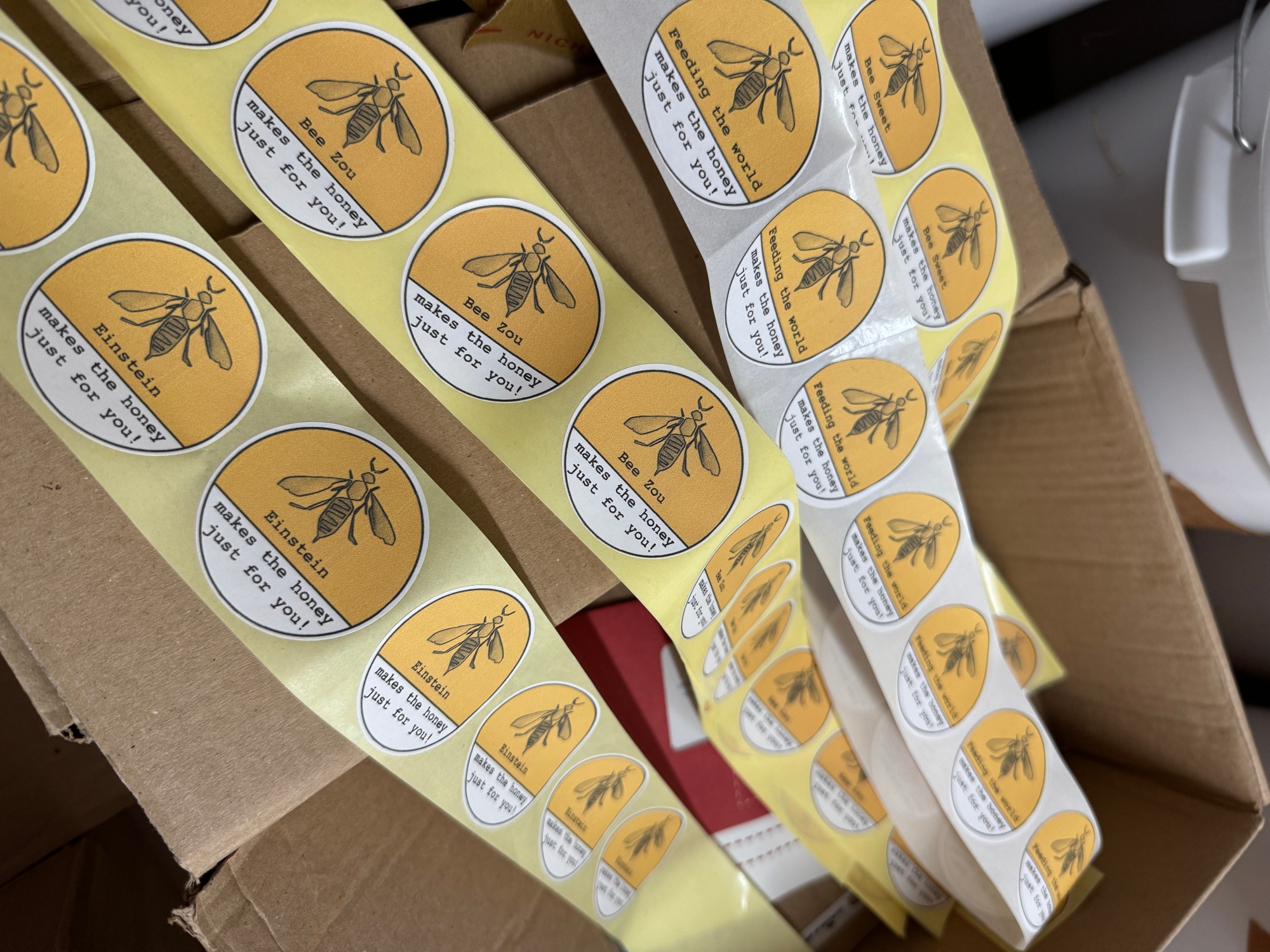
He still has 400 kg of honey to bottle in the next few days. He also sells the honey in his own shop on Wiepke’s main street. Since it’s a self-service shop, you can browse in peace, regardless of Linda’s or Tilmann’s daily work. If you can’t get to the Altmark region anytime soon, you can adopt one of Tilmann’s hives through CrowdFarming. In the preparation room, we see buckets of honey and meters of personalized label ribbons—each with the name of a bee colony.

When I ask him what he enjoys most about his job, Tilmann says: “Being with the bees – alone. I’m completely at peace with myself.” It must be these moments of absolute contemplation that give him the strength and peace he needs. Tilmann is not only a beekeeper, but also part of Bauer Freigeist. Anyone who read my last article will probably now understand why I’m in the Altmark region and not the Harz Mountains. Linda Becker from Bauer Freigeist and Tilmann are a couple and run the cheese dairy and farm shop themselves, for example.
In itself, being a farmer and life partner doesn’t seem unusual – the farms I’ve visited so far are mostly family businesses, where spouses work together on the same end product.
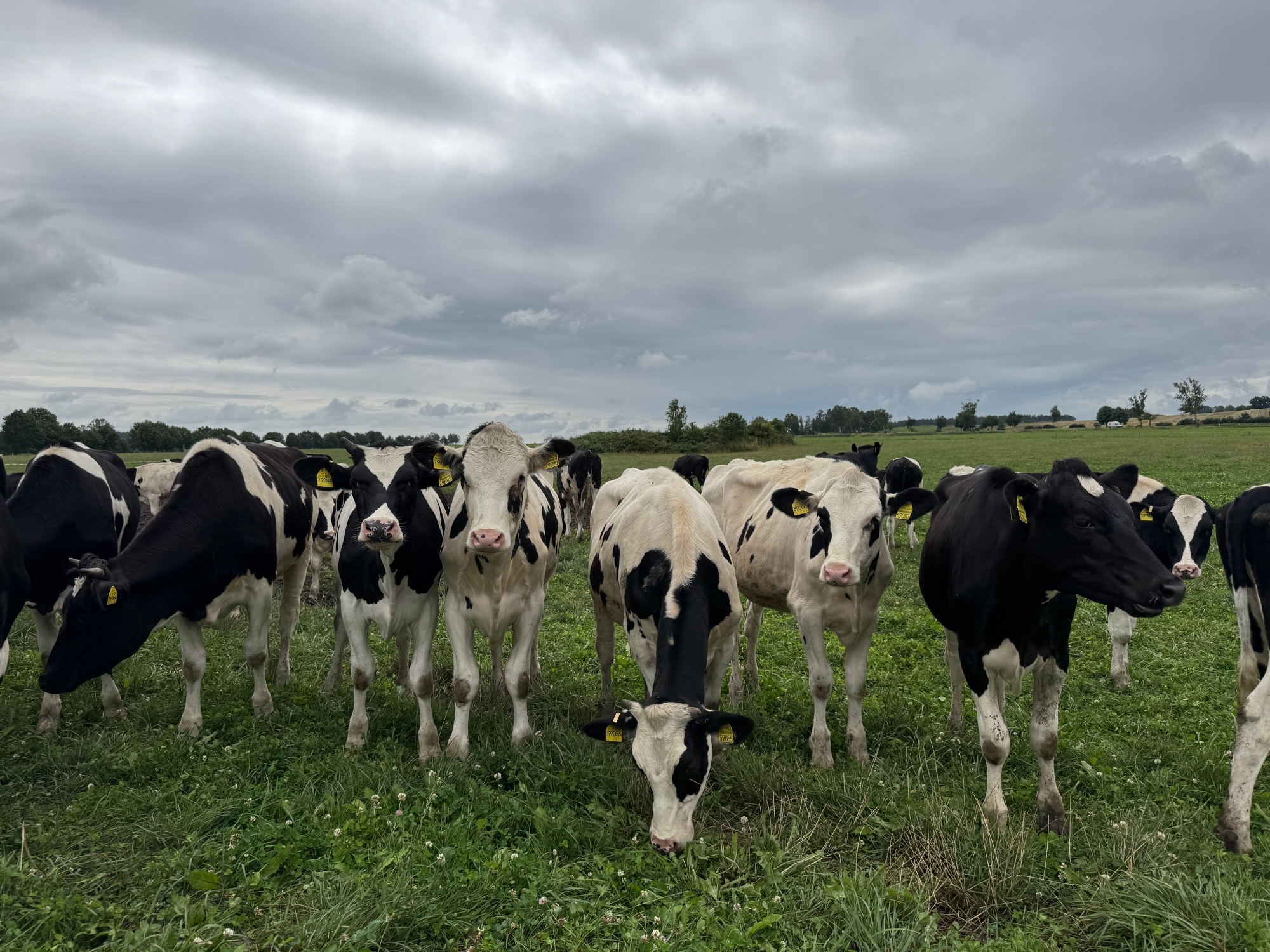
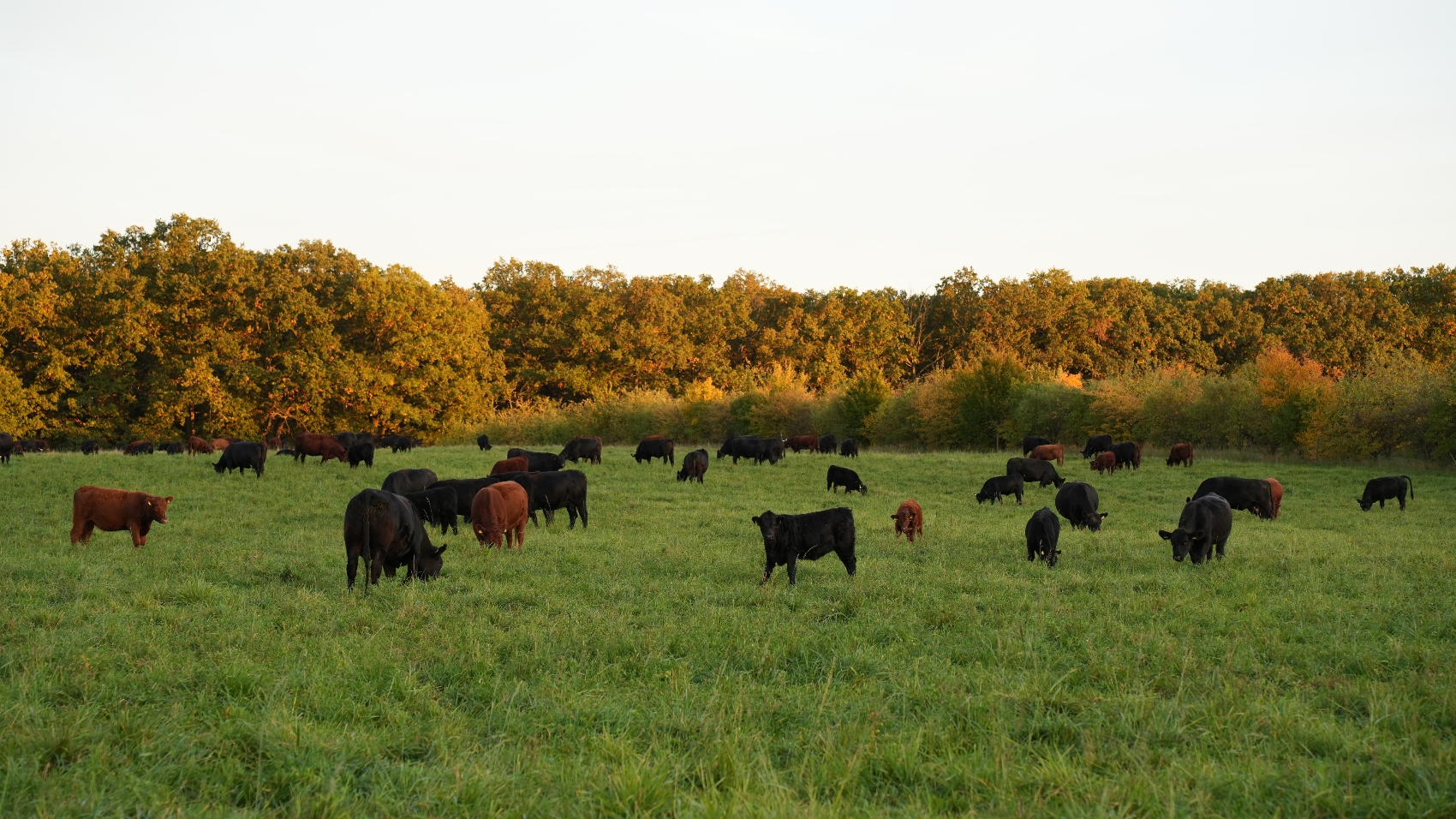
This isn’t the case here, and that’s what makes it so special for me. The two of them are always moving between the cowshed, the cheese dairy, and the beehives.
I remember the questionnaire we send annually to our farmers who participate in our regenerative agriculture program. Part of the data collection focuses on the farmer’s well-being—how well they balance work and personal life. During my visits to farms, I often get the feeling that there’s no boundary between the field and the kitchen—and many farmers confirm that work and private life very often merge. The couple explains that it’s been “relatively chaotic over the past few years” to be able to combine farm work, the family business, beekeeping, and their daughter. I can relate to this very well, because when I see them together, I see a lot of energy—sometimes it seems as if they’re floating above the ground with activism. I’m moved when they tell me that over the years they’ve learned to function as a team and set priorities—that this doesn’t always happen without discussion, Linda says with a wink: “We argue more easily, but we also make up more quickly.” The comparison with a beehive couldn’t be more apt – always moving, always something to do, but everyone knows their tasks.

My day with Linda and Tilmann is coming to an end – there are still 400 kg of honey to be bottled. What impresses me most is how the two manage to combine their many tasks with so much passion – while never losing sight of what’s important: healthy food, a respectful approach to nature and animals, and the openness to share their experiences. Leaving the farm is like saying goodbye to friends – you really want to stay, but you know you’ll see each other again very soon. I hope so!
Written by Magdalena Werner
I'm Magdalena, a Farmer Ambassador. I've been working at CrowdFarming for eight years, and after seven years in customer service, I'm now part of the sustainability and awareness team, sharing the farmers' stories and taking you on a journey through their daily lives in the fields.
Keep digging ...