




Published August 2026
8 tips to bring back the Buzz
How to turn your home and neighbourhood into a pollinator paradise
Up to 90% of flowering plants in Europe depend on bees to reproduce. In France alone, 72% of cultivated food species have some dependence on insect pollinators. In Germany (one of the most studied cases on the continent) the total biomass of flying insects collapsed by three-quarters in just 25 years. So, lose the bees, and the knock-on effects go well beyond honey. I’m starting with these numbers because they matter: pollinators underpin the food system.
The causes are well documented: habitat loss, pesticide use, intensive agriculture, climate change. What’s less discussed is what any of us can actually do about it. The answer, it turns out, is more than you’d think (good news!).
This guide covers the things that genuinely move the needle: which plants to grow and, crucially, when to grow them (there’s a timing gap most gardeners get wrong); how to build a bee hotel that actually works rather than gathering dust; why leaving bare patches of soil is one of the most valuable things you can do; and why autumn “tidying” is quietly one of the most destructive. Along the way, you’ll meet the 2,000 wild bee species that most people have never heard of, the ones doing the bulk of the work, and the ones most at risk.
But before we get started, you might be wondering how much impact can this actually have?
The good news: private gardens and outdoor spaces are among the most effective tools we have to push back. Research from the UK’s National Bee Unit found that a wildflower patch as small as 4m² can roughly double local bumblebee and solitary bee numbers within a single year. Across Europe, tens of millions of gardens, balconies, and urban green spaces collectively represent an enormous, and largely untapped, opportunity. Here’s how to make yours count.
First, know who you’re gardening for
Most people picture a honeybee when they think “bee.” Stripy, hive-dwelling, honey-producing. But Europe is home to around 2,000 wild bee species (honeybees account for exactly one of them). The rest are wild: bumblebees, mason bees, leafcutter bees, mining bees, flower bees, sweat bees. Most people have never heard of them, which is a problem, because they’re doing a huge amount of the pollination work.
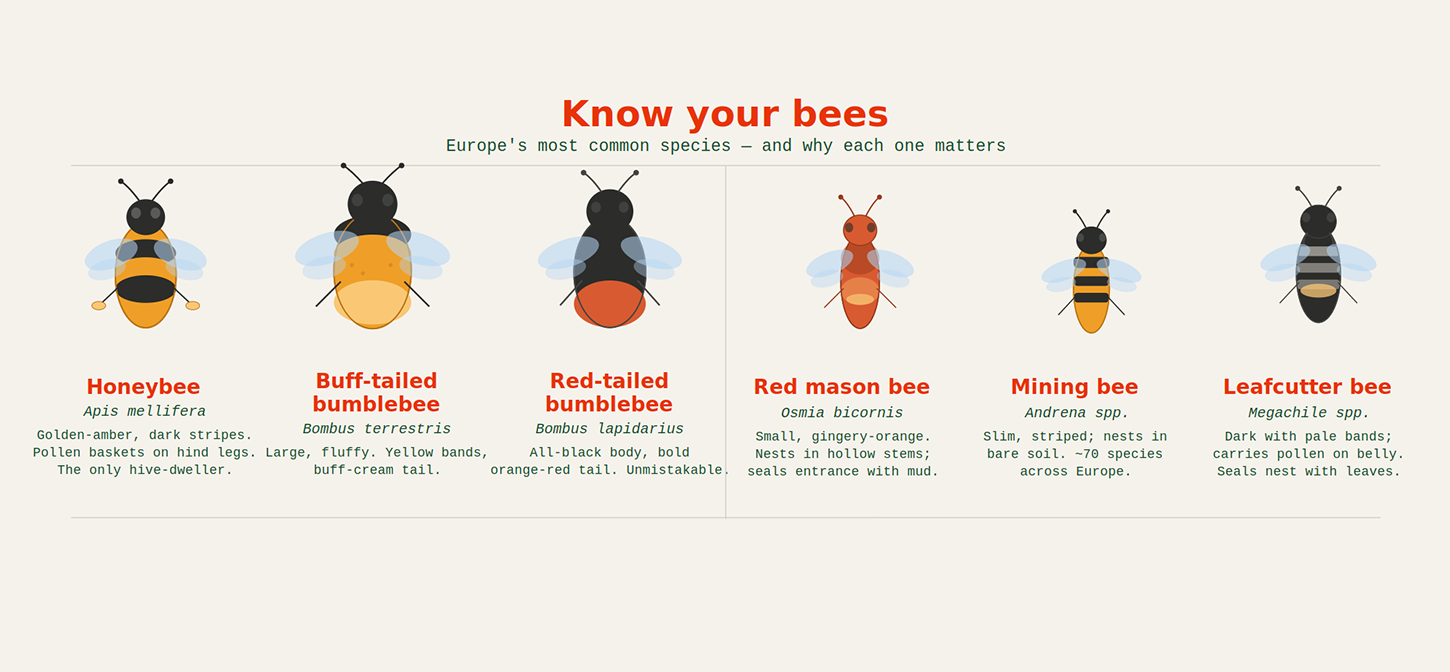
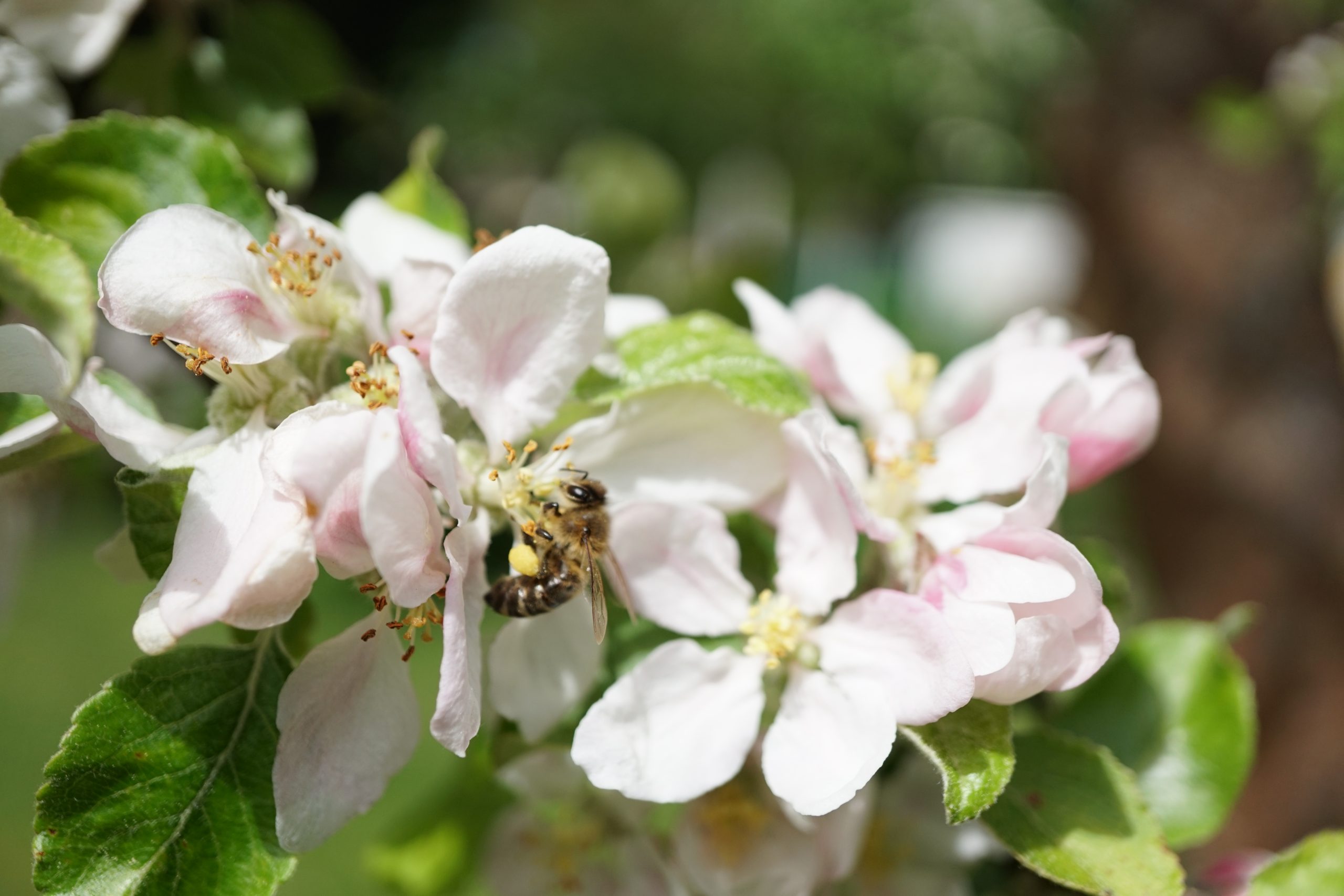
Solitary bees don’t live in hives. They don’t make honey. They don’t sting unless you physically grab one. But they are, in many ways, more efficient pollinators than honeybees. They carry pollen loosely on their bodies rather than packed neatly into baskets, meaning more of it falls off onto the next flower. The red mason bee (Osmia bicornis), found across most of Europe, is considered one of the most effective pollinators of early-season fruit trees.
According to the IUCN’s 2025 assessment, wild bee populations “are in drastic decline and cannot be easily replaced by managed colonies, which comprise less than 1% of existing species.” The honeybee gets the headlines, but the wild bees are the ones we really need to worry about. They nest in bare soil, hollow stems, beetle holes in old wood, the mortar gaps of old walls (all the things we’ve systematically paved, pruned, and pointed out of existence.)
Gardening for pollinators means gardening for all of them. Not just the honeybee on the lavender, but the mining bee making her small mound of earth beside the path.
1. Plant for the hungry gap (this is the most important thing you’ll read)
In 2024, researchers from the Universities of Oxford and Exeter published a finding that should be plastered on every seed packet in Europe: the plants commonly recommended as “pollinator-friendly” begin flowering up to a month too late to help bees when it matters most.
Bumblebee colonies are founded in early spring by a single queen who must feed herself and her growing larvae before any worker bees exist to help her. The colony’s demand for pollen and nectar peaks between March and June. A two-week gap in forage availability during March and April can result in a 50–87% drop in queen production for that year. No queens, no colony next year.
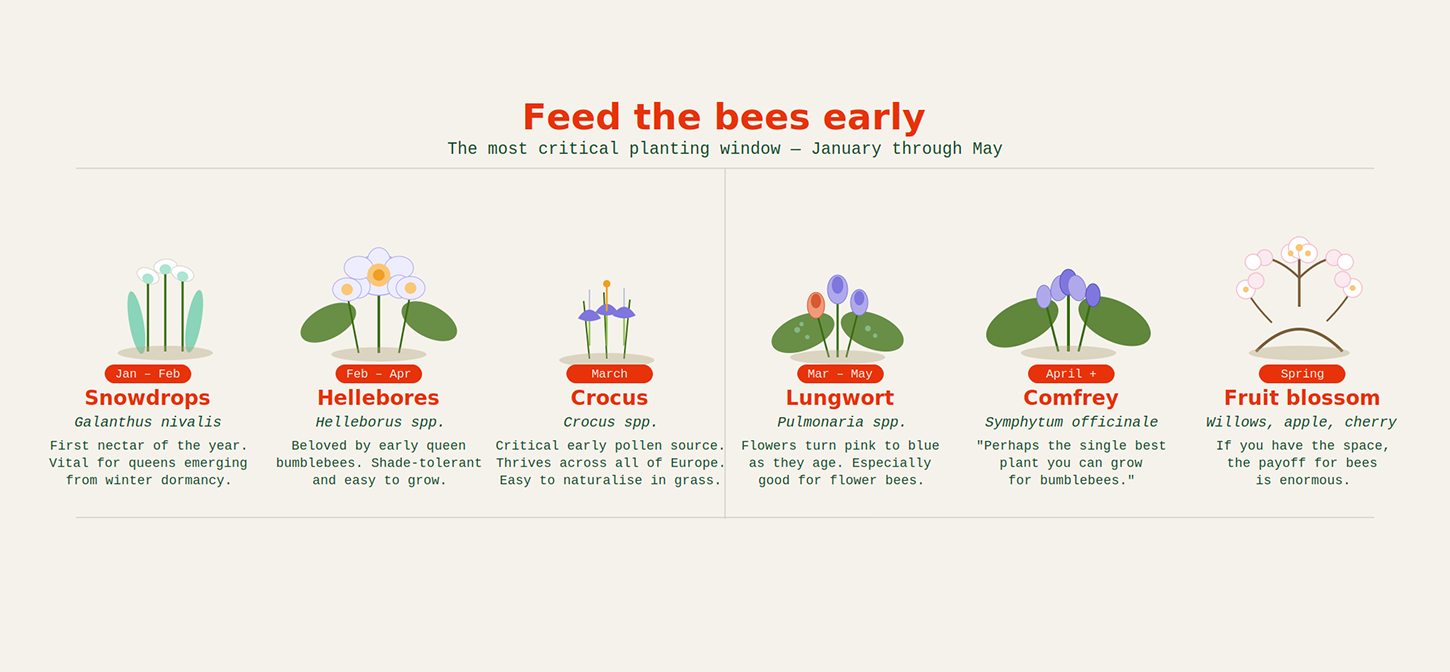
The fix is simple: plant early. Before you think about summer flowers, think about what’s blooming in February, March, and April.
Excellent early-season plants for bees across continental Europe:
- Snowdrops and winter aconite — January/February, among the first nectar sources of the year
- Hellebores — February to April, beloved by early queen bumblebees
- Crocus — March; a critical early source of pollen across France, Germany, the Low Countries and beyond
- Lungwort (Pulmonaria) — March to May, especially good for hairy-footed flower bees
- Comfrey — April onwards; ecologist Dave Goulson describes it as “perhaps the single best plant you can grow for bumblebees”
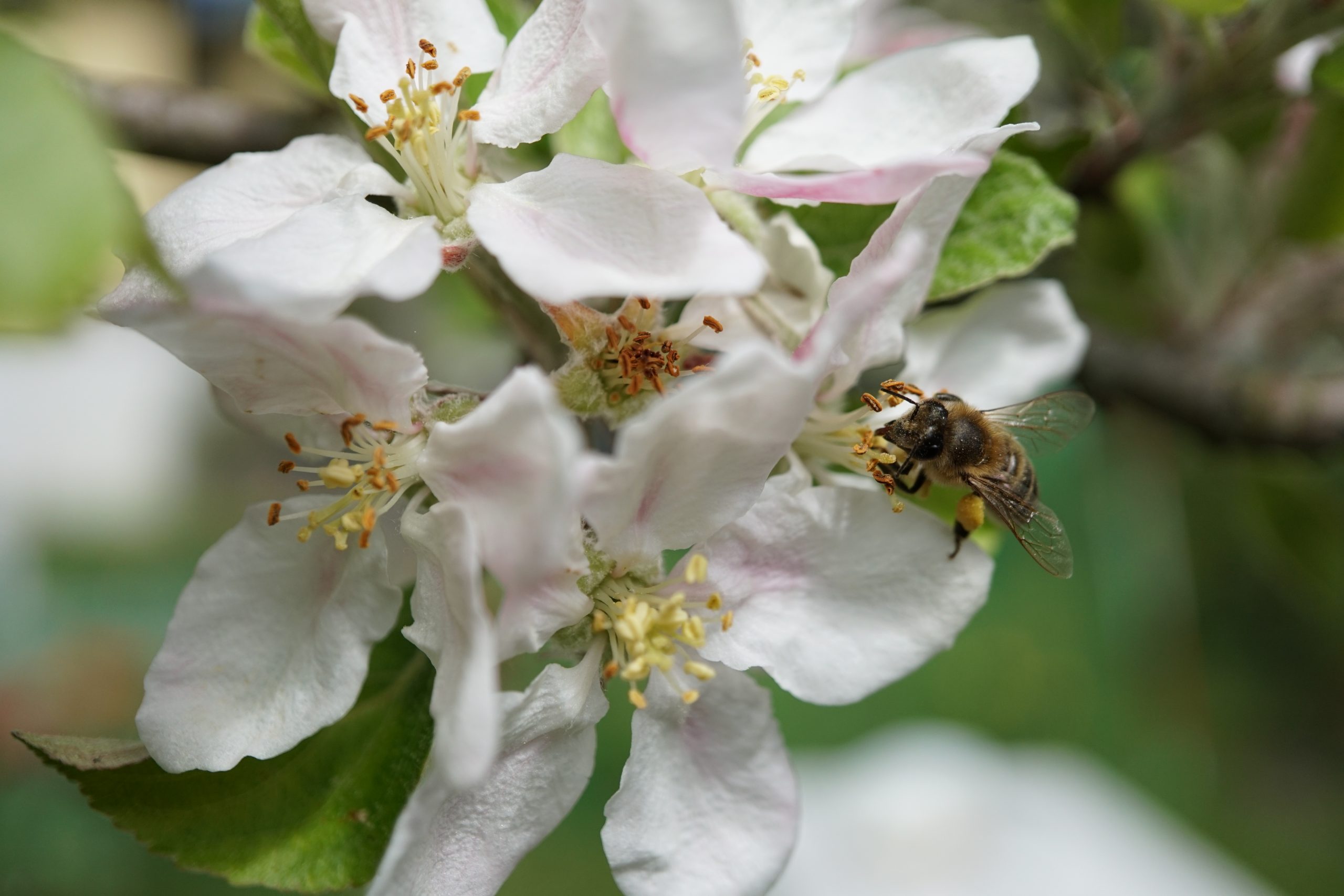
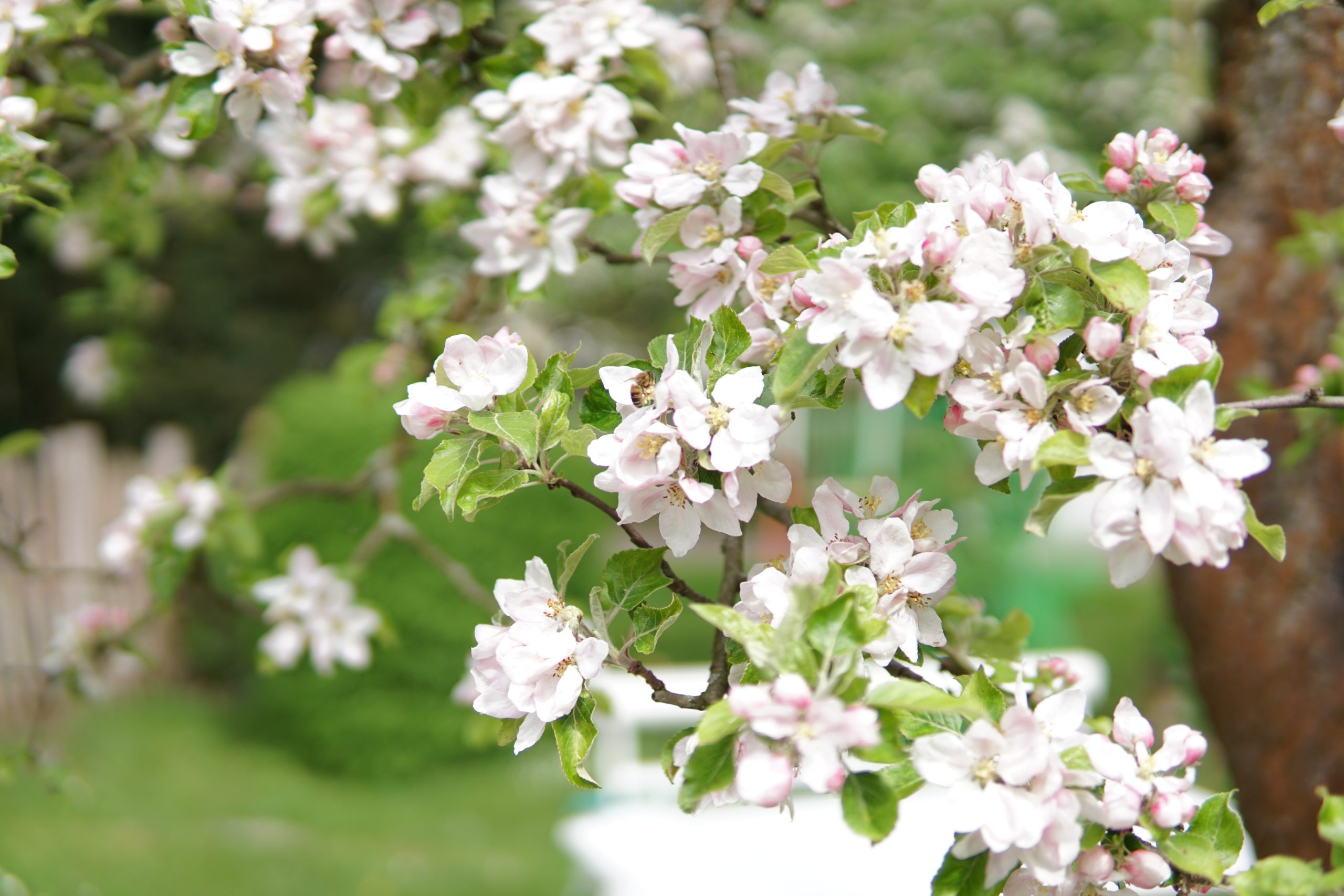
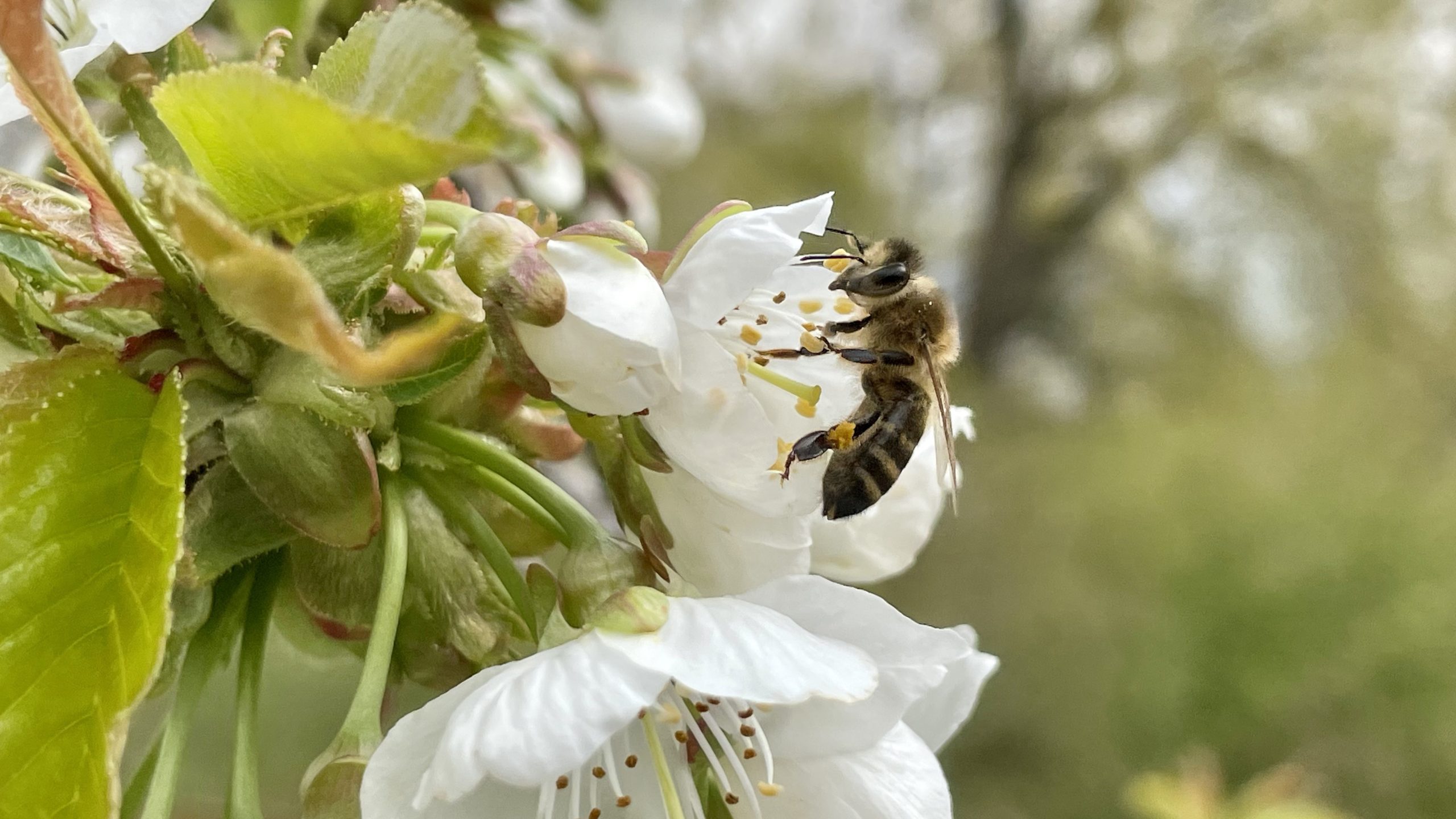
- Willows and fruit tree blossom — if you have the space, the payoff is enormous
Then carry the flowering season all the way through to late autumn. Ivy ( yes, ivy!) is one of the single most valuable late-season nectar plants for bees and hoverflies across Europe, blooming in October when almost nothing else does. Don’t cut it down.
2. Rethink your lawn
The closely mown monoculture lawn is one of the great biodiversity deserts of the European landscape. Ecologically, it offers almost nothing to pollinators, but the solution isn’t to tear the whole thing up. It’s to mow less, mow later, and mow unevenly.
Campaigns like the UK’s No Mow May and France’s equivalent Fauchage Tardif (late mowing) movement ask landowners and gardeners to hold off cutting until plants have had a chance to flower and set seed. The principle is the same everywhere: dandelions, clover, self-heal, and bird’s-foot-trefoil can appear from lawns that seem to have none (the seeds were always there, waiting). Plantlife notes that 97% of Europe’s traditional wildflower meadows have been lost in less than a century, and once-common plants like ragged robin and field scabious are now near-threatened in parts of western Europe.
The most effective long-term approach is varied mowing heights:
- Leave some corners completely unmown all season (oxeye daisies and field scabious will thank you)
- Mow the main lawn infrequently enough for daisies and clover to flower (once a month rather than weekly, for example)
- Keep paths and play areas short if you need to, but let edges go wild
One plant worth actively introducing: yellow rattle (Rhinanthus minor). It’s semi-parasitic on coarser grasses, weakening them enough to let finer wildflowers establish. Sow it in autumn, directly into a bare-scratched patch of lawn. Within two to three years it can transform a flat green carpet into something genuinely biodiverse.
One firm no: artificial grass. It is a biodiversity black hole and, frankly, an environmental embarrassment. If you’re considering it, please don’t.
3. Choose plants that actually work
Not all “bee-friendly” plants are equal. That elaborate double-flowered rose from the garden centre? Bees often can’t get into it, too many petals, and modern cultivars frequently have reduced nectar and pollen as a side effect of selective breeding. Remember that up to 90% of flowering plants in Europe depend on animal pollination, according to the IUCN, so the plants you choose genuinely matter.
Key principles:
- Single over double flowers. Open, flat, or tubular flowers are accessible; multi-layered doubles often aren’t.
- Native and near-native first. European native plants have co-evolved with European pollinators over millennia. They’re not always strictly necessary, a mix of native and well-chosen non-native plants supports the widest range of species, but natives should form the backbone.
- Variety of shapes. Different bee species have different tongue lengths. Bumblebees can reach into deep tubular flowers like foxglove and comfrey; short-tongued bees need open, flat blooms like ox-eye daisy and phacelia.
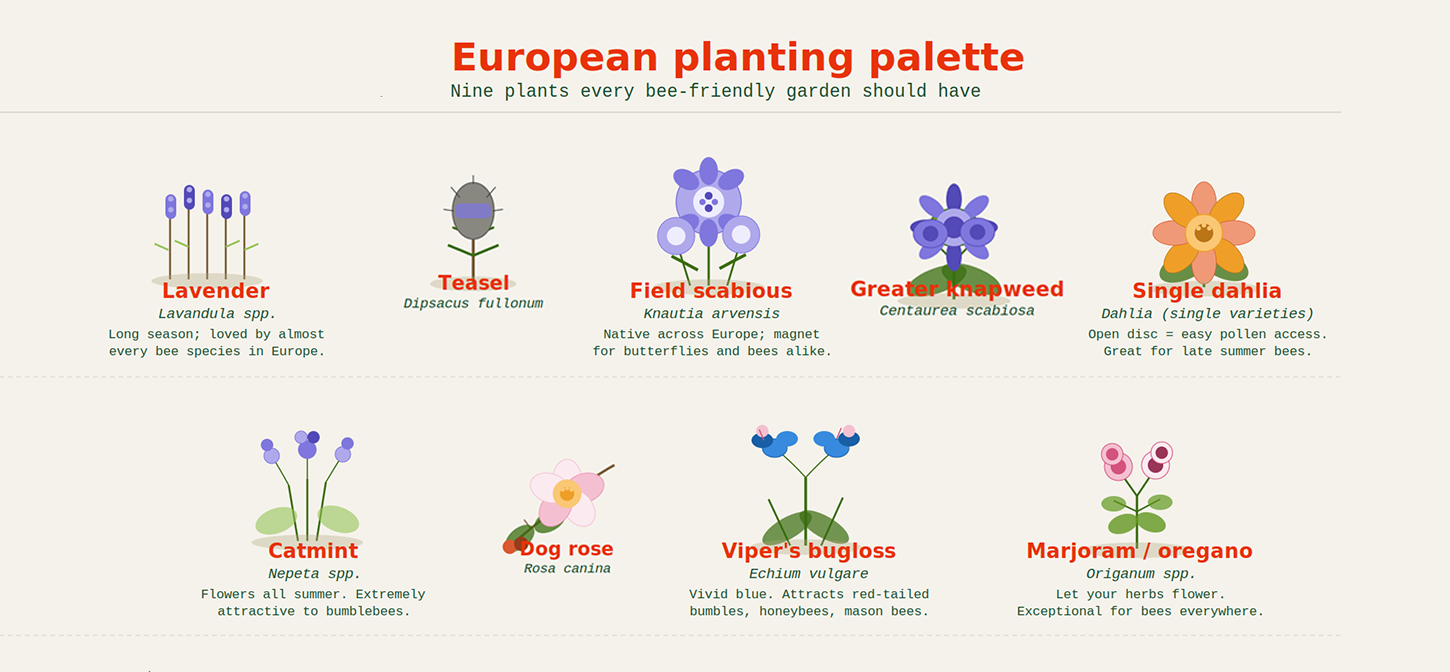
A reliable European planting palette:
- Lavender — long season, loved by almost every bee species; thrives across Mediterranean and temperate Europe
- Catmint (Nepeta) — easy to grow, flowers all summer, extremely attractive to bumblebees
- Field scabious (Knautia arvensis) — native across much of Europe, mauve, and a magnet for butterflies and bees
- Viper’s bugloss (Echium vulgare) — found wild from the Atlantic coast to central Europe; attracts red-tailed bumblebees, honeybees, and mason bees
- Single-flowered dahlias — often overlooked, but single varieties have a long season and are excellent for late summer pollinators
- Marjoram/oregano — let your herbs flower; they are exceptional for bees across the whole continent
- Teasel (Dipsacus fullonum) — architectural, loved by insects in late summer, seeds for goldfinches in winter
- Dog rose (Rosa canina) — scrambling native shrub, flowers in June, hips through autumn; supports moths, beetles, bees, and birds across Europe
- Greater knapweed (Centaurea scabiosa) — a common meadow wildflower of central and western Europe, one of the very best plants for a wide range of bees.
4. Build a bee hotel (but build it right)
Bee hotels have become something of a garden accessory cliché, and many of the ones sold in shops are, frankly, useless. Tubes too wide, too shallow, wrong materials, placed in the shade. Here’s how to do it properly:
Solitary bees that use bee hotels (primarily red mason bees (Osmia bicornis) and leafcutter bees (Megachile spp.) both widespread across Europe) are looking for dry, sheltered, south-facing cavities. The Natural History Museum of London, which has done extensive research on this, recommends:
- Tube diameter: 6–10mm. Many shop-bought hotels have holes over 10mm which is too large for most European solitary bees.
- Tube depth: at least 100mm. Shallow tubes don’t provide enough room for larvae or winter protection.
- Materials: Hollow bamboo canes, dried hollow stems from fennel, teasel, sunflowers, or elder, and drilled wooden blocks all work well. Avoid plastic tubes, they trap moisture and cause fungal problems.
- Placement: South or south-east facing, sheltered from driving rain, 1–1.5 metres off the ground.
- Location matters: Solitary bees only forage within a few hundred metres of their nest. If there aren’t flowering plants nearby, the hotel won’t be used.
Don’t worry if nothing moves in the first year, be patient, and ensure there’s a good mix of flowering plants within range. You’ll know the hotel is working when you see entrance holes sealed with mud (mason bees) or sections of leaf (leafcutter bees) by late July.
5. Leave some ground bare
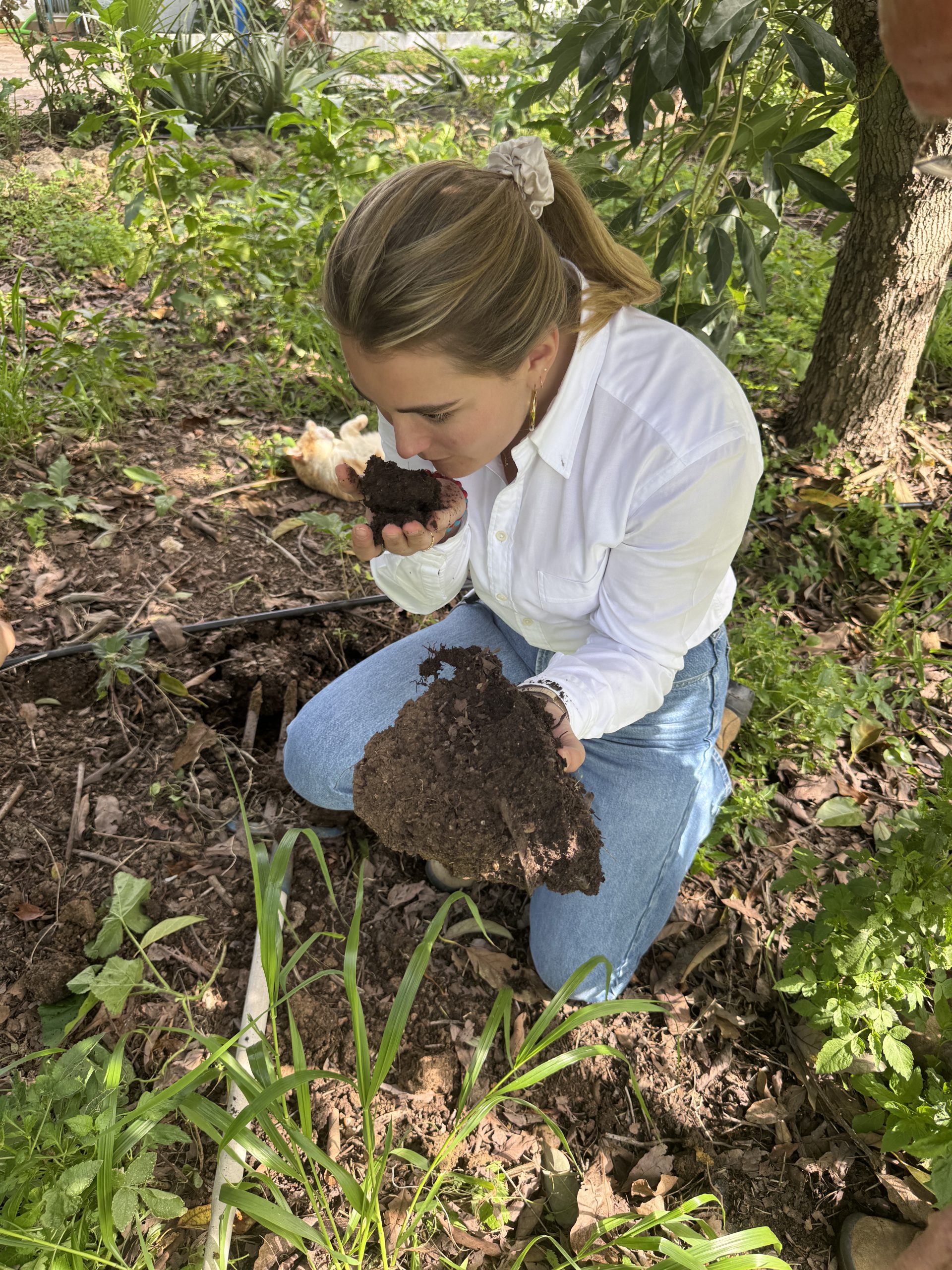
This is the least glamorous tip, but one of the most important. Around 70% of Europe’s wild bee species are ground-nesters, according to the European Environment Agency. Mining bees burrow into soil or sandy banks to build their nests, and they need bare, undisturbed, south-facing patches of earth.
In practice:
- Don’t mulch everything. Heavy mulch covering all your soil excludes ground-nesters. Leave some areas open.
- Tolerate the mounds. If you see small, neat piles of excavated soil appearing on a sunny patch of lawn or path edge, leave them, that’s a mining bee at work.
- A sunny bank or patch of sandy soil is among the most valuable habitat you can create for the widest range of wild bee species.
Tallinn, Estonia, offers an instructive example at city scale: its “pollinator highway”, a 13.5km corridor of pollinator-friendly green space through the city, was started in 2018, won an EU Green Capital award, and has since become a model being replicated in cities across Europe. The principle scales down perfectly: connect your bee-friendly garden to your neighbours’, and the impact multiplies.
6. Give them water
Bees need to drink, especially in hot weather, increasingly an issue across southern and central Europe. A standard birdbath can be a drowning hazard for small insects.
Instead:
- A shallow dish or plant saucer filled with pebbles or marbles, topped up with water
- A shallow tray of wet sand or mud (bumblebees in particular are drawn to this for minerals)
- If you have space, a wildlife pond with a gently sloping edge is the gold standard, it supports not just bees but hoverflies, beetles, amphibians, dragonflies, and birds.
7. Stop tidying up in autumn
The urge to “tidy the garden” in autumn is strongest precisely when you can do the most damage to overwintering insects. Leave it alone.
Dead stems, hollow plant stalks, piles of leaves, and patches of bare soil beneath hedges are winter homes for solitary bees, ladybirds, lacewings, and a host of other beneficial insects. Queen bumblebees hibernate in shallow scrapes in the soil, under leaf litter, in log piles. Cut everything back in October and you’re eliminating them before spring begins.
Practical winter rules:
- Don’t cut back hollow-stemmed perennials until March
- Leave a log pile or pile of dead wood in a shaded corner
- Keep a patch of long grass through winter
- Compost leaves rather than burning them
8. Think beyond your garden
Individual gardens matter, but they matter more when they’re connected. Pollinators need corridors, linked patches of habitat they can move between. A single bee-friendly balcony surrounded by concrete does less than a street where three or four households have let things go a little wild together.
Talk to your neighbours. Share seeds. If your street has grass verges, contact your local council about managing them for wildflowers, (or go for a guerilla gardening approach) reduced-mowing policies for roadside verges are spreading across France, Belgium, Germany, and the Netherlands, and citizen pressure is what drives those changes. Churchyards, allotments, school grounds, and office car parks are all underused spaces that can be transformed with relatively little effort.
Citizen science also helps: pollinator monitoring schemes across Europe, including the EU’s own EUPOMS framework, launched in 2024, welcome volunteer recorders. Even an hour a month spent counting bees in your garden contributes to the national data that drives conservation policy.
The mindset shift
There’s a cultural script that says a good garden is a tidy one. Bare soil is “messy.” Long grass is “neglected.” It’s a script written before we understood what we were losing.
Europe is, by most measures, one of the most nature-depleted regions of the world. The IUCN’s 2025 assessment described the situation for wild pollinators plainly: habitat loss is now affecting more species than at any previous point on record, and agricultural intensification combined with land abandonment in less productive zones is fragmenting what little remains. You don’t need to rewild a field. A 4m² wildflower patch, a south-facing bee hotel, a dish of pebbles with water, and the willingness to skip the autumn tidy-up will do more than most people realise.
The bees will find you.


Sources: INRAE / ITSAP — Les abeilles au cœur des transitions; Plateforme ESA — Enquête Nationale de Mortalité Hivernale des Colonies d’Abeilles (ENMHA); IUCN Red List — Mounting Risks Threaten Survival of Wild European Pollinators (October 2025); European Parliament — What’s Behind the Decline in Bees and Other Pollinators?; European Environment Agency — Protecting and Restoring Europe’s Wild Pollinators and Their Habitats; University of Oxford / University of Exeter — The Hungry Gap Study (2024); Natural History Museum London — How to Make a Bee Hotel; UK National Bee Unit — Wild Bees Fact Sheet; Plantlife — No Mow May; Woodland Trust — Wildflowers for Bees.
Written by Emilia Aguirre
Emilia Aguirre is our Awareness & Advocacy specialist — which means she spends her days asking the uncomfortable questions about how our food is grown, priced, labeled, and sold. She hosts What The Field?!, a podcast packed with stories from the ground, hard-hitting research, and conversations with the people shaping the future of food (whether they like it or not).
Comments
Keep digging ...

by Senna on July 2026
Thanks, this is full of no-nonsense tips I will keep in mind, especially the one about ivy (growing abundantly in our garden)