




Published August 2026
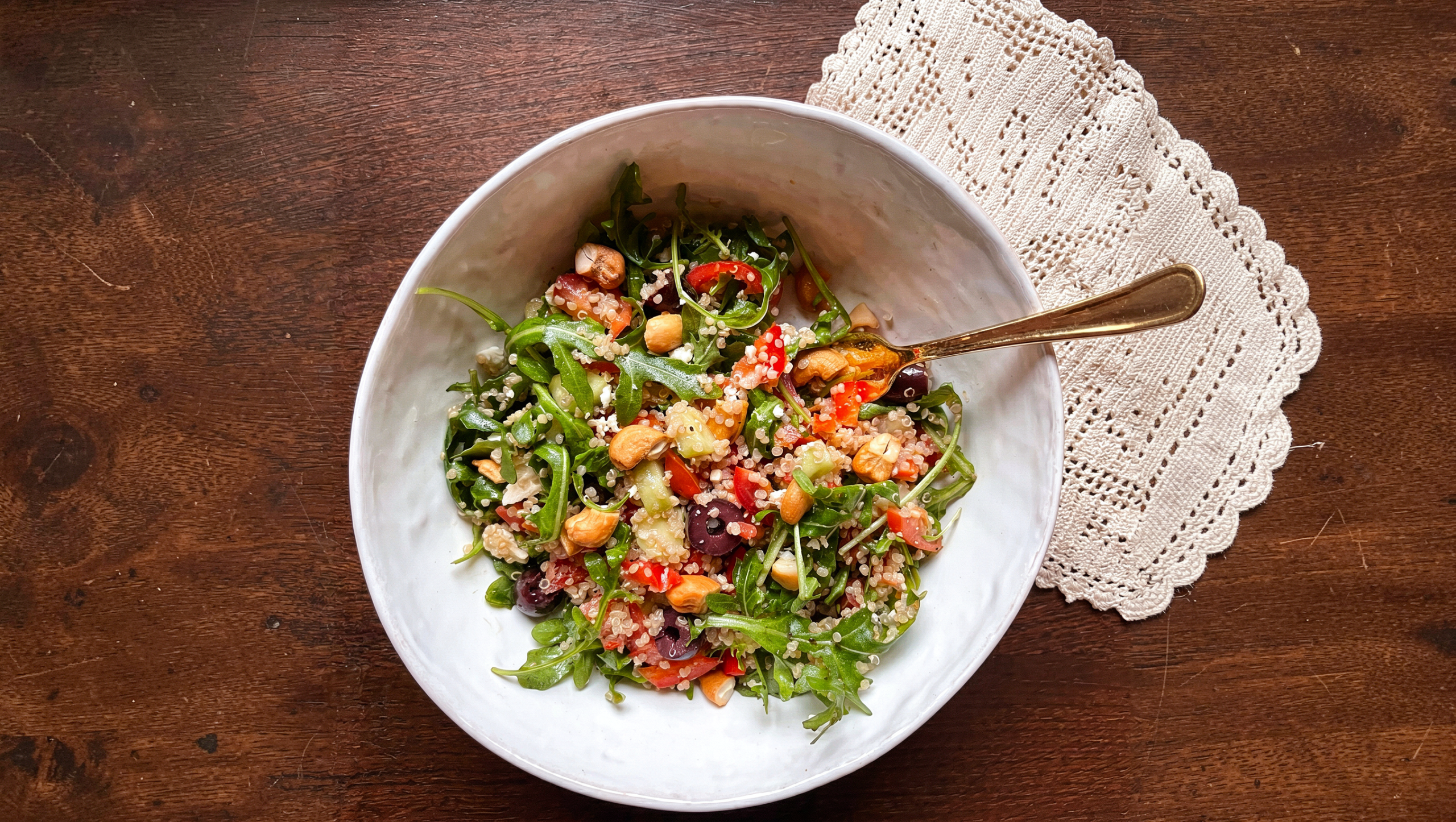
Lemony Quinoa and Rocket Salad
In May, fast-growing leafy greens like rocket are at their peak in European fields. Building meals around them is one of the simplest ways to eat with the season.
The beauty of a salad like this is that it’s not rigid; you can swap in whatever crisp greens you have on hand, like spinach or watercress. It is a straightforward, seasonal dish designed to make the most of what is actually growing right now. But there’s more to this story than just a seasonal recipe.
We’re used to quinoa travelling across an ocean to get to us, but farmers in parts of Europe are now growing it locally, bringing this staple much closer to home.
Quinoa makes its way to Europe
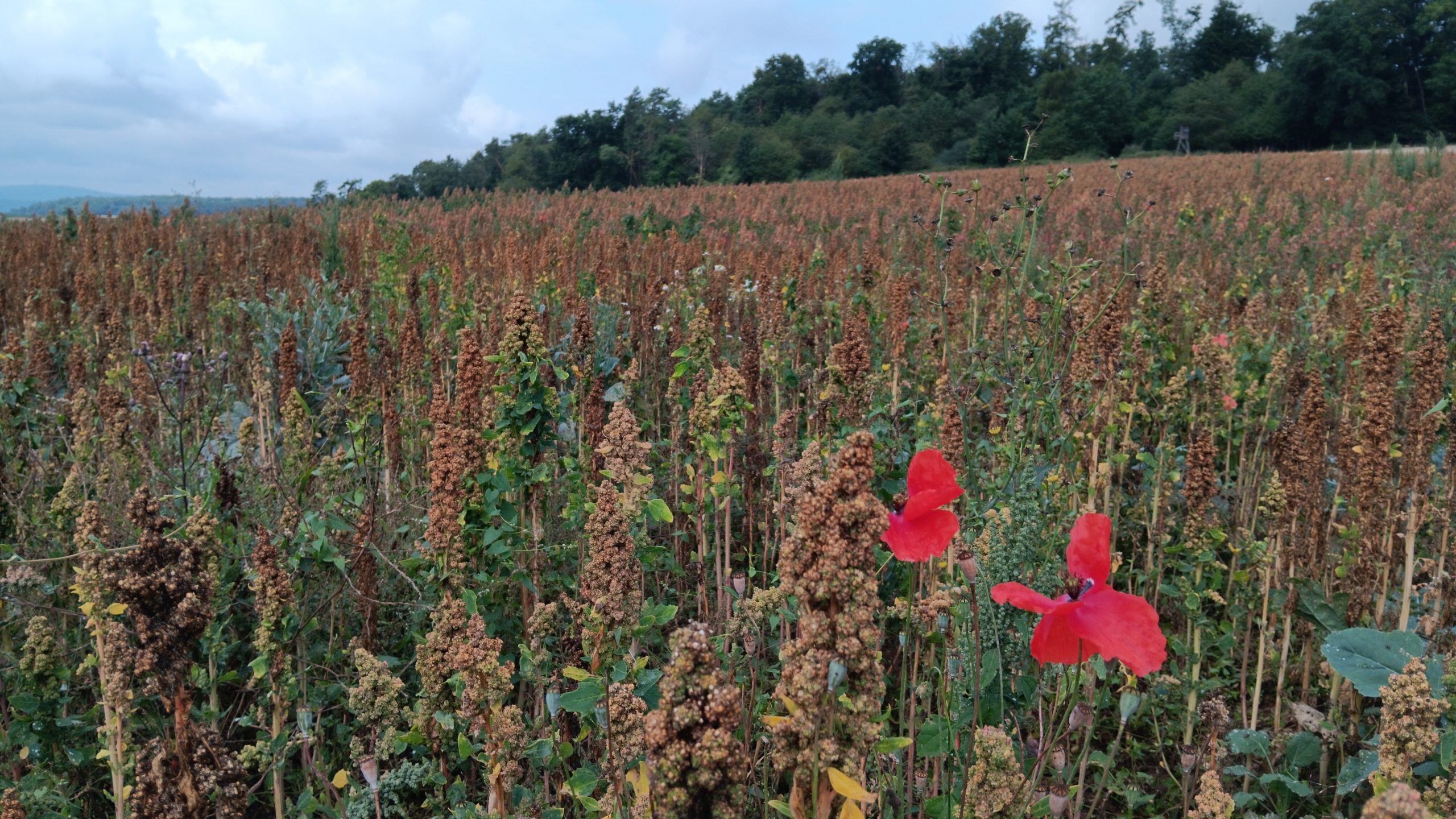
Quinoa is an ancient grain that has been cultivated in the Andean region of South America for over 7,000 years. Today, Europe has become the world’s largest importer of quinoa, but meeting this growing demand doesn’t have to mean stretching our food supply chain across oceans. In recent years, European farmers have started experimenting with quinoa cultivation closer to home.
In the Wetterau region of northern Germany, the farmers at Mudda Natur are proving that this resilient crop can thrive in European fields. And they are doing it without a single drop of artificial irrigation.
Planted in fertile soil enriched by ancient volcanic minerals found in the region, their quinoa relies entirely on rainwater. As the crop ripens during the hot days of May, it doesn’t require synthetic pesticides. Instead, when the quinoa is in full bloom, it naturally attracts predators like ladybugs, which feed on aphids and keep the ecosystem in balance. Once harvested, leftover stems, seeds, and leaves are sent to local biogas plants for energy production, ensuring nothing goes to waste.
Until recently Quinoa had to travel thousands of kilometres to reach European kitchens. Now, farmers in places like northern Germany are testing whether part of that demand can be grown much closer to home. Relying on local, regenerative farmers to supply these staples helps lower our carbon footprint, keep our soils alive, and support our European farmers.
Here is a simple way to pair this locally grown grain with the best of this season’s harvest.
Ingredients (3 servings)
Salad
- 170 g uncooked white whole grain quinoa (makes about 500–550 g cooked quinoa)
- 60 g rocket
- 75 g cherry tomatoes, halved
- 75 g red onion, finely diced
- 75 g red pepper, diced
- 40 g cucumber, diced
- 40 g Kalamata olive, halved (*can be swapped for other olive varieties)
*note that in the photo we used cashews instead of almonds, but any crunchy nut will work here!
Citrus Vinaigrette
- 45 ml extra virgin olive oil
- 7 ml balsamic vinegar
- 5 ml freshly squeezed lemon juice
- 1 garlic clove, minced
- Salt and black pepper, to taste
To Serve
- 50–70 g crumbled Feta
- Small handful fresh Basil, finely chopped
- 30 g chopped almonds
Preparation:
- Rinse the quinoa well under cold water.
- Add the quinoa and 475 ml water to a saucepan and bring to the boil.
- Reduce to a gentle simmer, cover, and cook for about 15 minutes, or until the water is absorbed.
- Transfer the cooked quinoa to a bowl and chill in the fridge until cooled.
- In a large mixing bowl, combine the rocket, cherry tomatoes, red onion, red pepper, cucumber, and olives.
- In a small bowl or jar, whisk together the olive oil, balsamic vinegar, lemon juice, garlic, salt, and pepper.
- Once the quinoa has cooled, add it to the vegetables and pour over the vinaigrette. Toss well to combine.
- Finish with crumbled feta, chopped basil, and chopped nuts before serving.
Written by Sofia Cadahia

Sofia is What The Field!?’s Nutrition & Food Science Editor, working at the intersection of nutrition, sustainability, and environmental justice. As a Registered Dietitian Nutritionist with a background in Digital Marketing, she uses storytelling to explore how food systems shape health, equity, and environmental outcomes, as well as the often unseen forces that determine what ends up on our plates.
Comments
Keep digging ...


by annie on May 2026
Fantastic recipe except for the feta! Keep kindness compassion and respect in every choice you make. Once you have visited slaughterhouses, gas chambers and many livestock farms you would never ever cause such suffering and cruelty to animals ! I was so ill as a child due to animal products thats what sent me on my journey to educate myself in Nutrition. Humans are frugivores we become naturally lactose intolerant by age 2 . It was life changing for me personally and I have never looked back I have helped people to do the same and I speak up for the voiceless animals 24 hrs a day. Thank you for the most amazing fruit I am going to expand my order I am heading for 70 and honestly people cannot believe it both the what they see and my energy I am like a 5 year old LOL ! x x x x x
by Emilia Aguirre on May 2026
Thank you so much for this lovely message, and congratulations on your health and energy, that is truly wonderful to hear! We’re so glad the fruit has been part of your journey.
We completely respect your choices and the compassion that drives them. The feta in this recipe is optional of course, and the salad works beautifully without it. We appreciate you sharing your perspective, and we’re delighted to have you as part of the community.