Published January 2026
From the barn to the treasure chamber
I’m visiting Linda Becker from Farmer Freigeist in the Altmark region, a small town called Wiepke.
A few months ago, I invited Linda to an online meeting where she told her story to the 1% for the Soil community directly from the barn. Perhaps it’s because I’m from Thuringia myself that stories from the GDR era always resonate with me. Linda’s family was expropriated in the GDR, which meant the farm became state property. After the fall of the Berlin Wall, the family was able to buy back the farm and acquired some parts of the former LPG (Licensed Farming Company).
There’s also a production cooperative in my area, which is why the rather “plain” barns don’t put me off. I admire Linda and her family because, while young people are migrating, and organic farming, in particular, isn’t everywhere in East Germany, her family has decided to rebuild the farm and create jobs. So, it’s no longer just about agriculture, but about the future of a region. While it might sound pathetic, it isn’t. How often in my years in customer service have I talked to customers about how it would be better to “buy from the farmer around the corner.” But in my region, there are no farm shops at all, let alone organic farm shops. Opening a self-service store with organic products in a small town like Wiepke is a logical decision and, according to Linda and Tillmann, has been well received.
There’s always a need for someone to take the initiative. And Linda and Tillmann are definitely two people who are actively working on sustainability—not just in the fields.
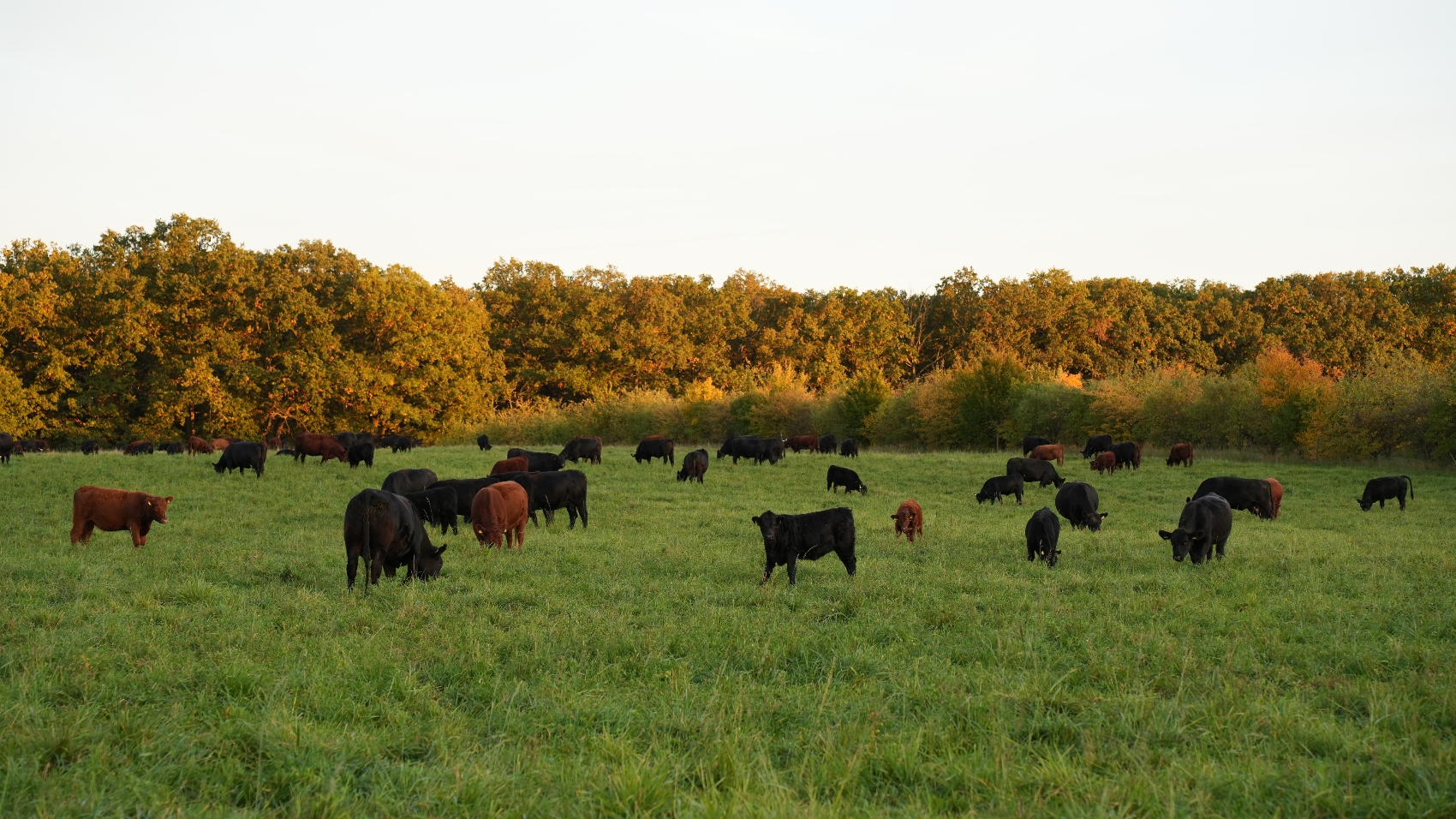
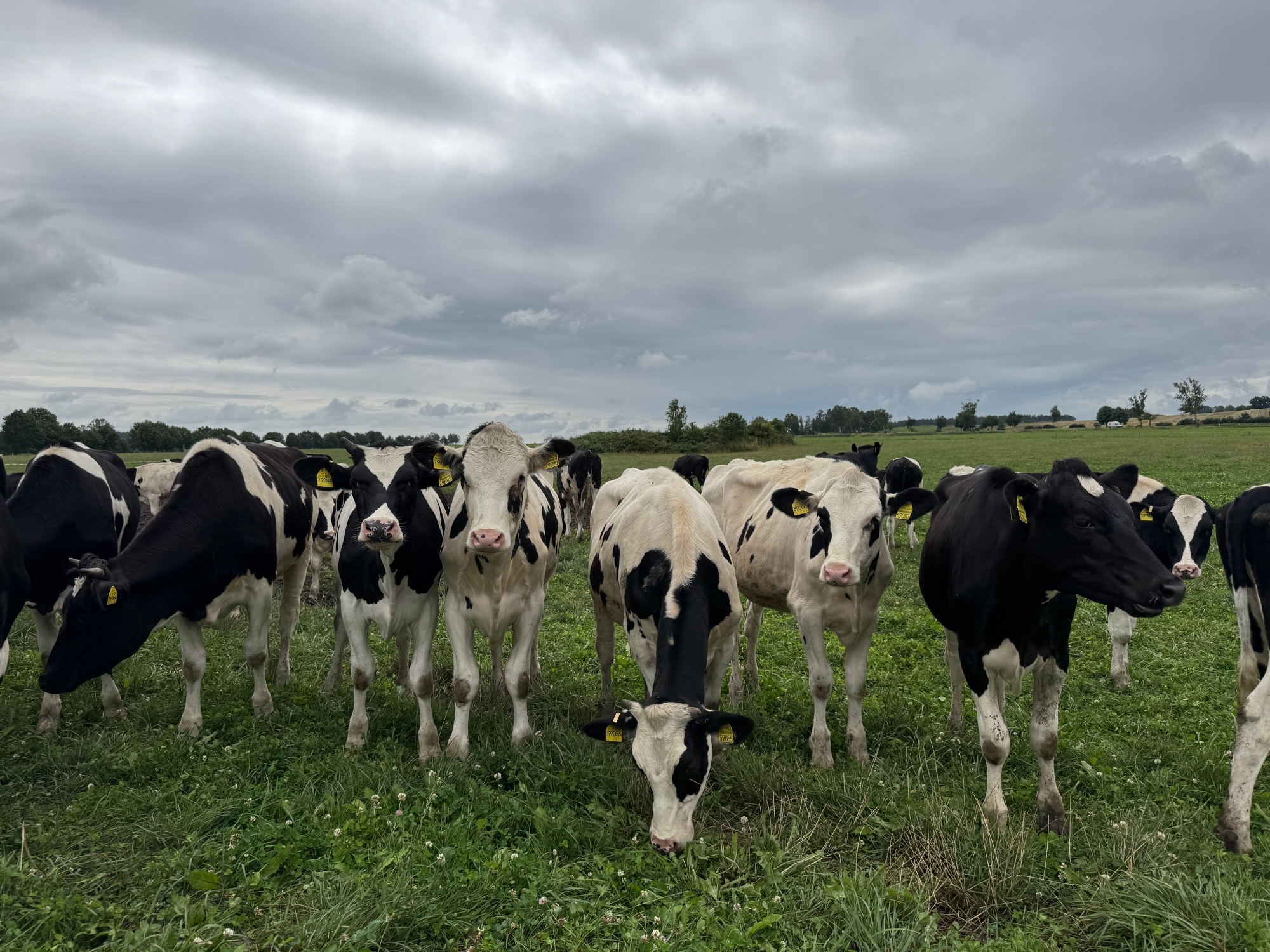
Linda’s herd consists of around 300 animals, and since it’s been raining, most of the animals are kept in the barn. Linda explains that it has been raining so continuously over the past few weeks that the pasture needs frequent regeneration breaks, and she brings the green fodder directly to the barn. Through a so-called “green forage belt,” the cows are provided with green fodder from early spring to late autumn – in addition to pasture. Alfalfa and clover grasses not only ensure that the cows have fresh forage, but also that rainwater is stored in the soil, as the grasses can remain in the crop rotation for several years.

Linda not only participates in our regenerative agriculture program but has also been chair of the Demeter Association for several years. As part of the Demeter certification process, she decided to breed her cows to grow their horns again. For the cows, these horns help regulate body temperature and serve as a means of communication. For farmers, however, they can pose a risk, as the cows can injure each other. It now takes several generations for the horns to fully grow back.
I understand this involves a lot of reflection – what worked well, what could be improved, and how to streamline the way things are done. Linda explains that friction can always arise on her family business, and that innovations are always the subject of much debate. It took “some convincing” to get her family on board with purchasing a fully automatic milking robot. “That sounds very technical, but it’s actually much more important that we understand that this is exactly what a cow would do in nature. She would decide on her own to eat something, stand still, and then the calf would have the opportunity to collect milk,” Linda explains. The cows seem to like it – while Linda introduces us to her team and explains how “Robi” makes the work so much easier, the same cow runs through the trough three times. Why? While the cow is being milked, feed is poured into a trough. If the robot notices that the cow has already been milked and is only coming back for the feed, the lid closes. Nature and technology – it’s exciting to see how they intertwine.
Investments always have to pay off, explains Linda – but she definitely wouldn’t want to be without “Robi” anymore.

As Linda leads me through the stables and tells me about her family, I keep thinking about the enormous effort involved – a completely subjective thought, since this is all Linda’s daily work. I’ve been with CrowdFarming for eight years, come from a farm myself, and yet I’m still constantly overwhelmed by everything that goes into producing a food product and how humble we all should be sitting in front of our full plates.
So I’m all the more excited when we drive to the cheese factory in Gardelegen – a commercial kitchen that Linda rescued from being vacant.
It’s very humid and smells of warm milk, almost a bit sour. Halloumi is being made here today. Halloumi is being made here today – a grilled cheese that’s cooked in 90°C whey and then aged in brine. At lunch afterwards, we were able to witness the excellent quality for ourselves. My colleague Amanda is allowed to help with turning and coating the cheese wheels – it’s primarily fun, but also an almost meditative process that must be repeated daily.

The last stop on my visit is the “treasure chamber,” as Linda calls the ripening chamber. When I ask her what she bases her decision on when making cheese, Linda simply says, “Whatever I feel like.” Translated into CrowdFarming terms, that means six crates, each with several different varieties—there’s literally something for every taste. Linda’s creativity knows no bounds, and that’s how the idea for a smoked cheese was born. Linda and her colleague Ika are particularly proud of “Rauchi”—not only is it beautiful to look at with its rust-red skin, but it was also awarded a Culinary Star this year. This is a cheese that is smoked for three days in three smoking sessions.

My visit is coming to an end. What I take away from Linda: Agriculture is much more than just producing food. It’s about community, a regional future, and the courage to break new ground. Her work reminds me that sustainable food systems don’t spring up anywhere -they begin here, on farms like this one.
Here you can find a recording of our live stream – directly from the field and with an unexpected surprise guest.
Watch here
Written by Magdalena Werner
I'm Magdalena, a Farmer Ambassador. I've been working at CrowdFarming for eight years, and after seven years in customer service, I'm now part of the sustainability and awareness team, sharing the farmers' stories and taking you on a journey through their daily lives in the fields.
Keep digging ...