Looking for more? 

We’re just an email away.

33 min

Pesticide regulation, lobbying and the revolving door: a conversation with Pesticide Action Network

#7 | September 2026

Society

33 min

Published August 2026

Pesticide regulation, lobbying and the revolving door: a conversation with Pesticide Action Network

Ask most people to name a pesticide and, if you are lucky, you will get two answers: glyphosate, and “the ones that kill bees”. That is already progress. Twenty years ago, says Nick from the Pesticide Action Network UK (PAN UK), the public had almost no idea what pesticides were, let alone what they do to soil, water, pollinators and the people who grow our food.

PAN UK is the only British charity working on every aspect of pesticides, from international treaties down to the weedkiller sprayed in a local playground. In this episode of What The Field?! we sat down with Nick to understand a system that touches almost everything we eat and yet stays strangely invisible. The short version: regulation is slow, the lobby is fast, and the people paying the highest price are the farmers themselves.

Twenty years in, what has actually changed

Nick has spent two decades at PAN UK, and when we asked what has shifted most, he did not point to a law or a ban. He pointed to awareness.

"When I started, the public really had no idea about pesticides. Now they can sort of name two: there's glyphosate, and then there's the ones that kill bees."
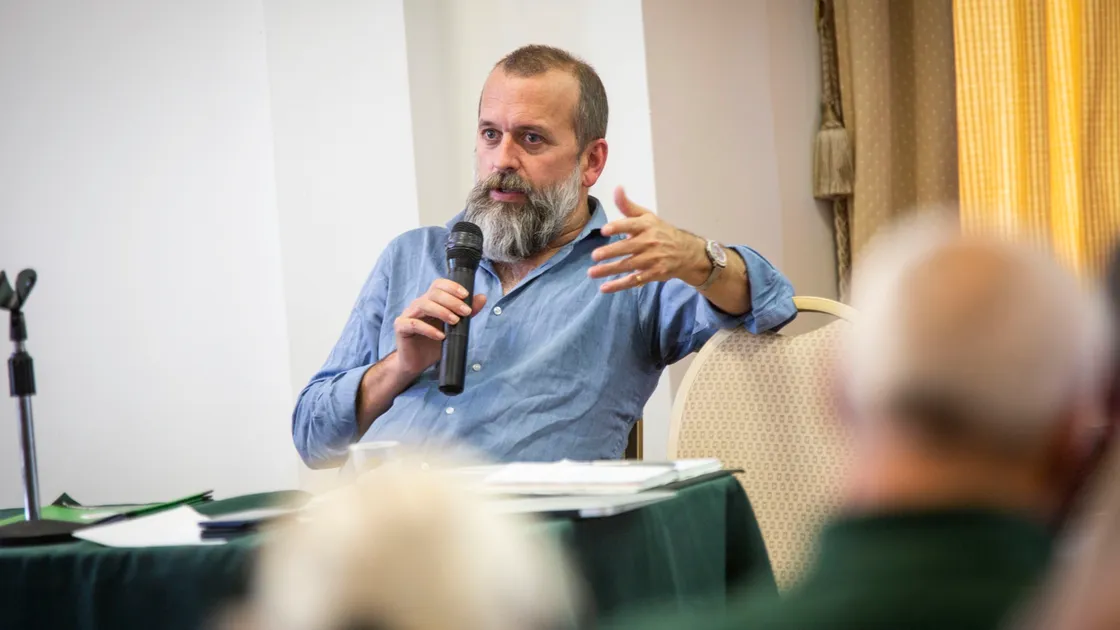
That matters more than it sounds. Regulators and politicians, he argues, are finally accepting that something has to change, not only about individual chemicals but about industrial farming and the role it plays in biodiversity loss and water pollution. Understanding has grown. The regulation, unfortunately, has not kept pace.

Why pesticide regulation is always playing catch up

The central frustration of Nick’s work is speed. Regulation, he says, is “always playing catch up with the big issues”.

The clearest example is neonicotinoids, the insecticides linked to pollinator decline. It took more than a decade to ban them across the EU, despite the evidence stacking up the whole way through. A decade is a long time in the life of a bee.

Part of the reason is that the pesticide industry is not, in Nick’s blunt framing, in the business of helping farmers. “They’re interested in making profits for their companies. That’s their role.” Any opening to protect a product, defend a margin or roll back a rule tends to get used.


The industry playbook: lies, lobbying and the revolving door

One of PAN UK’s jobs is to debunk what Nick calls “the nonsense” the industry puts out, and there is a pattern to it. He offered two examples worth remembering the next time you hear a scare story about food security.

In 2009, as the EU debated a new hazard based approval system, the UK’s National Farmers Union, which Nick describes as “basically the political wing of the pesticide industry”, warned that if the rules passed, Britain would “never grow a carrot again”. The rules passed. Carrots are now one of the few crops the UK is essentially self-sufficient in.

When restrictions on neonicotinoids were proposed, the industry forecast losses of around 39 billion pounds and 60,000 jobs. The restrictions came in. Neither number materialised.

“It’s a good sign when they put these things out,” Nick notes, “because they know they’re under pressure.”

Behind the headlines sits a quieter problem: the revolving door. Politicians and civil servants who once oversaw farming or chemical policy move into industry roles, and industry figures move into the bodies that decide which pesticides get approved. It brings relevant experience, Nick concedes, and a large helping of conflict of interest. The result is a decision making process with, in his words, “a massive lack of transparency”, from approvals all the way to the advice a farmer receives in the field.


Why supermarkets, not politicians, move first

If regulation is slow, where does change actually come from? Nick’s answer is not romantic, but it is practical: retailers.

PAN UK works with the ten largest supermarkets in the UK. Many have gone beyond the legal minimum and banned highly hazardous pesticides across their entire global supply chains, which ripples out to growers in the global south and anywhere else they import from. Since Brexit weakened the UK’s maximum residue levels, several retailers have simply kept the stricter EU limits, because it is easier to run one standard than two.

Then comes the line that says the quiet part out loud.

"A politician is more likely to listen to the CEO of Tesco than they are to listen to me. Which is sad, but true."

The lever, in other words, runs through the checkout. Retailers respond to customers, and customers who ask for fewer residues and more organic produce push supermarkets to change their supply chains. It is a slower kind of power, but one that can route around a stuck regulatory process.


The yield myth

Few ideas are as sticky, or as useful to the pesticide industry, as the belief that we must keep pushing yields ever higher to feed the world. Nick calls it “a complete and utter fabrication”.

It was once true. At the end of the Second World War, Britain genuinely needed to grow more food. But the argument stuck long after the context changed, partly because it is very hard for a politician to stand up and say we do not, in fact, need more food. Much of the land in question grows feed for animals, biofuels or monocrops like sugar beet, not food for people.

The better measure of a good farmer, Nick argues, is not yield but income, and you can raise income by cutting inputs rather than chasing tonnes. He points to the Nature Friendly Farming Network, whose members are not organic but are reducing pesticides and fertilisers while improving their margins. One of the few upsides of Brexit, he adds, is the replacement for the old subsidy model: farmers are now paid public money for public goods such as clean water, healthy soil and biodiversity, including a payment for stopping insecticide use. It has proved popular.


What organic really means, and what it doesn’t

Is organic farming pesticide free? Not quite, and Nick is refreshingly honest about it. Organic growers can still use a limited toolkit, but the difference in scale is enormous: fewer than 20 active substances are approved for organic use, against 400 to 500 for conventional agriculture. And there is no prophylactic spraying. A farmer reaches for one of those substances only after other methods have failed and a real financial loss is at stake.

Not all of them are harmless. Copper, in particular, is problematic, and a few others carry risks. But the quantities are so small that, in terms of harm to human health or the environment, Nick puts organic and conventional “magnitudes of difference” apart.

There is a cocktail effect worth understanding here too. We do not ingest pesticides one at a time; we take in a mix of residues across a lifetime, and how those combine is still poorly understood. Switching to organic measurably lowers your dietary exposure. CrowdFarming’s own team looked into this and found that people moving to an organic diet can see a sharp drop in pesticide residues in their bodies within about 24 hours.

But Nick is wary of making organic all about personal health. That framing, he thinks, has actually held the movement back.

"To my mind, the point of organic is working with nature, improving biodiversity, and farmer health, because they're not being exposed."

The Dirty Dozen, explained

PAN UK’s best known consumer tool is the Dirty Dozen, an annual list of the produce most likely to carry multiple pesticide residues, drawn from the UK government’s own testing data. It is deliberately practical. Nobody expects a family to buy everything organic, so the list helps people spend where it counts, swapping the one or two items they eat most often.

Two honest caveats from Nick. The government tests only a limited range of products, and it changes what it tests each year, so the picture is indicative rather than comprehensive. And the point is not really the specific ranking. It is the reminder, once a year, that most of our food carries residues at all, and that the public has a right to know what is on it.

"If you ask any member of the public, 'Do you want to eat pesticide residues?', their answer will be no. It's hidden away. People have a right to know."

Glyphosate, the Omnibus and the fight in Brussels

PAN UK tends not to campaign against single pesticides, because banning one usually just clears the shelf for the next. Neonicotinoids are the cautionary tale: they were banned, everyone declared the pollinators saved, and yet plenty of other bee toxic substances are still out there. The system, not the molecule, is the problem.

Glyphosate is the exception, and a deliberate one. It is so well known, thanks in large part to its links with Monsanto, that it works as a hook to explain everything wrong with the approvals process: the industry science, the corporate capture, the lobbying. More than a million people signed a European petition to ban it. “You’re not going to get that for anything else,” Nick says.

The bigger fight now is in Brussels. The EU’s Omnibus package, marketed as a “simplification” of agrochemical rules, worries him a great deal, because it risks relaxing what has been the most precautionary pesticide regime in the world. His colleagues at PAN Europe are working on it daily and have concrete actions ready. His advice to concerned citizens is specific and unglamorous: write to your national politicians and your MEPs, and check the PAN Europe website for the campaigns running ahead of the autumn parliamentary discussions.


The What The Field?! moment: the farmers we forgot

We close every episode with the question the podcast is named after. What, in all his years, has most made Nick think, what the field is going on?

His answer was not a chemical or a loophole. It was a silence.

"The most shocking thing is the complete and utter absence of any attention on farmers being poisoned by pesticides."

He points to the sheep farmers poisoned in the 1980s by organophosphate sheep dips, which were mandatory at the time so that Britain could sell sheep to France. The official advice was, in his word, appalling. Hundreds of farmers died, or lost relatives, or developed Parkinson’s and other conditions, and the bodies meant to represent them looked away. Farmers, the people most exposed to pesticides and the people who grow our food, are still the last to be protected.


One book to read next

Nick’s recommendation is a classic, and a slightly depressing one, because it holds up too well. “Go right back to Silent Spring. It says everything you need to know, and sadly we’re still facing the same arguments, in some cases the exact same pesticides.” Rachel Carson’s 1962 book arguably launched the environmental movement. More than sixty years on, Nick’s point is that it reads like it could have been written yesterday.

Written by Emilia Aguirre
Emilia Aguirre

Emilia Aguirre is our Awareness & Advocacy specialist — which means she spends her days asking the uncomfortable questions about how our food is grown, priced, labeled, and sold. She hosts What The Field?!, a podcast packed with stories from the ground, hard-hitting research, and conversations with the people shaping the future of food (whether they like it or not).

Comments

Your email address will not be published.

Share this content:

Keep digging ...

Society

44 min

A Bean Renaissance with Amelia Christie-Miller

#5 | August 2026

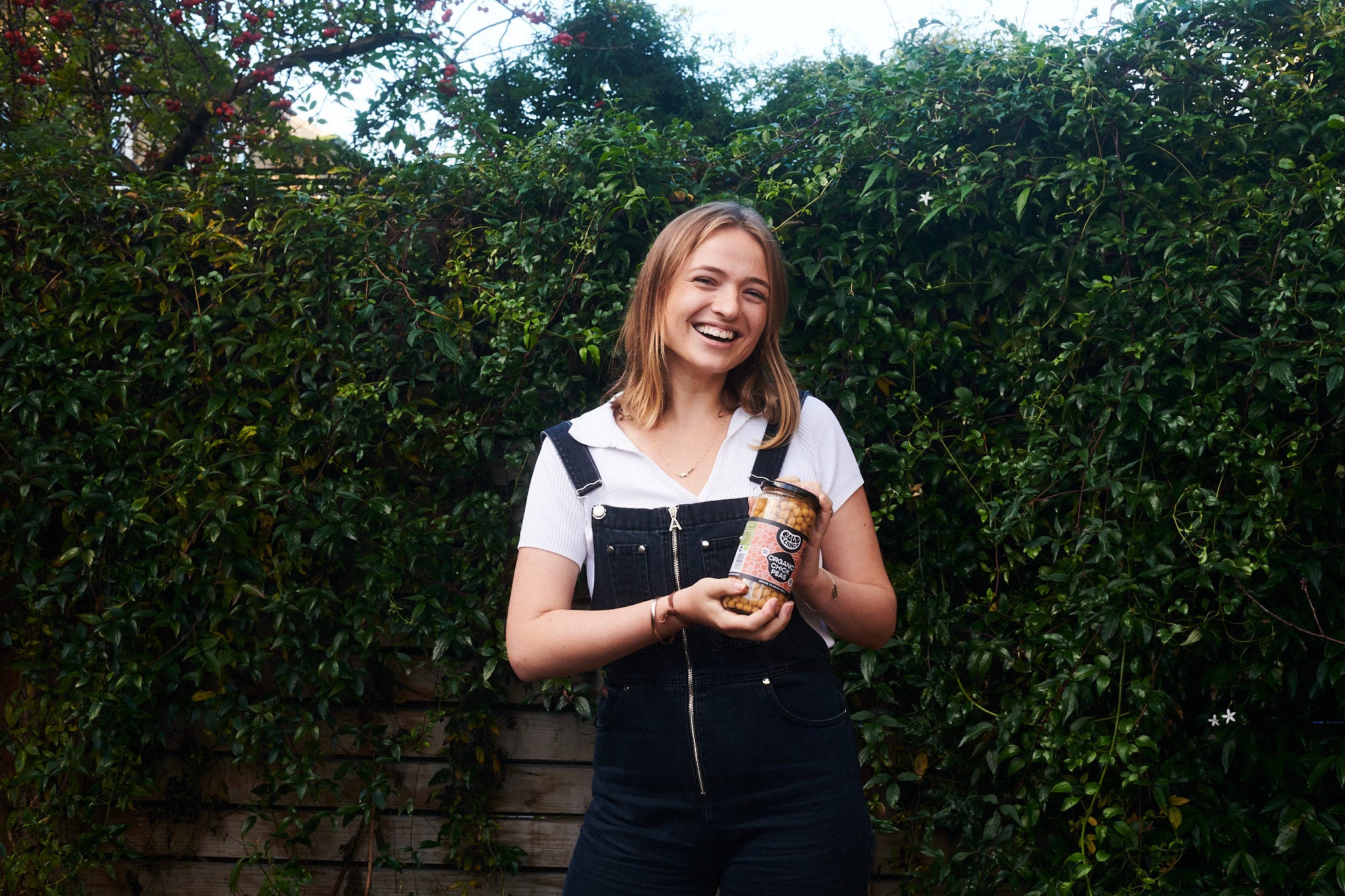
Amelia Christie-Miller didn’t set out to become Britain’s most persuasive advocate for beans. Before founding Bold Bean Co, she worked in food sustainability, connecting farmers directly with chefs on a platform not unlike CrowdFarming’s own model, only for the restaurant trade rather than the household one. It was there, watching the best chefs in London build menus around pulses rather than meat substitutes, that she became convinced beans were the answer to most of the food system’s problems. The jar of beans she tasted on a hungover morning during her Erasmus year in Madrid gave her a better story to tell than that, but it wasn’t really where it began.We sat down with Amelia to talk about why beans deserve the same reverence as coffee or wine, how she’s persuading supermarkets to give an unglamorous, declining category more shelf space, and why she will never, ever market a bean as a substitute for meat.Is it true you got into beans on a hungover morning during your Erasmus year?Has it always been beans, or did you consider other products when you were starting out?Always beans. It’s the food group. I was in the fortunate, if often depressing, position of being exposed to food system problems early on, but I’m an optimist, and the solution I kept coming back to was simple: people need to eat more beans. When I launched, people assumed I meant coffee. Beans felt dull next to the London restaurant scene I’d been working in. But two years after we launched, the UN’s Sustainable Development Goals Advocacy Hub chose beans as the campaign they believed would have the most impact across all their goals, and the Food Foundation in the UK made a similar call. The problem with beans has never been availability or affordability. It’s desire. That’s what I wanted to build in a category that’s been commodified and unloved for decades.For people who don’t know as much about beans as you do, why should we all be paying attention to them?Their role in soil health is one reason, and food security is another. If we all had to live off what our local land could produce, we couldn’t eat the way we currently do. We can’t all live on lamb and chicken. We’d need to rely on beans and pulses, and there are thousands of varieties, including ones that grow in deserts, which matters a great deal in a warming climate. Then there’s health. Fibre feeds the gut microbiome, which we now know is deeply connected to mental health, immunity and longevity. Beans are associated with the world’s Blue Zones, the places where people live the longest and the healthiest, and a common thread running through all of them is beans at the centre of the diet. I had gestational diabetes during my pregnancy, and beans were genuinely useful there too, because they release energy slowly rather than causing glucose spikes, which affects mood as much as it does fat storage. This isn’t a fad. It’s the oldest food group we’ve eaten for thousands of years. It only became associated with poverty once industrialisation gave us easier access to meat. If someone set out in a lab to design the answer to most of our food system’s problems, they’d end up with beans. We already have the solution. We just need people to want it.Tell us about the farmers you work with. What makes their beans different?It depends on the bean. Our butter bean comes from a specific region in Poland, and it’s a different genetic variety to the conventional butter bean most people know, closer to a scarlet runner bean, harvested differently. It’s the same food group, but varieties can taste as different as one apple does from another. The Carlin pea is a different case entirely. We work with a farmer called James on the Norfolk-Suffolk border, alongside Hodmedods, who support British growers transitioning to regenerative practices and bean crops. Nobody in Britain really knows what a Carlin pea is, so there we’re not chasing the most popular bean, we’re trying to raise the profile of one nobody has heard of. We got a whole chapter on them into our last cookbook and onto Prue Leith’s television show. Sometimes the difference isn’t that an entire harvest is superior. It’s about which grade of that harvest we choose. The lower grades often go to canneries and sit in warehouses for years. We take the highest grade based on texture and cook.Were these farmers already growing beans like the Carlin pea, or did you have to convince them to take a chance on a crop without existing demand?There’s already a huge appetite among farmers to grow something like the Carlin pea. I have farmers messaging me constantly offering to grow for us. The gap isn’t willingness, it’s that we haven’t created the demand yet, and that’s the work I’m doing. Our butter beans present a different challenge, because for our farmers they’re a cover crop, planted to benefit the soil rather than to sell. Getting them to keep scaling that as we grow means shifting their mindset from “this is good for my soil” to “this crop is worth something,” because we’re willing to pay well for the best of it.Are the farmers you work with already focused on organic or regenerative practices, or does that vary?It varies enormously, and it’s closely tied to origin and culture. A lot of farmers are farming to survive, not to change the world, and persuading them to care about soil health when they have other priorities is a work in progress. I’d like to say every farmer we work with prioritises this, but it isn’t true yet. Our job is to make growing beans commercially interesting, because we know that by default it’s good for the soil. Why would a farmer pay to certify a cover crop as organic when they might need to reach for a pesticide if a particular risk comes along? Our ambition is much bigger than serving one type of consumer. We’re trying to grow demand for beans generally, and organic growth follows from that. I believe money is what creates change. I can be as passionate as I like, but farmers need to make a living. Almost all the beans sold in major UK supermarkets are varieties that don’t grow well here, or exist only as a single, expensive trial field. There’s a cultural shift needed to get people excited about the varieties that do grow well in our soil, and growing the popularity of beans generally is what makes space for that.How have you convinced supermarkets to give a commodity category more shelf space?We’re incremental to the category. Stores that don’t stock Bold Bean Co see beans decline year on year. Because beans have been a commodity for so long, they’re accessible, and cheap tinned beans aren’t our competitor, because we want people eating more beans full stop. What we’re doing is closer to what Fever-Tree did for gin and tonic: creating a premium product that turns drinking into an experience, which then lifts the whole category. For every four pounds we make for a supermarket, one pound comes from someone who wasn’t previously shopping the bean aisle at all. If a supermarket lists us, we make them money, because the people already buying tins will buy more too, just for a different occasion. What supermarkets need to do now is give bean brands the same kind of impulse-buy space they give Cadbury’s Fingers, rather than relying on people who were already heading to that aisle. When we were placed in the meat aisle for a period, forty per cent of the people who bought us there had never bought our beans before.Do you lean on the “meat alternative” message to reach that new audience?Never. People don’t like being told what to eat, and framing beans as a substitute creates compromise rather than desire. I don’t want someone choosing a chickpea tikka masala over a chicken one because they feel they should. I want them looking at a pecorino and sweetcorn risotto and simply wanting that, without thinking about what they’re not having instead. That’s how we change behaviour: by giving people something they want, not something they’re settling for.Do you see yourselves ever moving beyond beans in jars?The rule I’ve set for myself is that the bean has to be the hero. Hummus is a good example of what I mean. People love it, and most don’t really register that it’s beans. I don’t think we have a job to do there. A bean patty could work if it were something in its own right, but not if it exists purely to replace a burger someone actually wanted. We want to create things that are unapologetically bean-centred, not a way of making people feel better about a decision they’re only half-committing to.Your product sits at a premium price point. Does that create friction with customers?It does, and I won’t pretend otherwise. I wish we could charge less, but the moment we do, we start creating a commodity product. Price comes down, the quality of the bean we can afford comes down with it, and the transformative first-taste experience disappears. Our goal is for someone who thinks they dislike chickpeas to try ours and change their mind, and that experience depends on not compromising. There are plenty of cheap beans out there already. We’re offering something different, and a different job to be done.How do you reach beyond the food-loving, Ottolenghi-cookbook audience who already gets it?We’re currently serving a fairly specific, food-literate, middle-class customer. But I believe food culture moves outward from people with credibility in food. Avocado toast appeared on a menu in an Australian brunch spot decades before it became a mainstream, multi-format industry. We’re serving that core audience first because I believe that if we keep doing a good job, we’ll progressively become more mainstream. That’s my honest theory of how you shift consumer behaviour on something like this.Do you ever lean into how broken the food system is, and how that explains the price of good food?I don’t, deliberately. I feel that way myself, and my team is motivated by it, but I don’t think it’s our job as a brand to make people feel dismayed. I want the message to stay singular: these are the best beans, and they’ll change your mind about beans. Not “these are the best beans, and here’s why the food system is broken and that’s why they cost more.” I don’t think that gets the best out of people. I’m trying to win people over to loving beans, and I don’t think guilt is the right lever for that.If you had to convert one committed bean-hater, what’s the first thing you’d have them try?Ideally, straight from the jar, so they can tell me honestly what they think. But realistically, I’d start with a dish that includes meat if they’re not vegetarian. One of the best recipes in our first cookbook, contributed by a guest chef, is a sausage and butter bean stew: fried sausages with creamy butter beans, mustard, Parmesan, lemon and crunchy breadcrumbs. It’s hearty enough that people forget they’re eating beans at all, and by the time they realise, they’ve already fallen for them.Is there a myth about beans you’d like to put to rest for good?That they’re dusty and tasteless. That perception is everything we need to change. I always compare it to coffee thirty years ago, when people assumed it was all the same. Now everyone understands there’s terroir, process, and real variation, in the same way there is with wine. Beans deserve the same reassessment.What’s been your biggest “what the field” moment on this journey?Before starting Bold Bean, I was deep in food system problems, and that was bleak in its own way. What genuinely gets me now, working in retail and commercial food, is how much control big food companies have over what we see on shelves simply because of what they’ve paid for that space. Supermarkets want to stock us, but they’ve already committed shelf space elsewhere. Governments need to step in, because supermarket executives aren’t going to sacrifice short-term sales of something like Chocolate Fingers for the long-term upside of nudging people toward healthier, more sustainable diets, even though that’s exactly what a brand like ours can offer. The system is built for big, ultra-processed businesses to win, and a brand celebrating genuinely good ingredients has to fight for space it should, given what’s actually at stake, be handed freely.Any recommendations for our listeners, a recipe or otherwise?Head to the Bold Bean Co website. Over 300,000 people visit each month for the recipes alone, and you don’t need our beans to cook any of them. Try the butter bean puttanesca, and if you’re not ready to go fully vegetarian, add some fish. My own go-to is what I call miso beans: cook down miso, butter and whatever onion is lying around, add a jar of white beans, then top with whatever’s in the fridge, usually a fried egg in chilli oil, some kimchi or pickled cucumber, and a bit of green veg. It’s comfort food with enough going on to never feel repetitive.

Listen

Society

48 min

Getting Healthy in Toxic Times with Dr. Jenny Goodman

#3 | June 2026

Dr. Jenny Goodman trained as a conventional medical doctor before spending decades building a practice in ecological medicine, a field that takes nutrition, environmental toxins, and root causes seriously in a way that mainstream medicine, she argues, simply does not. She is the author of Staying Alive in Toxic Times and Getting Healthy in Toxic Times. We spoke with her about pesticides, the gut microbiome, why governments won’t protect us, and what we can actually do about it.You trained as a conventional doctor, went through all of that, and then walked away from it. What happened?It was much sooner than most people expect. Probably within the first year or two of medical school, I knew something was wrong. I couldn’t put my finger on it, but the moment of real disillusionment came at the start of the third year, when we were finally meant to meet patients and learn the arts of healing. I thought: now I’ll understand what all that anatomy, physiology, and biochemistry was for.Instead, the word “healing” was taboo on the wards. The word “cure” was taboo. What they talked about was managing symptoms — suppressing them with drugs, then adding more drugs to manage the side effects. Nobody went home well. Nobody went home healthy. The World Health Organization defines health as a state of complete mental, physical, and spiritual wellbeing. It’s not just that they never achieved that — they weren’t even aiming for it, and they would have been embarrassed if you mentioned it.There was also no attempt to look at root causes. I would ask: why has this 40-year-old man had a heart attack? Why has this woman of 45 got liver cancer? And not only did they not have answers — the question itself was taboo.Did you find anything within conventional medicine that worked for you?Emergency medicine. I liked it because I didn’t disagree with what was happening. Conventional medicine is brilliant at emergencies — you break a bone, you have a heart attack, in that moment, that’s what you need. I felt I was doing the right thing. But I didn’t want to do it forever.What eventually changed everything was discovering the British Society for Ecological Medicine in the late nineties, about 17 years after I’d qualified. These were doctors doing the kind of medicine I had imagined I was going to learn as a 19-year-old. They were getting to root causes, making people better, and not making them worse.So what actually is ecological medicine?It has two halves. The first is nutrition — identifying what good substances are missing from our bodies, understanding why they’re missing, and putting them back. The second is environmental medicine — identifying which industrial toxins have entered our bodies and teaching people how to avoid them going forward. And those two halves are deeply connected, because a lot of why we’re nutritionally depleted comes back to farming.The reason it’s called “ecological” is twofold. First, we see the whole body as one joined-up ecosystem. In conventional medicine, if you go to your GP and say you have joint pain, a rash, and trouble breathing, they’ll send you to three separate specialists who have no way of connecting with each other. The body is a whole. We look at what is causing inflammation to manifest across all those different systems.But it’s also ecological in a broader sense: the human body is not just an ecosystem, it is part of the ecosystem of planet Earth. This isn’t vague, new-age language. It’s basic biology, physics, and chemistry. Whatever we put into the air, we inhale. Whatever we put into the water, we drink. Whatever we put into the soil is taken up by the plants, ends up on the plate, and gets into our bodies — including our gut microbiome. There is no separation. We cannot poison the planet without poisoning ourselves.You’ve said that farmers hold the keys to public health solutions. Why?Because the connection is direct. If farmers are growing food in nutrient-depleted soil using synthetic fertilizers that don’t contain the minerals we need — no magnesium, no iodine, no chromium, no zinc, none of the things I find people desperately deficient in after 26 years of practice — then the food on the plate is nutritionally depleted too. And if they’re using pesticides, those pesticides kill the good bacteria in the soil, which are responsible for getting nitrogen and minerals into plant roots. You don’t just get poisoned crops. You get nutritionally empty ones.Everywhere I go, farmers are desperate to convert to organic and regenerative. There is no ideological problem. There’s an economic problem in making the transition. But once they’ve made it, they save money — they’re no longer spending on synthetic pesticides and fertilizers. The issue is that governments need to subsidize the transition to small-scale, human-scale, organic, regenerative family farming, instead of subsidizing agribusiness.Our research found that around 84% of Europeans have at least two or three different pesticides in their system at any given time. What is that actually doing inside the body?I should start with detox, because we do have ways of clearing these things — but let me explain the mechanisms first, because they’re worth understanding.Most insecticides and pesticides are cholinesterase inhibitors. To understand why that matters, you need to know how nerve transmission works. When an electrical impulse travels through your nervous system, at every synapse — every gap between nerve cells — it briefly becomes a chemical signal. The neurotransmitter responsible for that chemical crossing is acetylcholine. Once it has done its job, it has to be destroyed, otherwise the system gets stuck in the “on” mode and becomes paralyzed. The enzyme that destroys it is called acetylcholinesterase.What pesticides do is destroy that enzyme. The system can’t reset. It gets stuck. And that is one of the major mechanisms behind neurological deterioration — Parkinson’s, multiple sclerosis, motor neuron disease, and Alzheimer’s.And this isn’t a fringe hypothesis. When I started writing my second book, I thought: I hope I can find half a dozen studies connecting pesticides to these diseases. I was overwhelmed. There are tens of thousands of studies, in peer-reviewed scientific and medical journals, showing strong links between pesticides and Parkinson’s, MS, ALS, and most forms of cancer.Where do these chemicals come from, in terms of their original chemistry?Their chemistry is based on nerve gases used in the World Wars — particularly the Second World War. Come 1945, the manufacturers couldn’t sell those products anymore. So they converted them, first into insecticides, then herbicides, fungicides, and so on. It is essentially the same chemistry, slightly modified, that was used to kill human beings. These are biological weapons. And of course they kill wildlife, disrupt soil bacteria, harm mammals, and harm us.You also mentioned endocrine disruption as a third major impact area.Yes. Some pesticide molecules structurally resemble estrogen. They sit on estrogen receptors in the body and trigger estrogenic effects. Many heavy metals — aluminum, nickel, mercury, cadmium — appear to do something similar.The results are already visible in wildlife: feminization of male fish in rivers, dramatic drops in fertility across mammals, birds, reptiles, and fish. And in humans: sperm counts across the Western world have been falling for decades. There’s a classic Danish study comparing sperm counts in organic versus non-organic farmers. The organic farmers had excellent sperm counts and healthy children. The non-organic farmers had worryingly low ones.In my practice, so-called “unexplained” infertility was one of the most common things I saw. When you get the nutrition right and identify and detox the heavy metals and pesticides, couples can often conceive within a year. And the damage doesn’t stop with one generation. These chemicals can be adducted — literally stuck onto DNA, from both egg and sperm — and passed on. We’re talking about multi-generational damage.Glyphosate comes up constantly in this conversation. Is it really as dangerous as people say?The World Health Organization classifies glyphosate as a carcinogen. Monsanto Bayer’s defence has been that the metabolic pathway glyphosate interferes with in plants doesn’t exist in mammalian cells. That’s technically true. But it does exist in the bacteria in our gut. And the microbiome isn’t an optional add-on — it’s as vital as the liver or the kidneys. Glyphosate poisons it, and therefore we get sick.There’s also something deeply troubling about its molecular structure. Glyphosate is structurally very similar to glycine, an essential amino acid that forms part of our connective tissue — tendons, ligaments, collagen. It’s biologically plausible that in people with insufficient protein intake, the body could substitute glyphosate for glycine in collagen molecules, which would compromise their structural strength. Nobody has funded that research. Who would?In the meantime: if you’re not making your own bread from organic flour, your children are eating glyphosate every day.What can people actually do?First: eat organic. When people switch, I consistently see their health transform. After a few months, they stop needing supplements because they’re finally getting the nourishment from food, as we always used to.On affordability — the criticism is valid, but the framing is misleading. Mass-produced cheap food is effectively subsidized because the environmental damage it causes isn’t factored into its price. If we charged the real cost, organic food would win the comparison easily. There are also practical adjustments: if you eat chicken three times a week, switch to organic and eat it once a week. One organic chicken costs less than three battery ones. And think of it as health insurance. Getting cancer is extraordinarily expensive — in lost income, in treatment, in suffering.Second: filter your water. In many parts of Europe, unfiltered tap water contains residues of pesticides, fertilizers, hormones from HRT and contraceptives, antibiotics, heavy metals, and chlorine. A good water filter removes most of this.Third: avoid pesticide contact outside of food. Pet flea treatments are a major and underestimated source — most of them are insecticides, regardless of the trade name. Ask your vet directly. Local authority grass verge spraying is another exposure route, especially for young children. Campaigns to stop unnecessary spraying have gained real ground in recent years.For detox, there are seven approaches I outline in my books: high-dose vitamin C; organic vegetable juicing; Epsom salts baths; short saunas — critically, five minutes only, and wipe the sweat off continuously rather than letting the body reabsorb it; specific supplements like phosphatidylcholine (found in egg yolk) and glutathione; colonic hydrotherapy for some people; and sprouting seeds on your windowsill. Tiny two-centimetre broccoli sprouts contain up to 50 times the nutrient density of a mature broccoli head.Why hasn’t any of this been acted on at a government or industry level?In one word: capitalism. These products are highly profitable, and the companies that make them have the resources to counter independent research with their own. The pattern is the same with every pesticide: it’s introduced, then banned 10 years later when the evidence becomes undeniable. The companies say they’ll go back to the drawing board and make a safer version. Then that one gets banned too.As for governments — they are not neutral parties. Ministers hold shares in these companies the same way they hold shares in pharmaceutical companies. The regulatory authorities that are supposed to control this industry are staffed by people who have worked for that industry. It’s the revolving door. Accepting this was genuinely disillusioning for me, but the evidence is plain.The only people who are going to protect us are ourselves. Through food choices, through campaigning, through teaching the next generation — including that the level of illness we’re seeing, in children as well as adults, is not normal, not natural, and not necessary.

Listen