
A mango that actually tastes of mango: Miguel Páez, from fruit trader to farmer
# | October 2026
Published October 2026
A mango that actually tastes of mango: Miguel Páez, from fruit trader to farmer
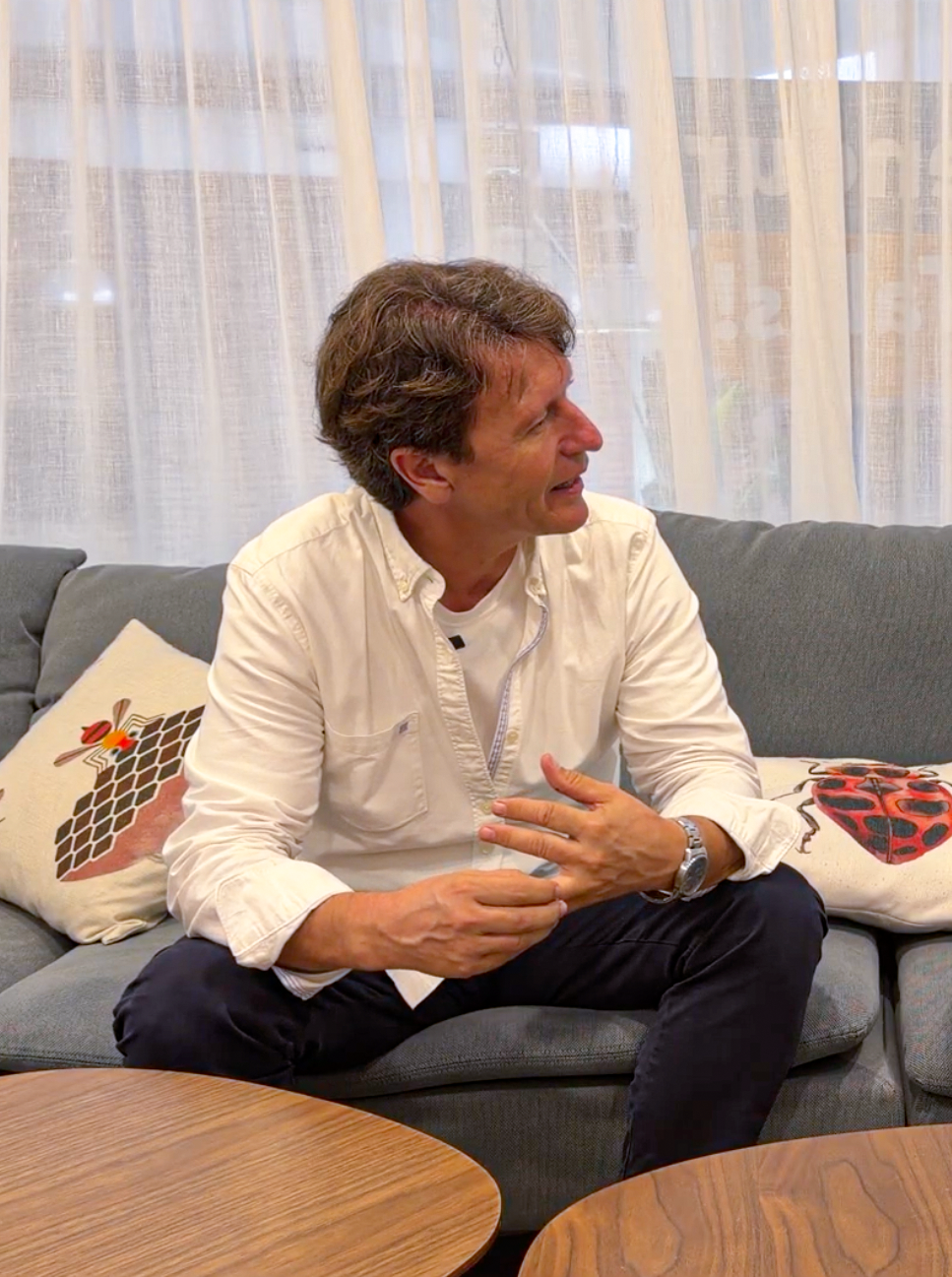
Miguel Páez spent more than twenty years buying and selling fruit before he started growing it. Today he farms avocados and mangoes with his son, also called Miguel, on the family farm, Cortijo Salobreña. Having worked both sides, as trader and as grower, he talks about what hardly anyone says out loud: why supermarket mangoes so often smell and taste of nothing, why they’re picked green on purpose, what ‘quality’ really means when the shelves have to be full twelve months a year, and why farming organically costs more than you’d think.
From the warehouse to the orchard
What’s an engineer doing in the mango business?
I grew up in a modest family. My mother had a saying I’ve never forgotten: your education is your inheritance. I studied engineering, but I caught the entrepreneurial bug and set up a company trading avocados and mangoes. I handled the Spanish season and imports too, at times with fruit from seven different origins in the warehouse, selling to wholesalers, restaurants and retailers. I had a little production of my own, because my family and my business partner’s had always farmed, but it was a tiny share. After twenty or so years, when I sold my stake, I turned to growing. Today I have an avocado farm and a mango farm in Salobreña, plus two avocado farms in Valencia with a partner.
Why leave the business to get your hands dirty?
I’ve always loved it. Planting, watching a farm come into production, running a team: I find that really rewarding. And there’s the money side, too. Making money is healthy: it gives back to society, it means your workers are better off and it lets you grow.
Would you like your children to farm?
Yes, absolutely. Farming is a big part of what I’ll leave them. And I think seeing how their dad farms clears away a lot of prejudice. People think working the land is old fashioned and amateurish, something for people with no education, and it’s the opposite: farming can be as professional and as high tech as any other line of work. That label has to go.
What the land makes you unlearn
So when did organic come into all this?
I’ve had an organic line ever since my trading days. I know I want to farm sustainably. I converted the family farm years ago, and the mango farm in Salobreña is in conversion now.
Why go organic?
Because of how I see life and the food we eat. And because that’s what customers are buying. Seeing up close which products were being used, often pretty recklessly, had a big effect on me. That’s what made me take the step.
Does organic cost much more?
It used to be much harder. Today there’s a whole range of natural products: repellents, cinnamon and citrus extracts, biological pest control. Managing an organic crop is easier than it was twenty years ago. It does cost a bit more, because you do more passes over the field, but not enough to call it much more expensive.
Have you gone fully organic?
Everything except the two farms in Valencia, which I run with a partner. I’m working on him. It’s catching.
What have you had to unlearn?
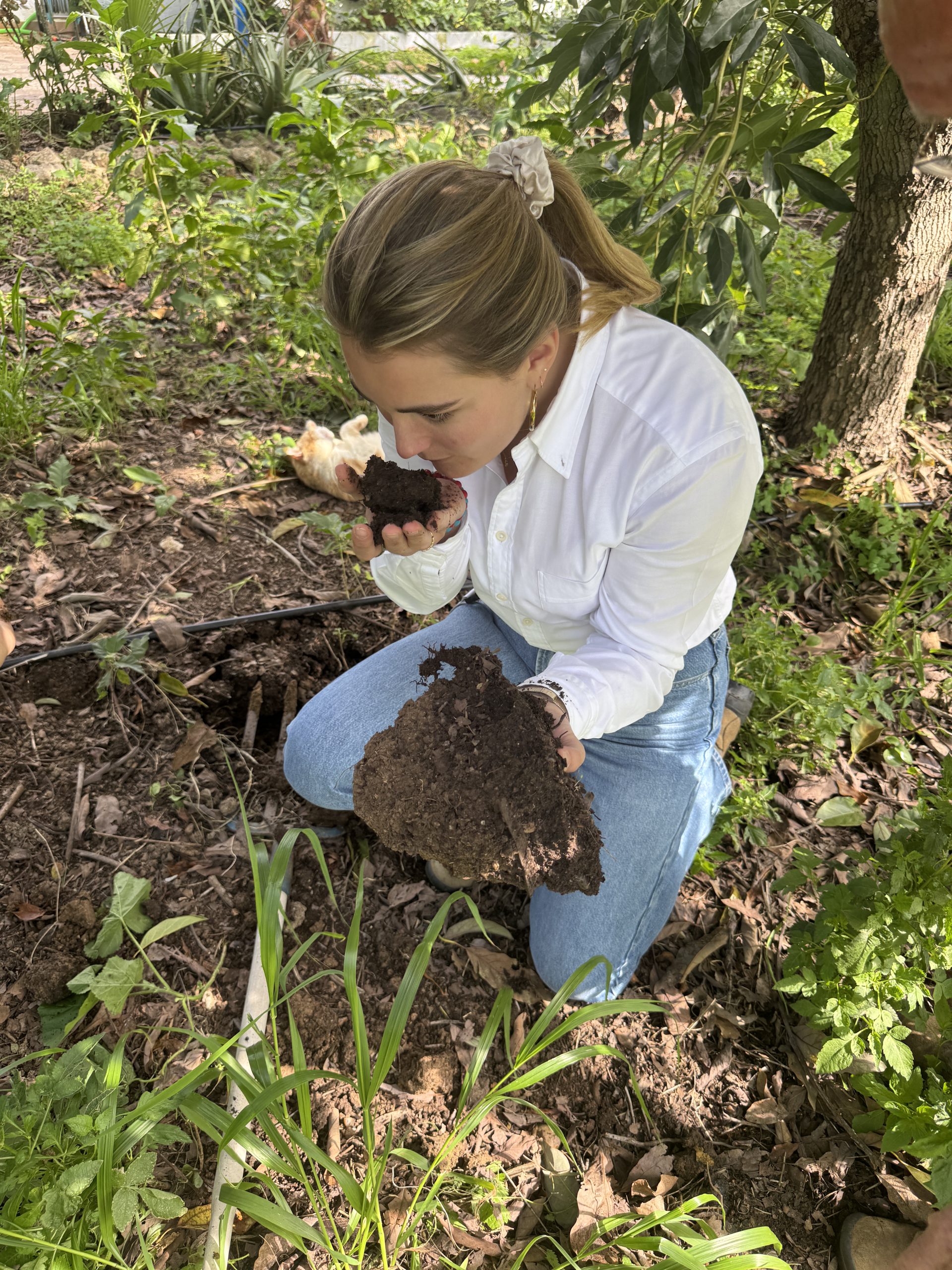
You learn something every day. There are things you take as gospel: you spend half your life thinking that stripping out the weeds is best, and then you realise it badly erodes the soil. You can’t be obsessed with keeping everything spotless. You have to live with your ecosystem, with the bugs that do you harm and the ones that help. We met five or six years ago at a day you organised on regenerative agriculture, all about the importance of cover crops. Now there are even apps where you snap a plant and they tell you what it is: a lot of those weeds aren’t so bad after all, and some fix nitrogen.
What supermarkets call quality
Does quality mean the same to a supermarket as it does to you?
Fruit has lost its seasons. That has an upside: you can eat almost anything almost all year round. But the supermarket should be the first to say no, especially in the overlaps between seasons, when quality drops. Avocados have two seasons, summer and winter, and in those two overlaps quality slips. You have to pick fruit when it’s ready, because these are climacteric fruits: they keep ripening after harvest, but only if they’ve reached a minimum physiological maturity. A lot of growers pick mangoes unripe, below the minimum Brix, to sell them sooner and at a better price. And once they’re on the shelf, many supermarkets don’t treat the fruit well: a mango that’s ripe and ready to eat needs chilling or a very quick turnover.
How do you stretch a season so there’s fruit on the market for longer?
With later varieties, or by growing in different areas where the same variety can run for longer. For me, cold storage should be for holding fruit, never for keeping it long term, because fruit ages. At the end of the day, a fruit has one job: to leave a seed. No system can keep it fresh forever.
What tricks are used on the shelf to sell a mango?
For retail clients, I’ve even worked with cushioned trays (so the fruit doesn’t move) and with technology that adds a scent, released when you brush against it. With mangoes that’s huge, because the smell is often what draws customers in.
Can you really tell where a mango comes from?
Hugely. Mango hates the cold. There are mangoes that come by ship and mangoes that come by plane, and they’re two completely different products sold under the same name. The ones that come by sea, after 25 to 28 days in transit from Peru, usually don’t smell, don’t taste of anything and are sour. A mango picked on day one can still be arriving on day forty, in a controlled atmosphere. The ones flown in are another story: they can be superb. It’s not that mangoes from one origin or another are bad. Very often, if you eat them where they’re grown, they’re delicious.
Our mango has an edge, and we should use it to put its origin on the map.
So why pick it early?
Often there’s a fear that in July, with more mango on the market, prices will fall, even when the fruit is superb. So people get in early. A marketplace with direct contact with the customer takes the edge off that: if I know I’ll get a fair price and a more or less fixed volume, I’m in no rush to pick before the fruit is ready.
Why can’t you set the price yourselves?
The Spanish mango season lasts about eight weeks. We’d like every customer to buy only ours, at the volume and price we want, but it doesn’t work like that: the supermarket still holds the most power. The downside is that we pack a lot of volume into very little time. Five or six million kilos of mango from other origins come into Europe every week, and then suddenly, in eight weeks, you’ve got fifty million kilos. That’s why so much planning happens before the season starts, watching the flowering and the fruit set. This year, for instance, we already knew it wouldn’t be a big volume season.
When farmers sell direct, everything changes
What changes when the customer has a face?
Knowing the customer matters enormously to me, and I’d never worked with the end customer before. The supermarket used to call the shots; it decided. But the internet and social media created a feedback loop: customers can now tell you what they think, and you have to look after that.
And what do you get out of selling direct?
Recognition, visibility and transparency. I can say: this is my farm, these are the farmers, this is what we grow, when, and which varieties. That gives me peace of mind and stability in volume and price, and it means part of my harvest is already sold to customers who trust what I grow. I’m not as much at the mercy of whether a season brings more fruit or less.
So where next?
You’ve already passed the first test: lots of businesses boomed during COVID and then vanished, and if you’re still standing, it’s because this model is here to stay. The next step is educating customers, being the ones they turn to for advice: explaining the varieties, how to eat each fruit, when it’s ripe. That knowledge is what will help you grow.
Written by Cristina Domecq
Cristina Domecq is the Head of Impact at CrowdFarming. She operates where the boardroom, the field, and social conversations converge, convinced that the clues to fixing the food system are revealed in that intersection. Her goal is to achieve a behaviour change that sticks—a mission that only works if both farmers and consumers are truly on board.
Comments
Keep digging ...