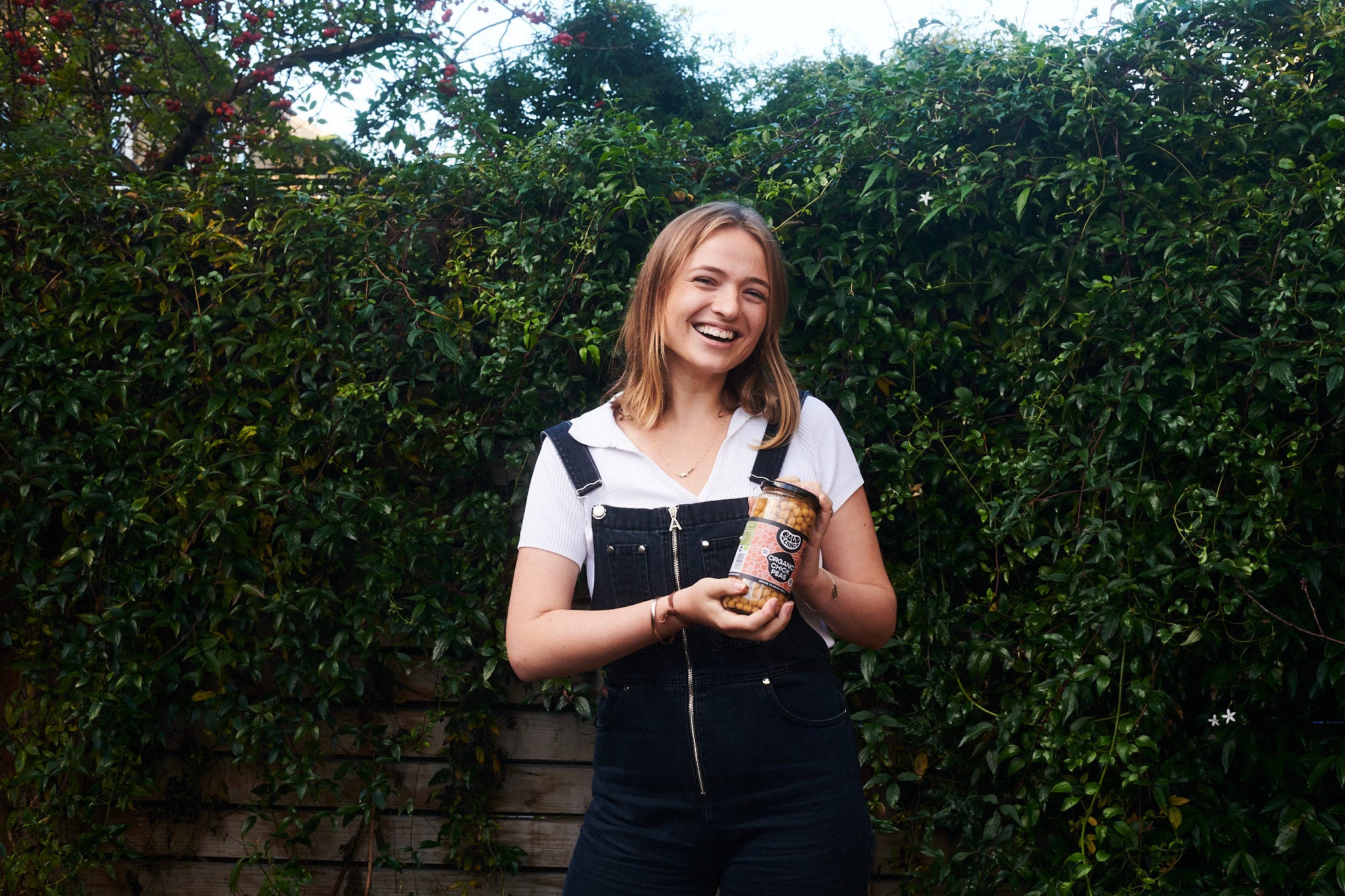
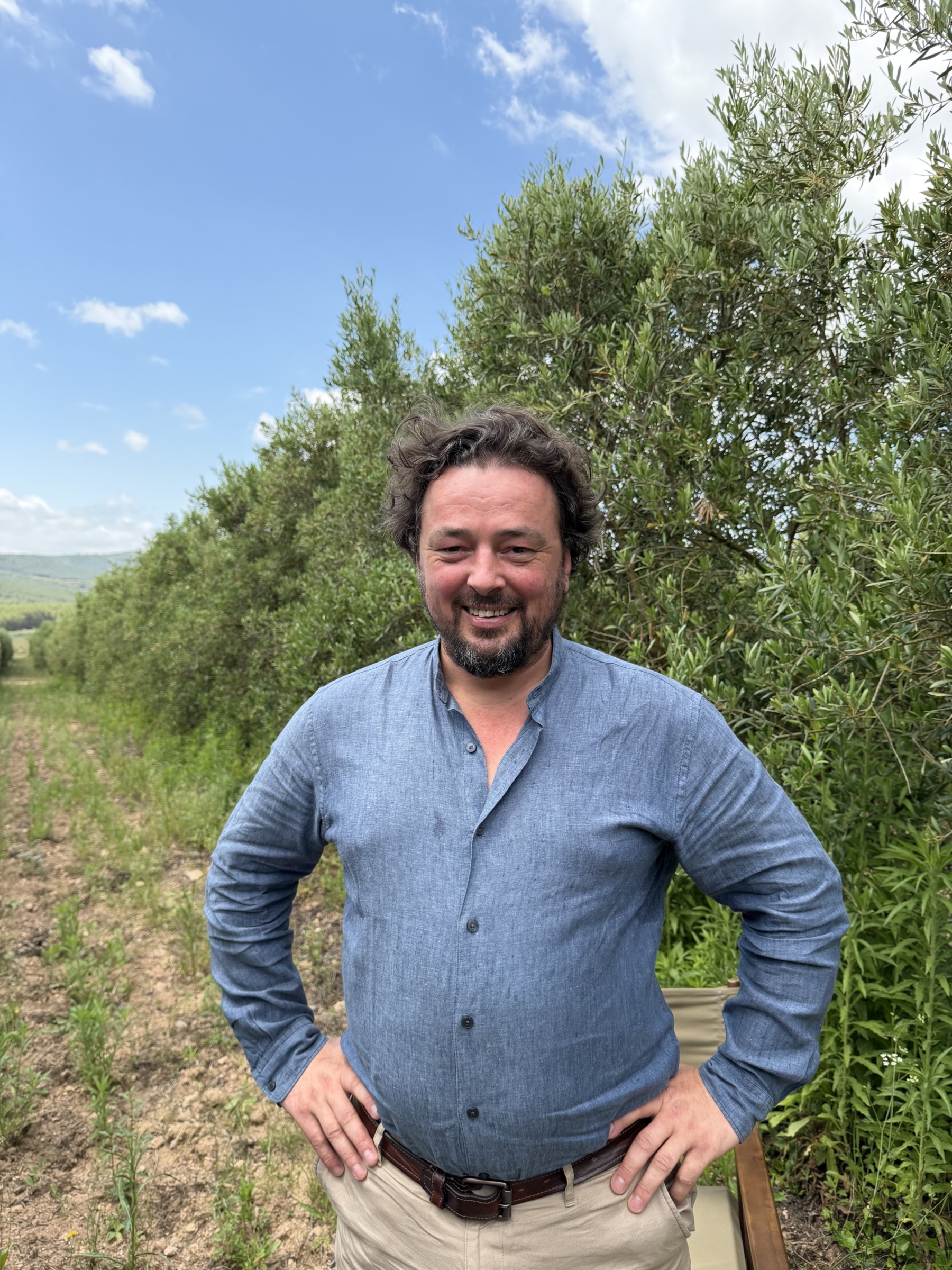
Amelia Christie-Miller didn’t set out to become Britain’s most persuasive advocate for beans. Before founding Bold Bean Co, she worked in food sustainability, connecting farmers directly with chefs on a platform not unlike CrowdFarming’s own model, only for the restaurant trade rather than the household one. It was there, watching the best chefs in London build menus around pulses rather than meat substitutes, that she became convinced beans were the answer to most of the food system’s problems. The jar of beans she tasted on a hungover morning during her Erasmus year in Madrid gave her a better story to tell than that, but it wasn’t really where it began.We sat down with Amelia to talk about why beans deserve the same reverence as coffee or wine, how she’s persuading supermarkets to give an unglamorous, declining category more shelf space, and why she will never, ever market a bean as a substitute for meat.Is it true you got into beans on a hungover morning during your Erasmus year?Has it always been beans, or did you consider other products when you were starting out?Always beans. It’s the food group. I was in the fortunate, if often depressing, position of being exposed to food system problems early on, but I’m an optimist, and the solution I kept coming back to was simple: people need to eat more beans. When I launched, people assumed I meant coffee. Beans felt dull next to the London restaurant scene I’d been working in. But two years after we launched, the UN’s Sustainable Development Goals Advocacy Hub chose beans as the campaign they believed would have the most impact across all their goals, and the Food Foundation in the UK made a similar call. The problem with beans has never been availability or affordability. It’s desire. That’s what I wanted to build in a category that’s been commodified and unloved for decades.For people who don’t know as much about beans as you do, why should we all be paying attention to them?Their role in soil health is one reason, and food security is another. If we all had to live off what our local land could produce, we couldn’t eat the way we currently do. We can’t all live on lamb and chicken. We’d need to rely on beans and pulses, and there are thousands of varieties, including ones that grow in deserts, which matters a great deal in a warming climate. Then there’s health. Fibre feeds the gut microbiome, which we now know is deeply connected to mental health, immunity and longevity. Beans are associated with the world’s Blue Zones, the places where people live the longest and the healthiest, and a common thread running through all of them is beans at the centre of the diet. I had gestational diabetes during my pregnancy, and beans were genuinely useful there too, because they release energy slowly rather than causing glucose spikes, which affects mood as much as it does fat storage. This isn’t a fad. It’s the oldest food group we’ve eaten for thousands of years. It only became associated with poverty once industrialisation gave us easier access to meat. If someone set out in a lab to design the answer to most of our food system’s problems, they’d end up with beans. We already have the solution. We just need people to want it.Tell us about the farmers you work with. What makes their beans different?It depends on the bean. Our butter bean comes from a specific region in Poland, and it’s a different genetic variety to the conventional butter bean most people know, closer to a scarlet runner bean, harvested differently. It’s the same food group, but varieties can taste as different as one apple does from another. The Carlin pea is a different case entirely. We work with a farmer called James on the Norfolk-Suffolk border, alongside Hodmedods, who support British growers transitioning to regenerative practices and bean crops. Nobody in Britain really knows what a Carlin pea is, so there we’re not chasing the most popular bean, we’re trying to raise the profile of one nobody has heard of. We got a whole chapter on them into our last cookbook and onto Prue Leith’s television show. Sometimes the difference isn’t that an entire harvest is superior. It’s about which grade of that harvest we choose. The lower grades often go to canneries and sit in warehouses for years. We take the highest grade based on texture and cook.Were these farmers already growing beans like the Carlin pea, or did you have to convince them to take a chance on a crop without existing demand?There’s already a huge appetite among farmers to grow something like the Carlin pea. I have farmers messaging me constantly offering to grow for us. The gap isn’t willingness, it’s that we haven’t created the demand yet, and that’s the work I’m doing. Our butter beans present a different challenge, because for our farmers they’re a cover crop, planted to benefit the soil rather than to sell. Getting them to keep scaling that as we grow means shifting their mindset from “this is good for my soil” to “this crop is worth something,” because we’re willing to pay well for the best of it.Are the farmers you work with already focused on organic or regenerative practices, or does that vary?It varies enormously, and it’s closely tied to origin and culture. A lot of farmers are farming to survive, not to change the world, and persuading them to care about soil health when they have other priorities is a work in progress. I’d like to say every farmer we work with prioritises this, but it isn’t true yet. Our job is to make growing beans commercially interesting, because we know that by default it’s good for the soil. Why would a farmer pay to certify a cover crop as organic when they might need to reach for a pesticide if a particular risk comes along? Our ambition is much bigger than serving one type of consumer. We’re trying to grow demand for beans generally, and organic growth follows from that. I believe money is what creates change. I can be as passionate as I like, but farmers need to make a living. Almost all the beans sold in major UK supermarkets are varieties that don’t grow well here, or exist only as a single, expensive trial field. There’s a cultural shift needed to get people excited about the varieties that do grow well in our soil, and growing the popularity of beans generally is what makes space for that.How have you convinced supermarkets to give a commodity category more shelf space?We’re incremental to the category. Stores that don’t stock Bold Bean Co see beans decline year on year. Because beans have been a commodity for so long, they’re accessible, and cheap tinned beans aren’t our competitor, because we want people eating more beans full stop. What we’re doing is closer to what Fever-Tree did for gin and tonic: creating a premium product that turns drinking into an experience, which then lifts the whole category. For every four pounds we make for a supermarket, one pound comes from someone who wasn’t previously shopping the bean aisle at all. If a supermarket lists us, we make them money, because the people already buying tins will buy more too, just for a different occasion. What supermarkets need to do now is give bean brands the same kind of impulse-buy space they give Cadbury’s Fingers, rather than relying on people who were already heading to that aisle. When we were placed in the meat aisle for a period, forty per cent of the people who bought us there had never bought our beans before.Do you lean on the “meat alternative” message to reach that new audience?Never. People don’t like being told what to eat, and framing beans as a substitute creates compromise rather than desire. I don’t want someone choosing a chickpea tikka masala over a chicken one because they feel they should. I want them looking at a pecorino and sweetcorn risotto and simply wanting that, without thinking about what they’re not having instead. That’s how we change behaviour: by giving people something they want, not something they’re settling for.Do you see yourselves ever moving beyond beans in jars?The rule I’ve set for myself is that the bean has to be the hero. Hummus is a good example of what I mean. People love it, and most don’t really register that it’s beans. I don’t think we have a job to do there. A bean patty could work if it were something in its own right, but not if it exists purely to replace a burger someone actually wanted. We want to create things that are unapologetically bean-centred, not a way of making people feel better about a decision they’re only half-committing to.Your product sits at a premium price point. Does that create friction with customers?It does, and I won’t pretend otherwise. I wish we could charge less, but the moment we do, we start creating a commodity product. Price comes down, the quality of the bean we can afford comes down with it, and the transformative first-taste experience disappears. Our goal is for someone who thinks they dislike chickpeas to try ours and change their mind, and that experience depends on not compromising. There are plenty of cheap beans out there already. We’re offering something different, and a different job to be done.How do you reach beyond the food-loving, Ottolenghi-cookbook audience who already gets it?We’re currently serving a fairly specific, food-literate, middle-class customer. But I believe food culture moves outward from people with credibility in food. Avocado toast appeared on a menu in an Australian brunch spot decades before it became a mainstream, multi-format industry. We’re serving that core audience first because I believe that if we keep doing a good job, we’ll progressively become more mainstream. That’s my honest theory of how you shift consumer behaviour on something like this.Do you ever lean into how broken the food system is, and how that explains the price of good food?I don’t, deliberately. I feel that way myself, and my team is motivated by it, but I don’t think it’s our job as a brand to make people feel dismayed. I want the message to stay singular: these are the best beans, and they’ll change your mind about beans. Not “these are the best beans, and here’s why the food system is broken and that’s why they cost more.” I don’t think that gets the best out of people. I’m trying to win people over to loving beans, and I don’t think guilt is the right lever for that.If you had to convert one committed bean-hater, what’s the first thing you’d have them try?Ideally, straight from the jar, so they can tell me honestly what they think. But realistically, I’d start with a dish that includes meat if they’re not vegetarian. One of the best recipes in our first cookbook, contributed by a guest chef, is a sausage and butter bean stew: fried sausages with creamy butter beans, mustard, Parmesan, lemon and crunchy breadcrumbs. It’s hearty enough that people forget they’re eating beans at all, and by the time they realise, they’ve already fallen for them.Is there a myth about beans you’d like to put to rest for good?That they’re dusty and tasteless. That perception is everything we need to change. I always compare it to coffee thirty years ago, when people assumed it was all the same. Now everyone understands there’s terroir, process, and real variation, in the same way there is with wine. Beans deserve the same reassessment.What’s been your biggest “what the field” moment on this journey?Before starting Bold Bean, I was deep in food system problems, and that was bleak in its own way. What genuinely gets me now, working in retail and commercial food, is how much control big food companies have over what we see on shelves simply because of what they’ve paid for that space. Supermarkets want to stock us, but they’ve already committed shelf space elsewhere. Governments need to step in, because supermarket executives aren’t going to sacrifice short-term sales of something like Chocolate Fingers for the long-term upside of nudging people toward healthier, more sustainable diets, even though that’s exactly what a brand like ours can offer. The system is built for big, ultra-processed businesses to win, and a brand celebrating genuinely good ingredients has to fight for space it should, given what’s actually at stake, be handed freely.Any recommendations for our listeners, a recipe or otherwise?Head to the Bold Bean Co website. Over 300,000 people visit each month for the recipes alone, and you don’t need our beans to cook any of them. Try the butter bean puttanesca, and if you’re not ready to go fully vegetarian, add some fish. My own go-to is what I call miso beans: cook down miso, butter and whatever onion is lying around, add a jar of white beans, then top with whatever’s in the fridge, usually a fried egg in chilli oil, some kimchi or pickled cucumber, and a bit of green veg. It’s comfort food with enough going on to never feel repetitive.