


Published June 2026
Rethinking the journey
At CrowdFarming, we often talk about soil health, biodiversity, and regenerative practices on the farm. But what happens once the harvest leaves the field? The journey from the farmer to your doorstep is a critical piece of the puzzle. In this article, you’ll learn:
- Why the “middle mile” is the biggest source of emissions in our logistics chain.
- What HVO is and why we’ve chosen it over other alternatives like electrification.
- How our partnership with Trucksters is making our longest routes cleaner.
- The real, certified impact this change has had on our carbon footprint since late 2024.
1. The elephant in the lorry: Our biggest carbon challenge
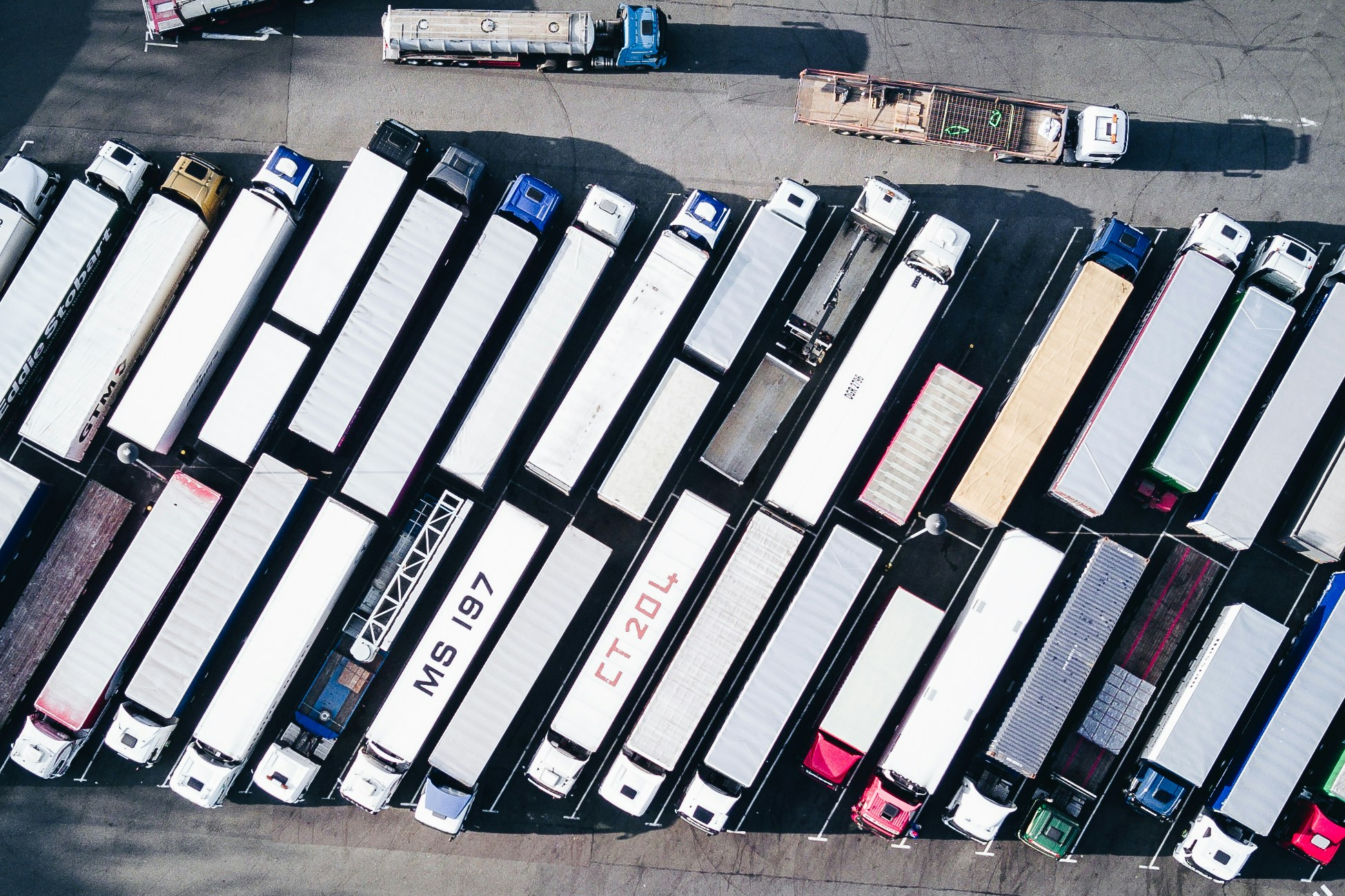
In the world of logistics, much of the recent innovation has focused on the “last mile”—the final delivery to your home. It makes sense; this is the part of the journey consumers see, with electric vans and cargo bikes becoming common sights in our cities. But the real giant in terms of emissions is the “middle mile”: the long-haul journey that takes thousands of boxes from farms and regional hubs across Europe to distribution centres before entering the last stage of home delivery.
To put it in perspective, a Life Cycle Assessment we conducted on oranges traveling from Valencia (Spain) to Berlin (Germany) revealed that transport is the single largest contributor to their carbon footprint, accounting for around 70% of total emissions. The middle mile alone accounted for 47% of the total carbon footprint from farm to fork. While farming practices and packaging matter, the long road between the field and the final distribution hub is where our biggest impact lies. For years, this has been our biggest operational challenge. As Javier Sanjurjo, CEO of CrowdLog — CrowdFarming’s logistic company —, explains, “We are always looking to reduce our environmental impact, from agricultural practices to the final delivery. The middle mile was where we saw the most room for improvement.”
2. The search for a solution: Beyond the electric dream
Our first instinct was to explore electrification. The idea of silent, zero-emission trucks is compelling. However, the reality of heavy electric transport in Europe is, for now, a complicated dream.
“We explored electrifying our routes,” says Javier, “but the hurdles were immense. The initial investment in charging infrastructure was sky-high, and the operational reality of taking a truck off the road for up to 11 hours to charge just isn’t viable for a supply chain that needs to be agile.” This is where our partner, Trucksters, came in. While continuing to test electric options, they presented a more immediate, scalable, and powerful solution: HVO.
3. HVO: Turning used cooking oil into a cleaner journey
So, what exactly is HVO?
HVO stands for Hydrotreated Vegetable Oil. It’s a premium-quality biofuel that can be used in conventional diesel engines without any modifications. Crucially, we use second-generation HVO, which is produced from waste materials like used cooking oil.
“The emissions’ reduction is massive,” explains Alvaro Guerreiro, International Sales Manager at Trucksters. “A normal truck emits around 2.2 tons of CO₂ on a long-haul trip. With second-generation HVO, we reduce those emissions by up to 90%.” Unlike electrification, HVO requires no new infrastructure, has no range limitations, and can be implemented immediately. It represents a pragmatic and powerful step forward. While it’s still more expensive than conventional diesel, as Javier puts it, “from a sustainability perspective, it’s not expensive at all.”
It’s important to note that while the second-generation HVO we use (from waste products) is a powerful tool, it is not a silver bullet for the entire industry. The global supply of used cooking oil is finite, and the broader debate around biofuels remains complex. This is especially true for first-generation biofuels, which are made from agricultural crops grown specifically for fuel (like palm, soy, or rapeseed oil). The use of these crops raises critical questions about land use—often referred to as the ‘food vs. fuel’ debate—as it can compete with food production and potentially drive deforestation. For us, focusing on second-generation HVO is a crucial and effective transitional technology that allows us to act now, while we continue to explore and support future innovations in sustainable transport.
4. How we guarantee the impact: The mass balance system
When a truck fills up with HVO, how do we ensure that the emissions’ reduction is correctly attributed to CrowdFarming’s deliveries and not double-counted?
The risk of double-counting in this context refers to the risk of a logistics provider assigning the same batch of sustainable fuel, and its corresponding CO₂ reduction, to two different clients. For example, if a provider buys 1,000 litres of HVO, they could fraudulently sell the environmental benefit of those 1,000 litres to Client A and to Client B, effectively claiming twice the impact that was actually achieved.
To prevent this, the entire process is managed through a certified system called Mass Balance Accounting. This system works like a transparent digital inventory:
- Audited Supply: The fuel provider, Cepsa, certifies every litre of HVO that Trucksters purchases.
- Tracked Consumption: Trucksters uses a platform called SQUAKE to track every kilometre driven for CrowdFarming and calculates the exact amount of HVO consumed. This inventory is meticulously managed to prevent double-counting.
- Certified Reduction: Finally, an independent body, TÜV, audits this data and issues an official certificate detailing the exact CO₂ reduction achieved.
“This strict, three-step audited process gives us and our clients complete confidence,” says Alvaro. “They can be sure the impact is real.”
5. The results: Our impact since the beginning of our HVO journey
We began transitioning our main route from Museros, Spain, to Speyer, Germany, in the last quarter of 2024. The results have been immediate and significant.
- In the final months of 2024, 21 full truckloads were powered by HVO.
- This shift has already allowed us to avoid approximately 34.5 tonnes of CO₂e.
- Our goal is to continue expanding the use of HVO across all our routes with Trucksters and to encourage our other logistics partners to adopt this technology.
“It’s not crazy to think that we can cut our middle-mile carbon footprint in half,” says Javier. “Which is huge.”
Conclusion: From offsetting to actively avoiding
For years, the logistics industry has relied on carbon offsetting—planting trees to compensate for emissions. While well-intentioned, this approach doesn’t tackle the problem at its source.
Our switch to HVO represents a fundamental shift in strategy: from offsetting to actively avoiding emissions. By investing in cleaner fuels and smarter logistics, we are proving that a more sustainable supply chain isn’t just an abstract goal—it can be built into the very way we move food.
This is a journey, and it’s not without its challenges. As Alvaro notes, widespread adoption requires a “mindset change” from manufacturers, insurers, institutions, and truck drivers themselves. At CrowdFarming, we see our role as finding and supporting these solutions, while engaging others to take the same route. By supporting pioneers like Trucksters, we are helping to accelerate a much-needed transformation in the transport sector.
Written by Emilia Aguirre
Emilia Aguirre is our Awareness & Advocacy specialist — which means she spends her days asking the uncomfortable questions about how our food is grown, priced, labeled, and sold. She hosts What The Field?!, a podcast packed with stories from the ground, hard-hitting research, and conversations with the people shaping the future of food (whether they like it or not).
Keep digging ...