




Published June 2026
One Design, One Season
We’ve spent years working to transform the agri-food system, connecting society with the people and places behind their food. We set out to fix a broken system that was failing farmers, harming the environment, and compromising the quality of our food. Today, we’re applying that same mindset to something we also use every day, yet rarely associate with nature’s cycles: your clothes.
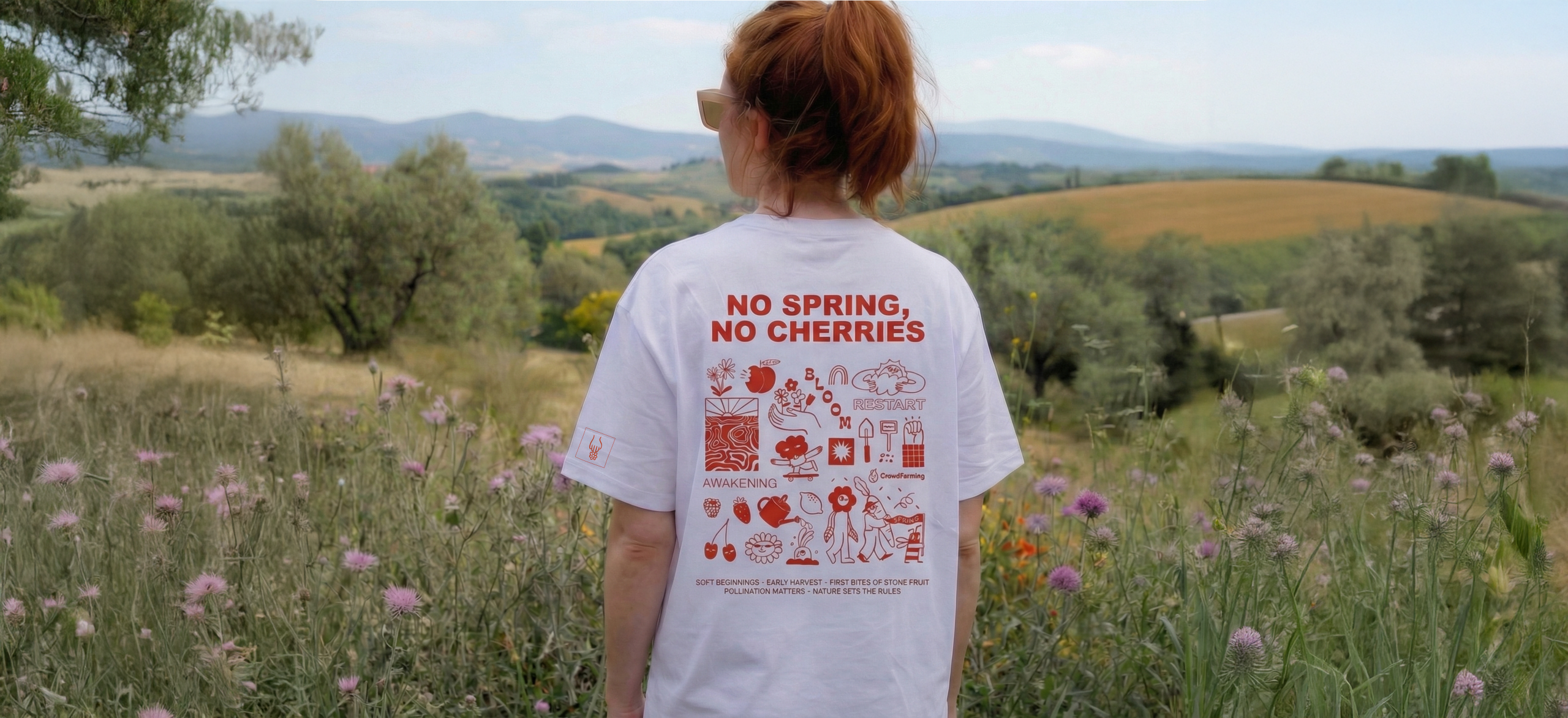
Introducing our first “Cultivated Clothes” piece with the Spring Limited Edition — the season of new beginnings.
This project was born from a recurring request from our community. Many of you asked for a way to carry CrowdFarming’s values beyond the screen and the kitchen. You wanted a way to “wear the message” — literally — and share this respect for the land in your everyday life. This garment is a way to bring our community into the physical world and start real conversations on the streets of your cities about where things come from.
A simple proposal: One design, one season
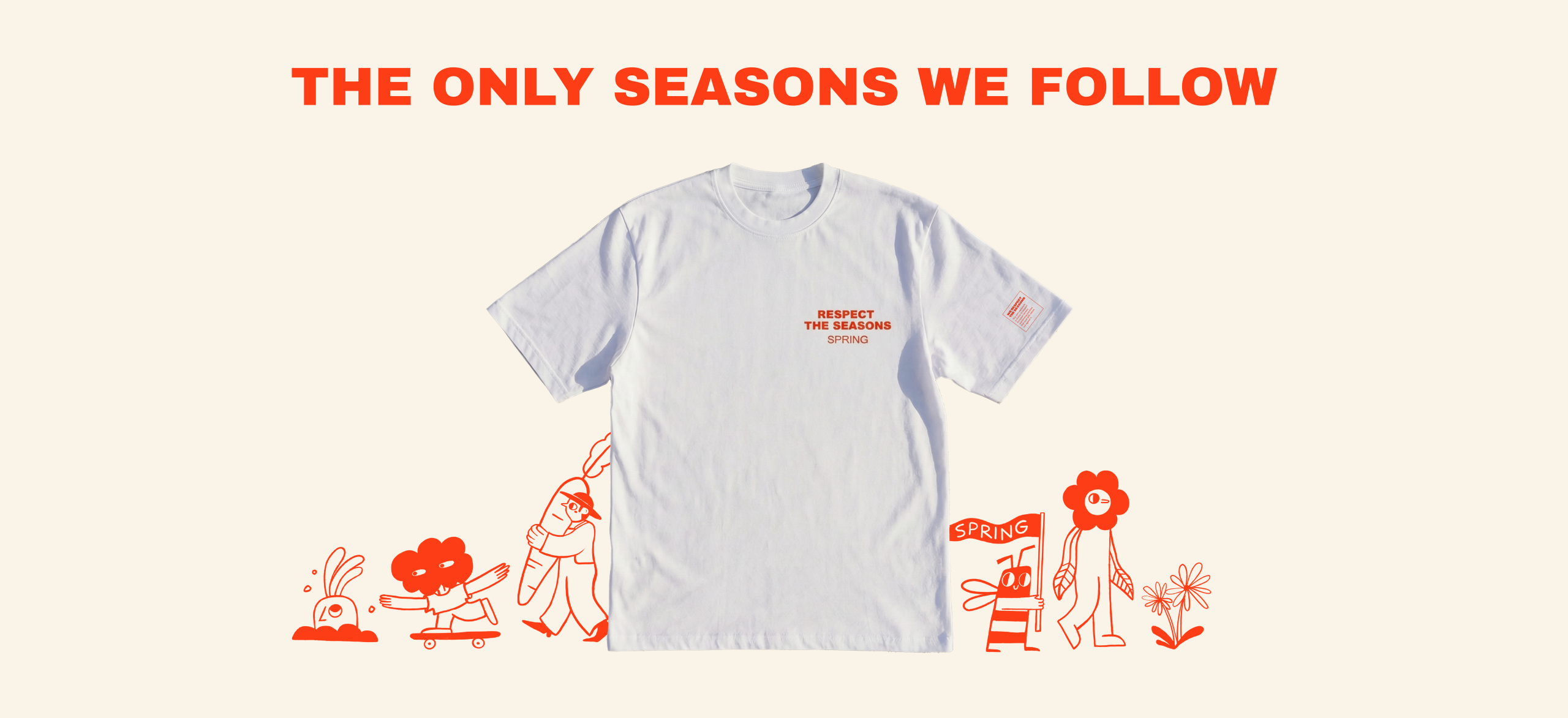
While the fashion industry races frantically toward the next fleeting trend, we’ve decided to take our foot off the gas. Our production should reflect the natural world; it should be born, lived, and exhausted at the pace set by nature itself — our primary resource provider.
We present the Spring Edition: the season of new beginnings, where roots stretch and the soil awakens. This edition will only be available while the last oranges still hang on the branches alongside the blossoms of the next harvest. It is the window when we pick the first blueberries in southern Spain while the bushes in Germany are just waking up; when almonds are still green and tender, and olive trees are covered in those tiny white flowers that herald the future olive.
This limited edition will be available following the astronomical calendar: from the spring equinox on March 20th to the summer solstice on June 21st. This is the time the land needs to complete its most critical transition: from the opening of the buds until the fruit “sets” and becomes strong enough to withstand the rigors of summer.
It’s a response to the idea that everything must be available 365 days a year in forty different colors. We are applying the same principles to your wardrobe that we demand for our food: absolute respect for nature’s rhythm.
FAQ
Why a limited edition?
In conventional fashion, excess stock loses its relevance (and value) as the season changes. Producing thousands of garments to sit in a warehouse for months is exactly the industry logic we are questioning. Just as we do with our harvests — where we only pick the fruit once it has a home to prevent it from withering in cold storage — we’ve opted for a prudent initial run for this garment. If the community responds and the model proves sustainable, we will increase the number of units in future seasons. Our goal isn’t exclusivity, but responsible scalability: producing only what the real world is ready to wear, preventing a garment from becoming waste before it’s even debuted.
Where is it produced and what materials is it made of?
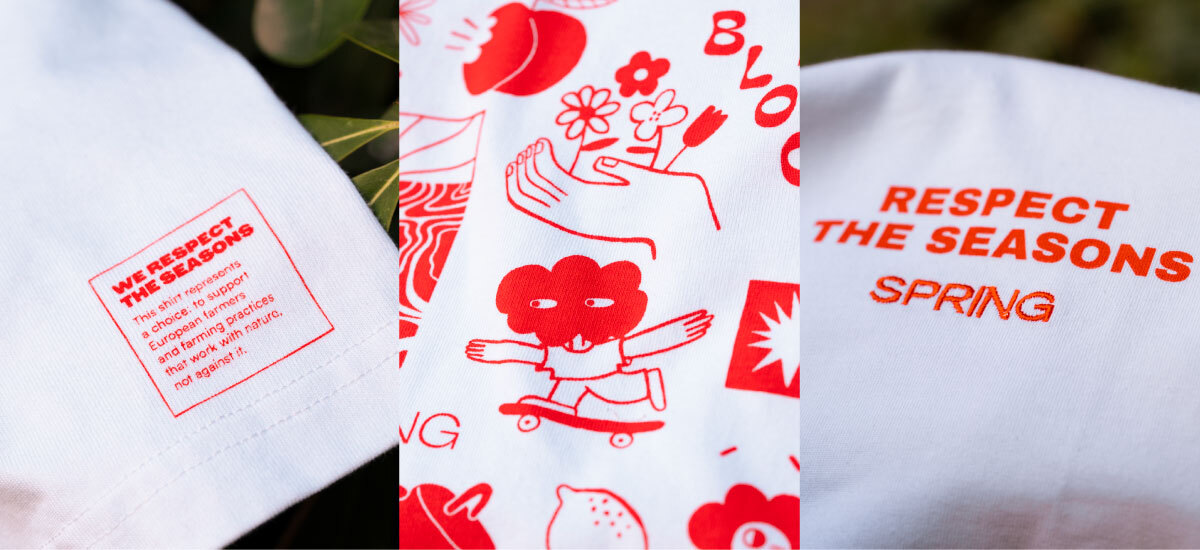
We apply the same principles to your wardrobe as we do to our food: short chains, absolute respect for seasonal rhythms, and ecosystem health.
- Made in Portugal.
- 100% GOTS-certified organic cotton.
- Printed with OEKO-TEX® certified inks.
What is my size?
We know online shopping can bring up doubts, and there’s nothing more disappointing than a garment that doesn’t meet your expectations. We want your experience to be as flawless as our cotton — you can download our size guide here.
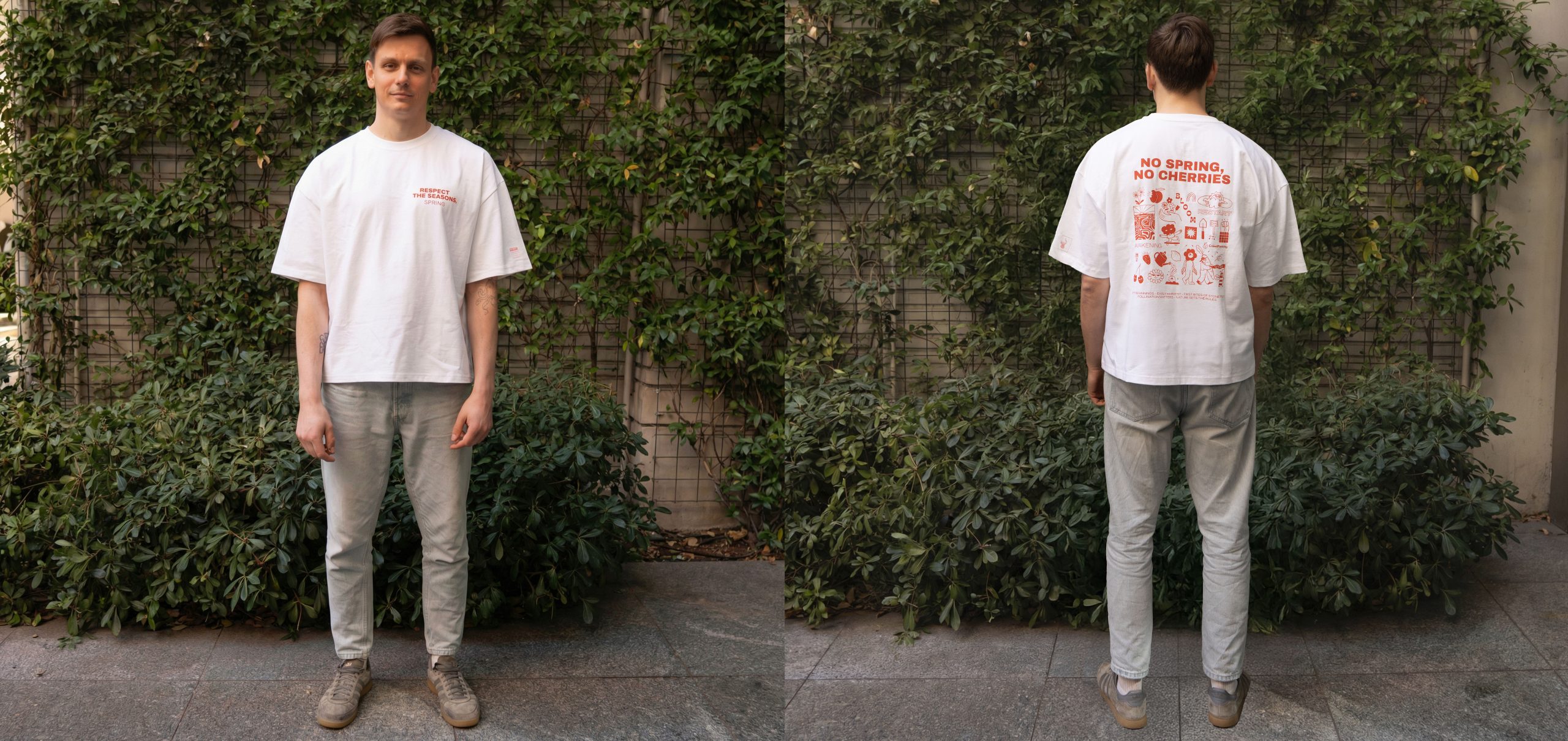
Lucas is wearing a size L and is 1m89 tall.
(NO) Return Policy
If the garment doesn’t fit as expected or meet your needs, we ask that you find it a new home. Gift it to someone in your circle who shares these values. By doing so, together we avoid unnecessary transport emissions and you help us spread the message.
How did we decide the price?
We’ve set a single price for all of Europe. Our shipping costs and taxes aren’t the same everywhere, but we’ve decided on a flat rate so as not to penalize those living in more remote areas. Here is the breakdown of the €35 for your Spring Edition:
46% Fixed Product Cost: The minimum amount for the garment to exist. Covers organic cotton, ethical manufacturing in Portugal, materials (rice paper, seeds, cards), shipping to our logistics center in Museros (Valencia), and manual preparation of the package.
15% to 53% Shipping: This has the widest range. While shipping to high-volume countries costs us €5, complex destinations can cost nearly €20. We’ve set an average price so your location doesn’t penalize your support for the project.
20% to 25% Taxes and Payment Tech: VAT varies by country, plus payment platform fees that ensure transaction security.
10% Average CrowdFarming Margin: This isn’t net profit; it’s what remains after discounting all direct costs. We’ve chosen a small margin because our goal is for this T-shirt to help raise awareness for seasonal products and regenerative farming.
Written by Julia Navarro
Hey there, I’m Julia. I’m an illustrator and designer at CrowdFarming. I’m a firm believer that the smallest details tell the biggest stories, and I love using visual metaphors to make intricate ideas feel intuitive and human. My mission is to bridge the gap between the land and the consumer through design that is as powerful as it is honest.
Comments
Keep digging ...



by Stacey on August 2026
So are they still available ?
How do I buy one ?