Published March 2026
One year on from the floods
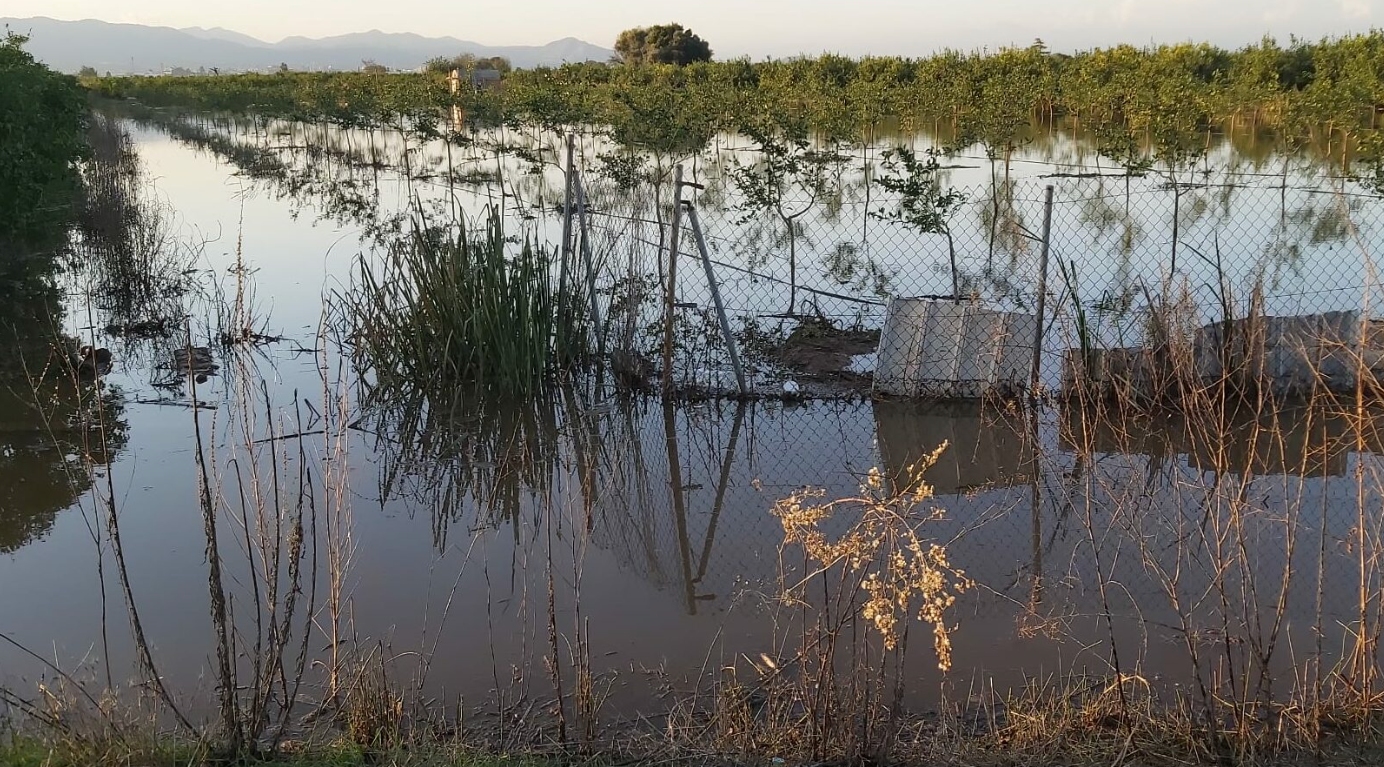
On the 29th of October 2024, Valencia suffered one of the worst episodes of flooding in its recent history. A cold drop unleashed torrential rains that triggered floods and overflows of rivers and ravines, causing flash floods with catastrophic effects.
The balance was tragic: 229 deaths, mass destruction of infrastructure, material losses (about 120,000 cars were declared total write-offs), loss of crops, and a major deterioration of agricultural soils, water structures and rural paths.
Everything was covered in mud. Thousands of people (especially young people) came from all over Spain and Europe with mops, buckets, and brooms to collect thousands of tons of mud from houses, schools, shops, streets, and cars.
How was so much mud generated? Where did it come from? Could it have been avoided?
In this article, we’ll explore how the mud was produced and how regenerative agriculture practices can influence soil management, water infiltration and biodiversity, and why they could be key to slowing down the speed of water, thereby reducing mud generation and mitigating disasters such as the 2024 floods in Valencia.

Why does rain become so destructive?
Heavy rain isn’t directly synonymous with damage. The problem is the speed of the water when it falls to the ground and what it’s able to carry along with it. When water can’t infiltrate the soil, it flows on the surface, causing erosion and turning into mud.
The most common causes of low infiltration in agricultural areas are:
- Compaction by heavy machinery, which seals the soil and reduces its porosity.
- Absence of plant cover, which leaves the soil exposed to the direct impact of rain and doesn’t act as a natural barrier.
- Frequent and deep tillage, which destroys biological channels and accelerates structural degradation.
To simplify and explain the damage that rainwater can cause, we’ve created the following formula:

To reduce the damage that rain can cause, agriculture can respond directly to two of the three variables: speed and load of soil swept away or transported.
According to figures from the European Environment Agency, it is estimated that between 60% and 70% of European soils are degraded. This degradation is due to causes such as erosion, pollution, compaction and loss of organic matter.
A hidden problem for most farmers is that they don’t account for the loss of fertile soil on their farms in the same way as other costs that they pay for with money. It’s an invisible but huge cost that causes constant and prolonged damage to their bottom line. What does this mean? Fewer harvests. The lower natural productivity of the soil forces farmers to buy more fertilisers because – after erosion – the soil only serves to keep the tree upright.

The ticking time bomb of having tilled soils
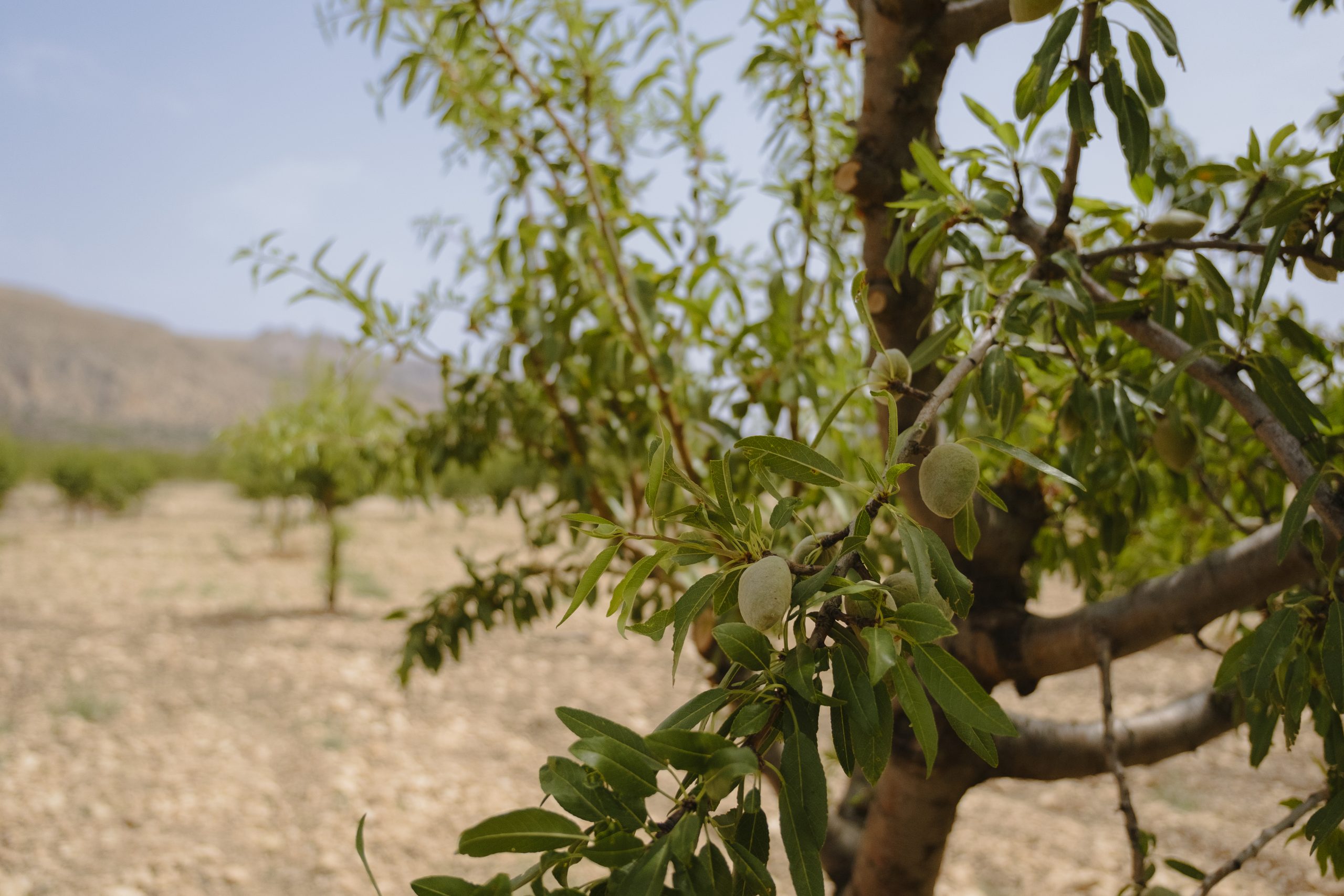
After the grape harvest, winegrowers in Mediterranean regions (such as Valencia) often till the land in their vineyards. Farmers of almonds, walnuts, and olives that are harvested in September and October follow the same practice.
They do this to remove weeds and provide nutrients for autumn and winter.
They also do it for aesthetic reasons. Culturally, the image of a well-kept farm is highly valued in rural areas, which is often (wrongly) associated with a weed-free soil.
A ploughed field looks tidy and ‘clean’, giving the impression of diligence and care on the part of the farmer. Organic farming, which encourages spontaneous grass to grow among the vines, has in recent decades been associated with the image of an old-fashioned or lazy farmer.
In soils de-structured by tillage, the finest and most fundamental particles for fertility, such as clays, remain in suspension and are washed away by rainwater. Meanwhile, larger and less fertile particles, such as sand and gravel, remain in the soil. It’s the combination of clay, organic matter and microbiology that gives rise to clay-humus complexes, an indispensable basis of soil fertility.
What happened in October 2024? On recently tilled plots in inland Valencia, the rainwater formed rivers of mud that swept downhill with huge amounts of loose soil. In contrast, on plots with vegetation-covered soil, the water didn’t gather so much speed and could be absorbed (at least partially) by the soil, preventing run-off.
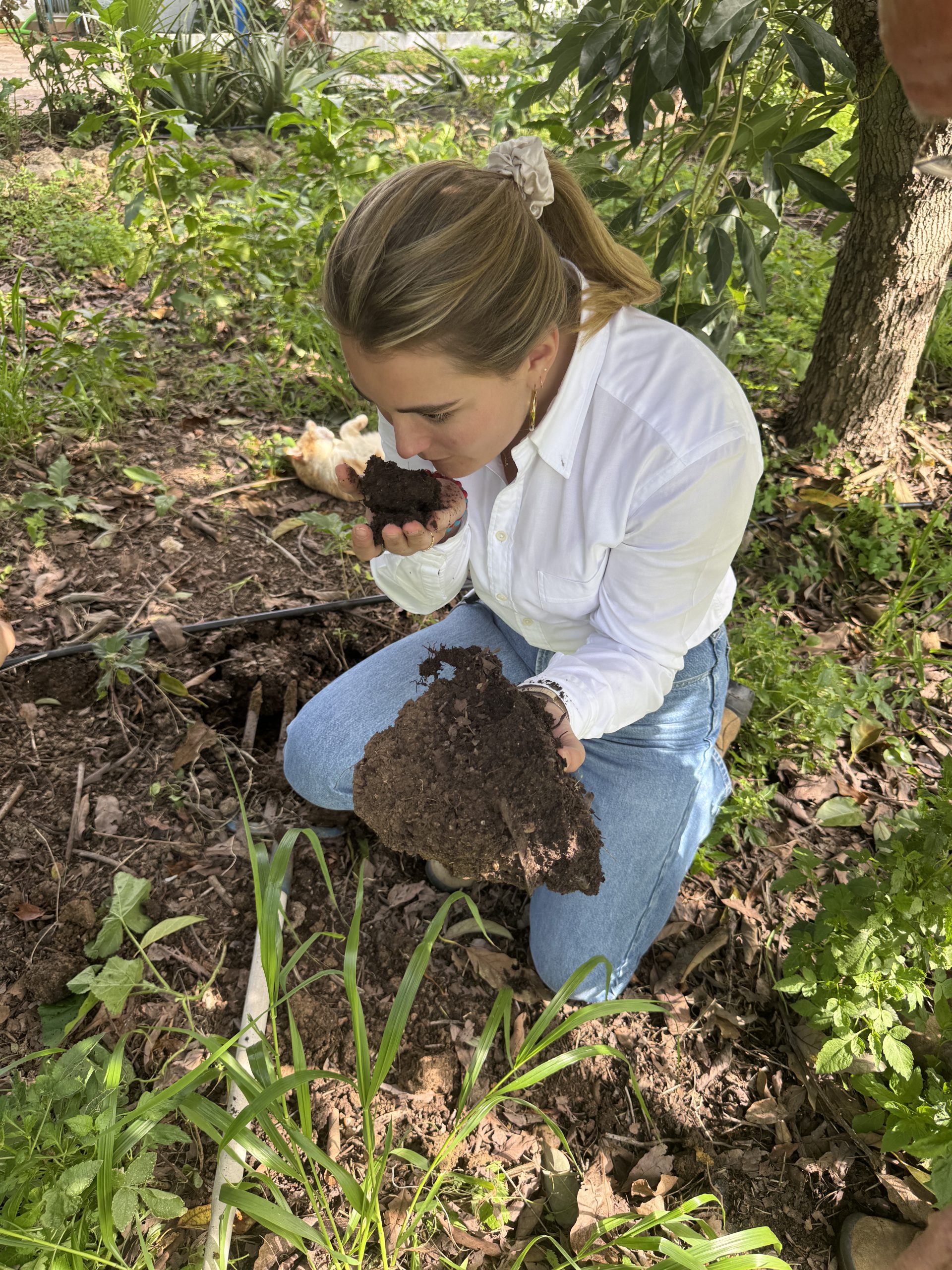
The plant layer reduces the impact of raindrops, the roots create pores in the ground, and the organic matter acts as a sponge, allowing much more water to seep in.
Healthy soil works as a natural rain buffer: instead of generating flash floods, it retains water, slowly filters it into aquifers, and gradually releases the surplus into rivers without sweeping away so much mud.

And what about the compacted soils?
We’ve already explained the effects of having tilled land that is too loose. Now we’ll explain the opposite effect, which is when the soil is too compacted.
The compaction of agricultural soil can be caused by various factors, the main ones being the continued use of herbicides that prevent the growth of weeds that help de-compact the soil, and the frequent passage of heavy machinery, such as tractors.
The peak of the citrus season in Valencia begins in November. In August, September and October, tractors drive between the rows to fumigate crops against pests such as fruit flies, red mites or thrips. This continuous traffic between the rows of trees compacts the soil, making it act as a slippery slope in the event of rain.
In citrus farming, which I’m using as an example because it’s the main crop in the Valencia area, the use of chemical herbicides leads to the loss of much of the soil’s microbiology and organic matter. This leaves only clay behind, which is easily compacted by the passage of tractors, thereby preventing water infiltration.
A field with compacted soil drains rainwater too quickly into rivers or ravines, causing flash floods.

Soil as the best investment in infrastructure
The cold drop of 29 October 2024 was a disaster that caused irreparable damage. Beyond public policies, warning measures or investments that need to be made, farmers have a duty to care for and repair the largest infrastructure capable of reducing the harmful effects of these torrential rains: the soil on our farms.
Failing to regenerate soil means accepting that each extreme event will be worse than the previous one. For us, for our bottom line, and for our surroundings.
Organic and regenerative agriculture isn’t a miracle solution and doesn’t prevent these climate events, but it is a solid, proven and replicable agronomic proposal that can restore the resilience that our fields have lost.
Written by Gonzalo Úrculo

Gonzalo es un "farmeneur". Como cofundador de CrowdFarming y agricultor, divide su tiempo entre la oficina y el campo. Además de la agricultura, disfruta leyendo y escribiendo sobre productos digitales y logística y discutiendo sobre su impacto en la cadena de suministro de alimentos.
Keep digging ...